Vance Cooper on Authentic Leadership, Self-Discovery, and Creating Your Own Opportunities
Get Promoted Without Becoming Someone Else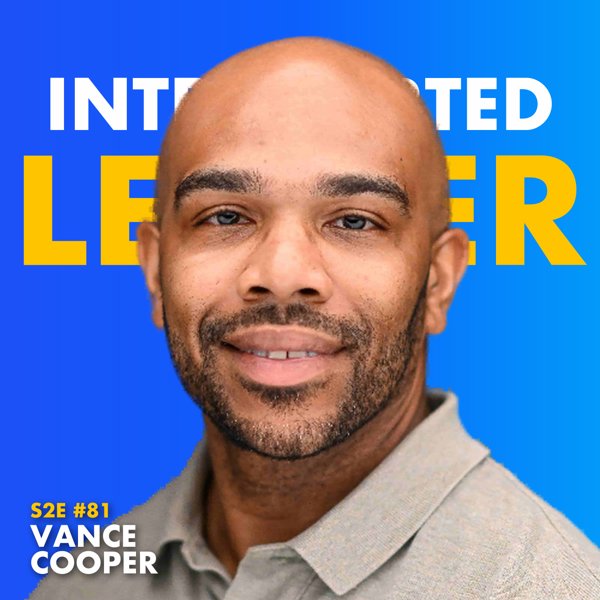
Dr. Vance Cooper is a leadership consultant with a PhD in corporate leadership who teaches that authentic leadership isn't a style to copy — it's the result of knowing yourself well enough to lead from your natural strengths. In this conversation, he shares how years of trying to mimic charismatic peers led him to a self-discovery process that reshaped his career, and he offers a three-part framework — vision, character, attitude — for leading as your true self. He also makes the case that when your current role doesn't offer leadership opportunities, you shouldn't wait — you should create them, often outside the walls of your job.
You can actually study leadership, but it doesn't actually teach you how to be a leader.
The most authentic leaders are the ones who are leading in their own unique ways.
Self-discovery is an ongoing process. I don't believe that it's something that you've necessarily arrived at. It's more like a destination that you're continuously working towards.
One of the biggest mistakes for people who are looking for opportunities to lead can make is looking for it within your job.
If you see a gap, instead of sitting back, complaining about it, getting frustrated about it, you just may be the person who's the perfect fit to be able to fill that gap.
Key Stories
- The mid-30s turning point: Through his mid-20s and into his PhD program around 2020, Vance quietly assumed something was wrong with him because he wasn’t the handshake-everyone type. It wasn’t until his mid-30s, studying leaders who succeeded without being the loudest voice, that he gave himself permission to lean into his supportive, empowering style.
- Studying leadership vs. becoming a leader: Vance realized during his doctoral work that you can study every leadership theory and still not know how to lead — because leadership is fundamentally a self-discovery process, not an academic one.
- The Myles Munroe influence: The late Dr. Myles Munroe was the first thinker who reframed leadership for Vance as self-discovery rather than traits, changing how he approached the entire field.
- Leading outside the job title: Without a fancy corporate title, Vance built leadership experience by becoming president of a nonprofit and serving on boards and advisory committees — proving that leadership opportunity doesn’t have to come from your employer.
- The introvert breaking point: Vance describes the pattern of quietly tolerating a bad process for months, saying nothing, until the pressure explodes — and how that silence quietly erodes both authenticity and confidence.
Techniques & Frameworks
- Vision, Character, Attitude: Vance’s three lenses for authentic leadership. Vision — can you articulate where you’re going clearly enough that people want to follow? Character — do people trust you? Attitude — how you respond when things go wrong will determine your results.
- Reverse-engineer the vision on paper: Don’t keep your vision in your head. Write goals on poster boards or paper you can see daily, then reverse-engineer the small wins and steps required to get there.
- Commitment-based routine: Build a daily routine anchored to the commitments you’ve made to yourself. Once the vision is set, “the commitment is the commitment” — protect it against the small things that quietly pull you off course.
- Use an outside voice: Work with a coach, mentor, or consultant who can ask the questions you wouldn’t think to ask yourself. Introverts especially benefit from externalizing thinking that would otherwise stay locked in their head.
- Create your own leadership lab: If your job isn’t giving you room to lead, look to nonprofits, boards, volunteer roles, or community initiatives. Don’t wait for a title — build the experience where the gap already exists.
Full transcript
If you’re an introvert in a leadership role, you’ve probably had this moment. You look at that charismatic person in the room holding court, keeping the energy up, even late into the day, and something in you says, that’s what people want in a leader, and that is in me. So you find yourself pushing yourself to be more like that leader, more vocal, more visible, even when it doesn’t feel right. But underneath, there’s a strain in that. It builds up when you’re leading in a way that isn’t authentic to you, and it catches up to you. My guest today spent years in that loop before he did the self-discovery work that allowed him to lead in his own way. Welcome to The Introverted Leader. It’s a podcast helping introverted leaders embrace your underrated, quiet strengths so you can get promoted and start earning what you deserve. I’m Greg Weinger. I have over 25 years of leadership experience, and yes, I am an introvert. Dr. Vance Cooper is a leadership consultant with a PhD in corporate leadership, and he teaches that authentic leadership is not a style to copy. It comes as the result of knowing yourself well enough to lead from your authentic strengths. One more thing before we start. I made a free masterclass for introverted leaders. It’s called Why Everything You’ve Been Told About Getting Ahead As An Introvert Is Wrong. 30 minutes, no slides, no pitch, just three moments that decide whether you advance in your career or stay stagnant. And one practice to start this week. Also, I’m running live leadership labs, also free monthly. Get started at gweinger.com slash masterclass. That’s G-W-E-I-N-G-E-R dot com slash masterclass one word. Let’s get into it. No, thank you very much for having me. I really appreciate you inviting me on. Yeah, good to have you. I have to ask you, kick off with the usual question. Do you consider yourself an introvert, extrovert, or other? I consider myself a natural introvert, but I try to really lean towards being an amoevert, which has had been a gradual process over time. But definitely, introvert is my natural comfort, though. You’ve learned to communicate very effectively with people and make connections in spite of this maybe recharge afterward. When did you first notice a tension between some of the ways that you were kind of called to lead and then these natural tendencies of yours? I think that it was probably a couple of years ago, I want to say around like 2020. I was in the middle of my PhD, so I’m a PhD in corporate leadership. I was in the middle of my PhD program, really just kind of getting to where I’m starting my dissertation. I was simultaneously going on this self-discovery journey because it seemed like, although I was having some more success, it seemed to me that I wasn’t really reaching my full potential. When I went through that self-discovery journey, I really had to take some time to recognize my, really had to be honest with myself and recognize some of my strengths, limitations, some of the things I enjoy, some of the things that I don’t really enjoy as much. Once I was able to go on that self-discovery journey, I really got an opportunity to really embrace myself as like who I am naturally, which is a person who likes to support other leaders and support other people. And so I think that there was an internal struggle, especially when you think about leadership, because you’re thinking, you think of leaders, a lot of times the default thinking of leadership is this person that’s the head of an organization or you think about that title. And what I really had to recognize, which is I think it’s something that helped me over the course of my studies as well, in addition to my personal journey, was recognizing that the most authentic leaders are the ones who are leading in their own unique ways. And so me recognizing that I have a strength to really be able to empower people, really be able to support and bring the best out of other people, I decided that once I discovered that about myself, I really decided to lean in. So that was really the point where that kind of started. So you recognized there’s not actually a one-size-fits-all version of leadership that you have to attend to, like what would leadership look like or what does leadership look like for you, for me, and applying that? No, absolutely. And it’s interesting because when you’re going and going through a PhD program in leadership, what that looks like is you’re looking at a lot of leadership theories, authentic leadership and authoritarian leadership and all these different concepts of these different types of leaders. But one of the things that I find interesting is that you can actually study leadership, but it doesn’t actually teach you how to be a leader. And what I recognize through this process is that leadership is actually more of a self-discovery process. Because again, in order for you to be authentic, you have to really be able to know about yourself. And self-discovery is an ongoing process. I don’t believe that it’s something that you’ve necessarily arrived at. It’s more like it’s a destination that you’re continuously working towards. Because we have different experiences, different things that want to happen that are going to kind of affect our leadership. And so if we aren’t in tune with who we are as a person and what our skill sets are and what our strengths are and what our limitations are, it’s going to be hard for you to influence other people in a major way if you’re not in tune with who you are authentically. It’s interesting. So you were doing a lot of research and reflection at the time where you were working on your PhD and you had had working experience in the world. So you’re applying that. I think for a lot of us and for me, it’s like just being in the crucible of intense leadership experiences is where some of my revelations came from. And you had this opportunity to go back and deeply study and come to some of these realizations. No, absolutely. And that’s really what the key is because it all goes back to who do I do I want to show up authentically in a manner that is true to who I am? Because I think that especially as we see other people stepping into their individual leadership gifts, we have a tendency, like a natural inclination to conform to what that person is doing, because it’s something that’s working for them. But it’s because somebody might be a good leader in a certain way that’s operating their stress. It doesn’t mean that it’s necessarily going to be your strength. And just because they lead in a certain way, it doesn’t mean that it’s going to be natural to you or it’s going to actually work for you. So I always go back to that self discovery process. It’s really about being in tune with who you are, recognizing the environment, recognizing what you bring to the table based on your experiences and then leaning in from there. So let’s talk about what happens when you’re not leading authentically. We talked before about reaching kind of a breaking point because there’s stress that builds up when you’re not being true to yourself, you’re doing things that feel bad, you’re putting yourself in situations that drain you and not allowing yourself to recharge. So what did that, did you experience that? What did that look like for you or the people you work with? So for me, I think that I was looking to, I think I’ll go back to what I said earlier about me thinking that I had to be this extroverted person talking to all these people. That really kind of, I used to kind of think that there was something that might have been wrong with me a little bit because I had this, I’d see these people, I have a couple of friends that are just charismatic, any room, they’re always looking for a new friend to talk to every single person in the room. And I always felt like, well, if I’m not going up talking, trying to talk to every single person in the room, shaking hands, am I not capable of being the leader if I’m not doing that? And so I think that up until, and I probably felt that way, like most of my 20s, it wasn’t really until like I started really getting into like probably like my mid 30s, where I started really looking at it from a different perspective and recognizing that there are people that are in leadership positions, but they’re not really looking to take credit for things. They’re not always vocally at the forefront, even though they might be doing a lot of great things in the background. So once I really started studying and identifying some of the leaders that look like they were having success, but maybe they weren’t necessarily the most vocal, maybe they weren’t necessarily the ones that were always at the forefront. I think that that’s something that really helped me recognize that it’s like, hey, Vince, you don’t have to be this person that’s shaking everybody’s hand, always looking to talk to people. You don’t have to be that type of person. I believe that everybody is capable, had the capacity to lead. And leadership doesn’t always necessarily mean that you’re leading people per se. You might be leading a process or something like that, where it doesn’t mean that you’re not a leader, it just means that you’re leading in a specific way. Because ultimately, when you’re a leader, there’s some skillset or some gift that you have that I believe that nobody can do it better than you, or you have to be at least that confident that nobody can do it better than you. So I think that being able to recognize that I don’t have to be necessarily this person who’s out in the forefront of all matters, be on the front page of newspaper and things like that. I think that recognizing that you can be a leader in a supportive role or from the background, I think that that’s really what helped me be able to really have a lot more success and not only success, but it just made me more confident in myself as a leader and more confident in what I bring to the table, just recognizing these unique skills that I do have. Yeah, that’s a really great point that leadership can look in different ways. It’s not necessarily tied to titles. You don’t need formal leadership in order to lead. And a lot of times, I like how you put that, it’s you’re doing what no one else can do. You’re filling in a gap. It’s the leader who steps in to take action because they believe it’s important, and you can do that no matter where you are in any organization, in any situation. Leadership is taking that initiative. Absolutely, absolutely it really is. I’m curious that you’re talking about some of these realizations about leadership. Were there specific researchers or papers or the kind of, like you said, theories that pointed this out or this is kind of broader reflection? For me, I think that it’s actually a gentleman, the late great Miles Monroe. That’s actually the person who I would say I would attribute to making me think of leadership from this perspective, because when I was doing doctoral work, it’s a lot of leadership theories. It kind of focused it on a lot of traits and studying different handings of leaders and things of that nature. And so when I was introduced to some of the work of Dr. Miles Monroe, that’s what really changed the way that I focused on leadership, where he was the first person who really made me look at leadership from the perspective of self-discovery. And I think that that was something, again, when you’re studying the theories, you’re not really focused on like self. You’re kind of focused on different studies and like you read a lot of journal articles and things of that nature. Just kind of study in the work of leadership that’s, you know, just from different perspectives of leadership that previously didn’t study. But up until that point, I had never really looked at leadership from a self-discovery process. And so I grew to realize was that leadership is really, one of the things that when I work at one of my clients is that I always look at leadership from three main perspectives. And that’s from the perspective of vision, from the perspective of character, and from the perspective of checking your attitude. And so when I’m looking at leadership, when I’m looking at those three things, those are things that you’re really not going to get when you’re looking at it from an academic standpoint. Like, I mean, I’m sure that there’s definitely articles and things like that that are focused on these things, but it’s not really, I don’t really think that there’s anything out there that really drills down on helping you be able to really discover yourself through those lenses. As a leader, what is your vision? As a leader, do people trust you? Do you have good character? Are you operating in good character? And then also as a leader, recognizing the type of attitude you have, because your attitude is going to determine your results. Even if something is going bad, or if you’re experiencing something negative, your attitude is what’s going to be able to help you push through to be able to get to the other side of that rocky situation. And so I think that when a lot of times when people don’t have success, you can go back to their attitude. You can go back to, do you have a clearly defined vision where everybody is able, you’re able to bring other people into this vision and be able to articulate it clearly in a way that make people want to and willing to follow you. And then also it’s also going to come down to character because people only are going to want to follow people that they trust. So it’s one of those things where if once you built trust, and once that trust is broken, trust is something that could be very, very difficult for you to get that back. Let me look at leadership from those three main points. I think that that’s what really kind of guides my leadership and helps me not only continue the self-discovery process, but also continues to help me maintain authenticity throughout my leadership and throughout the various organizations and things that I’m part of. Yeah. Where do you see introverted leaders struggle among those three? Where are they most challenged? I think that people have a struggle. I think that the vision is the biggest struggle for people because I think that quite often people don’t take the time to really sit down and really do the thought work to figure out what it is that they truly want. I think that a lot of times people are more focused on what they think they can do or what they know they can do versus what they actually want. And I think that until you actually sit down, it’s hard work. It can be hard work for people because you really have to sit down, get out some paper because I always recommend people. You don’t want to think about your vision in your head. You want to get that out of your head and you want to be able to put it on paper. So even if I were to show you, so I’m in my desk now, but if I were to show you what I’m looking at right now, there’s all these different, I got poster boards, I have a list of goals. I have it in places that I can actually see it because it’s like this is what I said I want to accomplish in 2026. And so these are the things that I need to do in order for me to accomplish that goal. And so I think that without you having that clear vision and then reverse engineering and being able to really figure out what different small wins you need or what small bulls you’re going to have or what steps you need to take in order to accomplish that end goal, I think that that’s where really, really one of the most difficult things because a lot of people quite frankly, don’t want to write things down. But in reality, you writing it down and kind of getting it out of your head and then having it some place like once you have all the steps in place, having it somewhere you can go back to on a regular basis. I really think that that’s the key. And I think that that’s from Austin. When you don’t do that, I think that that’s where people have a tendency to struggle. Yeah, I agree that process is not natural and intuitive and especially you can feel alone in it and you’re like, am I doing this right? Is this the way that I develop a vision? How do I know if it’s compelling or not? I think that’s probably a common struggle people have. You agree. I do think it’s a struggle that people have, which is why if you’re having difficulty, I will always advocate for you to have either a coach or a mentor or if you’re working with a consultant. Sometimes we need an objective party that we’re working with to be able to help us. Sometimes it helps us be able to even articulate it in a way that makes sense and it’s clear. And so at times we need people to ask us those questions that we might not be thinking of ourselves because it’s through those questions and thinking about and answering those questions. That’s really where we’re able to really think about what that vision is. That’s a vision for whether it’s corporate. It can be corporate or it could be something that’s a vision that’s going towards your personal life as well. Yeah, and I think where this might impact introverted folks more is that we have a tendency to keep things in our head. So if we’re not writing it down, externalizing it, we’re not sharing with people, we’re not necessarily getting feedback, then it’s really the feedback that helps you understand, does this make sense? Is it coming across? Is it clear enough? No, absolutely. Feedback is critical because you do want somebody to be able to pick apart your thoughts, to be able to really help you get crystal clear on what it is that you’re trying to articulate. Just because I might be thinking about it one way, but another person might be thinking about it in a completely different way, but it doesn’t mean that that person is wrong. It’s just that you maybe you didn’t think about it from that perspective. And so just being able to recognize that we don’t all share the same perspective, I think that that’s something that’s also critical in leadership as well. Hey, it’s Greg. Quick pause here, just a few more words about something I made for you. If you’ve ever sat in a meeting waiting to make the perfect point for a moment that never came, or say a performance review came back telling you that you need to work on your executive presence, I want you to know these are not confidence problems. And I put together a master class that talks about exactly what these problems are. It’s called why everything you’ve been told about getting ahead as an introvert is wrong. It’s just 30 minutes. It’s about the three key lies that the system tells you, it wants you to believe. You’re being gaslighted by a system. It’s all free. I’m not going to pitch you anything. I have nothing to sell. Signing up also gets you access to my free monthly learning labs where we’re sharing stories and just working on our leadership journey together. Get started at gweinger.com slash masterclass. That’s G-W-E-I-N-G-E-R dot com slash masterclass. One word. Thanks for listening. Let’s get back to the conversation. When you have an introverted professional come to you, what do they commonly come in with? What are they trying to achieve? I don’t know that people are necessarily coming to me because they’re introverted. I have people that are coming to me for insight and advice. I’m able to identify that they are an introvert to communication because I think as introverts, sometimes people have a tendency to believe that the way that they think is the way that everybody thinks. In reality, again, I get back to everybody has different perspectives. Sometimes I even quite frankly still catch myself doing is operating under the assumption that somebody knows what I’m thinking versus actually verbalizing it to somebody. I think that sometimes what gets introverts in trouble is that they might see something that maybe they don’t like or a process that’s not really, they’re not really agreeing with or it’s not really something that they’re comfortable with. I think that they’ll allow it to continue going on and on and on. Then at some point you have this breaking point and it’s like, this is a right. Why are you doing this? You could have said something months ago, but you’re just letting get winger and winger this uncomfortable situation until you just reached this breaking point where you just ready to explode. That plays directly into the authenticity because if you’re not expressing your authentic feelings in the situation, that feels inauthentic. If you persist in not speaking up, that undermines your confidence. All these things play together. No, absolutely, absolutely. In terms of mindset shifts, what kinds of things do you recommend for an introverted professional who’s kind of embarking on this journey? I would say is that the more strategic I am about my routine, I think that that’s what really has helped set the pace and increase my confidence. Really, what I do is my process is, first off, you have to have a vision. Clearly, define vision, know what your goals are, know those steps that need to be taped and the things that you need to do in order to be able to accomplish and achieve that vision. I think that once you know what that thing is, everything that you do has to revolve around that. Whether it is family time, whether it’s corporate things that you need to do, I think that being able to systemize and have an actual routine that you stick to on a daily basis, I think that that’s really the key to really being able to build that confidence and operate in your authentic self. Because once you set that vision for yourself, once you set those goals, once you have that epiphany, if you aren’t taking active steps to accomplish those goals, at that point is your fault. You really can’t blame anybody but yourself. Once you have a routine where you’re actually able to plan out the things that you need to do to accomplish those goals, I think that that’s really one of the key things and one of the biggest keys to helping me not feel stressed, making sure that everything that I need to get in, I’m actually getting in. Of course, I’m married, so just making sure that with respect to work and my speaking and workshops that I do, making sure that I’m still making time for family, being able to have a routine that I stick to in knowing that there’s certain things that I need to accomplish in a given day. I think that that’s something that really helps as well. It’s a mindset of commitment to a schedule, slow and steady process and building momentum and confidence through following through on that process. Exactly. That’s exactly what it is. It’s just you really want to have the mindset of focusing on your commitments that you’ve made to yourself. Because I think that we have a tendency to, especially because we’re so busy and that we know sometimes things can subtly come up that might pull us away from our goals. You really have to just have the mindset that the commitment is the commitment and I’m sticking to it. I think that that’s really the key. That’s really key. One more question, Vance. If people are, let’s say they’re progressing in their career, doing good work, but are remaining not as visible to the people who are making the promotion decisions. They’re not necessarily being recognized as leaders yet. What do you tell a person like that? For me, I think that was something that I also did experience as well, where it’s like, over the course of my career, well, I’ve had multiple leadership positions and I’m a leader within my own right. But I think that one of the biggest mistake for people who were looking for opportunities to lead can make is looking for it within your job. Thinking that having a new title is going to be something that’s going to open up all these leadership opportunities for you. Sometimes you have to create your own opportunities. So if there’s a unique initiative that you’re passionate about, I think that creating an opportunity for you to be able to step into that is very key. So like for me, whereas I didn’t necessarily have this fancy title at work, but I am president of nonprofit, I am a part of several boards and advisory committees. So being able to look for opportunities within the community, it could be a volunteer experience that you have, and it could lead to other opportunities for you to lead. So I always think that if you find in that you’re not achieving the leadership that you feel like you should have within your career, you always should look to the community because there are always different organizations that you are able to latch on to and lead within your own rights in order for you to be able to get that experience and that fulfillment that you seek. Again, if you’re not finding it in your career, I think that you should reach out and really look at your community to see organizations that need support. Because at that point, I’m 100% confident that if you’re not achieving that the leadership be a career that you’re looking for, that you’ll be able to find that in various opportunities, volunteering at other organizations that certainly are able to use your help. Yeah, that’s good advice. I would just add to that, don’t necessarily wait for permission. If you see an opportunity, stepping up, filling in the void is often the way to create more notice for some of the capabilities that you have and your leadership potential. No, that’s actually a good way to put it. If you see a gap instead of sitting back, complaining about it, getting frustrated about it, you just may be the person who’s the perfect fit to be able to fill that gap. So it’s a perspective and a way of thinking that’s very unique and really can take you very far what you’re able to think about things that way. Yeah. Vance, this has been great. If people want to learn more about you and your work and your consultancy, where should they go? So people can reach out to me at LinkedIn. You can find me on LinkedIn. It’s R. Vance Cooper, PhD, because I know there’s other Vance Coopers. And then also VanceCooper.com, very interested in doing workshops and seminars and coming in to do talks. I cover a very broad variety of leadership development topics. So again, VanceCooper.com or you can reach out to me on LinkedIn. Well, thanks so much for being on the show today, Vance. Thank you very much sincerely for inviting me and I greatly appreciate it. And hopefully this is valuable for your audience. Okay, that was Dr. Vance Cooper. And before we close out, I want to recap three things. Number one, authentic leadership starts with self-discovery. You can’t lead as yourself until you’ve done that honest work of naming your strengths, understand your limitations and the way that you uniquely influence people. Vance’s whole framework rests on that. Number two, you don’t have to be the loudest voice or hold the top title to be a leader. Vance made the point that leadership can look like asking better questions or leading a process or filling into a gap that no one else has seen. If you’re waiting for permission to lead, you’re going to be waiting a long time. And number three, get your vision out of your head and onto paper. Vance is emphatic about this. Write it down. Reverse engineer the steps. Build a strong routine rooted in daily commitments that compound. The vision you carry in your head plus commitment makes it your reality. And here’s one more concrete step that you can take. If this content resonates with you, subscribe wherever you listen to podcasts. It helps the show reach more people who need this content. We need more introverted leaders. I’m Greg Weinger. Keep leading with quiet confidence, and I’ll see you next time.