The Corporate Introvert — From Mistyped to Mastered
Get Promoted Without Becoming Someone Else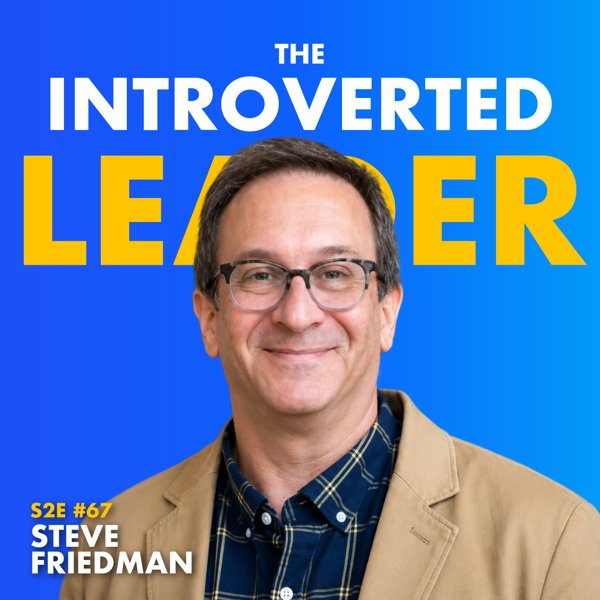
Steve Friedman is the author of *The Corporate Introvert* and founder of beyondintroversion.com. Raised surrounded by extroverts, he was so adept at mirroring extroverted behavior that he was mistyped as an extrovert on his Myers-Briggs at journalism camp — a moment that captures both his adaptive skill and the cost of losing yourself to fit in. His work focuses on helping introverted professionals advance in corporate environments without abandoning their identity.
I was so good at performing extroversion that the Myers-Briggs couldn't find me. And that was the problem — I couldn't find me either.
The corporate introvert isn't someone who hates people. It's someone who has been told, in a hundred small ways, that who they are isn't enough.
Key Stories
- Mistyped as extrovert at journalism camp: The defining origin story — Steve had grown so skilled at performing extroversion that even a personality assessment couldn’t see through it. The realization was disorienting: if the test can’t find me, can I find myself?
- Surrounded by extroverts growing up: Being the quiet one in a family or peer group that rewards noise is a formative introvert experience — Steve’s specific context gives it texture and explains why he became so adaptive.
- beyondintroversion.com and The Corporate Introvert: His decision to build a platform and write a book specifically for corporate introverts signals that he identified a gap — the general introvert space existed, but no one was speaking directly to the white-collar professional navigating advancement.
Techniques & Frameworks
- Identity-anchored strategy: Know which behaviors are authentic expressions of your introvert strengths vs. which are performances that cost you energy — and build your advancement strategy around the former.
- Beyond introversion framing: The name of his platform is intentional — not about fixing introversion, but moving beyond the limitations of the label to build something larger.
- Corporate introvert playbook: Practical tactics for navigating meetings, performance reviews, networking events, and promotion conversations as an introvert — without shapeshifting.
Full transcript
Have you ever come home from work and just crashed? Like you made it through the day, you were on in all the meetings, you had the hallway conversations, you showed up at lunch for your peers, but by mid-afternoon, you really started to flag. By the time you walk in the door, you got nothing left for anyone. That’s introvert burnout. And my guest today spent decades living it before he figured out how to stop masking and start leading as his true self. Welcome to The Introverted Leader. It’s a podcast helping introverted leaders embrace your underrated quiet strengths so you can get promoted and start earning what you deserve. I’m Greg Weinger. I have over 25 years of leadership experience and yes, I am an introvert. Steve Friedman is author of The Corporate Introvert and he’s built a five phase framework, starting with unaware all the way to flourishing. And this maps the journey from performing extraversion all the way to truly succeeding on your own terms. Let’s get into it. All right, Steve, welcome to the show. Great to have you here. Thank you, Greg. Looking forward to it. Excited to be with you today. You’ve done a tremendous job of putting information out there about introverts and helping people understand it, especially in the corporate world. So thank you for the work you’ve been doing. My pleasure. Well, what’s an all pleasurable. We’ll talk a little bit about the story, but thank you. I’m excited to share that with you. Excellent. So maybe we could start at the beginning. There weren’t people talking about this and there weren’t examples of introverted leaders that people were pointing to. Very true. Yeah. Yeah, I’m working in corporate America and we did Myers Briggs just for kind of a team building thing. And they had some facilitators come in and I was definitely on the introvert scale. And I looked at the definitions and everything. And I said, yeah, that feels a lot more like me. The problem and I think a lot of people may run into this over their lifetime as you take a test. And for me, they gave us the results. And then we moved on. And it felt like the extroverts were over on this side of the room. Yeah. And they’re chatting and they’re talking about feedback and the introverts were on the other side of the room. And they didn’t talk about what truly is introversion and what can you do with it? And what are the strengths and how can you not just cope with it, which sounds so depressing, but how can you leverage that? And why does the company want introverts around the table as much as extroverts? There was no conversation of that. So even though the definition and where I sat on that spectrum on that day felt more accurate. It left me very confused about whether I had strengths or not, whether the company that I worked for was supportive and found value or not. And that stuck with me. That was I was in my mid 20s. And that probably stuck with me for another 10 or 15 years. Yeah. Yeah. My experience was that I was even, I was like, this is bad. I was like, this is not good. This means I’m not going to be successful. This means I’m not going to be able to be a leader, which I want it to be. And yeah, when we’re giving these tests, we’re not giving people helpful information about what do you do with this information? And that, yeah, it’s not a sentence. Right. Yeah. Exactly. And I think whether consciously or unconsciously, I think I’d probably around that time recognize that I could look around me at people that I thought were successful. Certainly they were more, they appeared to be leaders in meeting rooms and things like that. And I thought those all must be extroverts. And so if I’m going to be successful, and I was a pretty ambitious young guy, and then I need to be like them. And so I felt like for most of my career, I put on a mask in the morning, I went in and I chatted in the coffee room and I tried to get my voice out there and talk more. And I think I pulled it off pretty well. But I was miserable. And I came home and for years, I just crashed on the couch when I came home. And I think my family probably thought I was lazy, but I was just so exhausted from having to act all day. And I think that there’s another toll that takes that we all take at least subconsciously is that when we’re acting all day, we’re thinking, I think we’re thinking, well, I’m not good enough as I am. So I have to pretend to be somebody else. And when you do that day after day, and you feel like my ability to support my family and achieve the personal goals that I have are dependent upon me being somebody else, it was really destructive. And it took it was pretty painful until a little bit past the middle of my career, I would say. So as you developed your thinking about this, you kind of outlined five different phases of this journey. Could you walk us through that? Sure. As I was learning more about myself and writing a couple of books about introversion and introversion in the corporate field, well after I kind of had my transformation in the middle of my career, I realized that I had already I was going through phases, I was not through these phases. I found a lot of other people could relate to that. So for me, I’ve I recognize that the first phase was just unaware. So as we talked about, for most introverts, when you’re a kid or a teenager, and sometimes into adulthood, you’re not really aware that you’re an introvert, you’re not aware of the term or anything, but you might feel that you’re different. Then the next phase that really came along, but it took me a while, some people can be very quick, but it was uninformed. So I think for my parents were great, but they just didn’t understand. And back in the day, there wasn’t a lot of conversation or education around it. And so it took me a long time. I think they’re even back then, and certainly today, there may be parents that, oh, yeah, I get it. I see my kid is likes different things, and I’m going to be very supportive. And so they can help their child move through that unaware phase pretty quickly. But it took me a while and I moved into an uninformed stage. So as we talked about, took the Myers Briggs says I’m an introvert, but I really wasn’t informed about what that meant. And as I said, I stayed in that phase for probably 15 years or so. And that was really frustrating because as uninformed, the negativity just bleached into my being. Eventually, a lot of introverts, but not everybody and it can happen at various times can be a teenager or it can be a senior citizen or may never happen. But I got to the third phase of enlightenment. And that is learning more about what introversion truly is, what my strengths are, the value that I bring to the table that I don’t need to wear a mask. That’s a pretty giant leap from uninformed to enlightened. But for me, it happened in the middle of my career. I had a really difficult spot. My mechanisms for coping with all this pressure were not healthy at all. And so it was really very frustrating for me until so I saw therapists which helped me through some things. I read Susan Cain’s book on introversion quiet, which came out. And it was really the first book that explained introversion in a way that I could understand and that I probably the first book I read covered a cover on introversion and really helped for me to recognize the positive aspects. So I was in my 40s when I kind of hit this enlightened period. After that was what I call the fourth phase of contentment. So I learned a lot in enlightenment, I got more comfortable with who I was, I became more content and confident in what I was doing and who I was and what I could bring to the table. In the fifth phase, I call flourishing. So that’s when we are authentic, we are who we are, we see the strengths, we’re very outgoing about that, we share it, we don’t hesitate to be proud that I’m an introvert. And I have all these strengths and talents that I can bring to the table. And that’s, I don’t, I think it would be really hard to jump from say, unaware to flourishing. I think we have to go through these phases, we have to learn about ourselves, we have to develop new skills. But if we can get to contentment and flourishing, then we’ve reached at the top of that Maslow’s hierarchy where we understand who we are, we have self actualization and we’re much more calm inside. Yeah, I love that it really resonates with me these various stages that I’ve been on. I was stuck in the unaware or willfully unaware. I don’t know if that’s a subcategory you have, but I was aware but in denial. But then because I didn’t have access to these resources, you mentioned Susan Kane and it’s, it had been around a while before I got to it. So it wasn’t one of the lucky folks that came upon it immediately. Surprising how many people that I interview for the podcast site, Susan Kane’s work as a watershed moment for them. Definitely agree. She was really the first, I think, that came out and explained it in a way people could understand and appreciate. You know, until we can understand it properly and embrace it and then learn from it, that we’re stuck in those first couple of phases and we learn from people or therapy or books or podcasts or whatever it might be. And it can, it can really open up doors for ourselves to grow. But until then, I, I know I found it really difficult and, and I coped really badly. I ate a lot. I drank a lot. I found in the business I was in that for me to grow and pursue my aspirations, that I had to move from more of a logistical, analytical role into a more commercial role, which meant more socializing and more time with people that I really didn’t know. But that was a career path. And if I didn’t choose that path, I would be stuck and I wouldn’t have achieved my goals. And so I’m not sure it was the best path for me, but it was a path I went on well before I reached enlightenment. And it just made me even more apprehensive about going to work. And the way I solved that for myself was I picked up these behaviors that were not only unhealthy, but in many cases pretty dangerous for me. I traveled a lot and drank in strange cities at strange times in order to try and cope with that. And finally, I was on a trip. I was actually in Hiroshima touring around. And after I finished the tour, I sat on a park bench and I used to, I still journal a lot. And I was just reflecting on how miserable my life was. And I had achieved a lot of my business goals and career goals. I was miserable. And I realized at that moment, something had to change. Either I needed to leave the business and go find something completely different to do, or I needed to figure out how I could do this my way. And I wasn’t really sure what I was going to do, but I knew I had to do something like that. And as fate would have it, I came back to, I was living in London at the time, came back to London after that trip. And I sat down with my manager to report out on how the trip went and so forth. And he took a pause after I had started, he said, let me talk to you about something else. He said, while you were gone, I was talking to one of the other managers and we’ve decided to combine your two groups, because we think that’ll be more effective and efficient. And your team will now report to John and will try and help you find another role. And I was not a happy camper, to say the least. But in retrospect, I think this guy did me one of the biggest life favors that I could have asked for. Because it might have taken me a while to make a significant career change. It’s hard to do when you feel like you’re making good money, supporting the family. It’s maybe miserable, but it is what it is. And it’s successful on the surface anyway. But he kind of made the decision for me. And I ended up finding another job came back to the States. And I took that opportunity to find a job that was much more suitable. It was commercial. But at the same time, I also was seeing a therapist. And I really figured out that whatever job I take, I need to make sure that I’m doing it my way. And so for about the last almost half, third to half of my career, I just decided I’m going to I’m going to lead my teams in an authentic way. And if my managers or my team don’t like it, then they’ll just make that decision for me. But I can’t continue to wear this mask. And I found that the last portion of my career was so gratifying, I realized that a lot of other people that I worked with worked for were introverts like I was, but they were kind of closet introverts, I would say, like I was for quite a long time. And that my approach was pretty refreshing and thoughtful. And I think some of the talents that many introverts have were very welcome. And but that whole process was really scary. But and I’ve talked to a lot of people that that are much older than I was that had never reached that point. So I was actually thankful for my old manager that I cursed a lot. That’s amazing how those things become gifts. Yeah, right. Yeah. And in terms of moving forward through these phases, sounds like you sought help. I followed a similar path I needed to get extra help at a certain point where things really weren’t working for me. I was extending myself beyond my capacity for being in crowded rooms full of extroverted executives. Like I needed to figure out some coping skills for myself, which I did. But what else what other suggestions do you have for people to help move through these phases? What I realized was that especially I think for introverts, things like meetings and leadership and networking were just naturally harder because it seemed like you need to be of a big voice in the room and that sort of stuff. And so even though I changed my approach, it took a lot long time to learn. Okay, I want to be more authentic. I need to be more authentic. But what does that really mean? And how do I approach meetings as an example differently or networking differently? I worked in a big company. And so every three years or so, you’re looking for another role. And so you’re always networking. And that was not a comfort zone for me. And I think it’s trying different things and learning what works for me and what works for me may not work for other people. But I found that for networking, for example, I really, I call it in my book networking intimacy, because I realized that I’m more comfortable to network. And I enjoy talking with other people. But I enjoy doing it in smaller places and familiar faces for shorter durations and in small groups. And so if I’m in a big room of 100 people, especially if I don’t know them, not very comfortable and probably not going to achieve whatever objectives I might have for networking. But if I have one on one or two on two sort of coffees, I’m pretty comfortable with that. Especially if I prepare, which is one of my introvert strengths, then I’m pretty comfortable to have that conversation. So I really tried to create more of those opportunities. So I would have a lot of one on one meetings with people, coworkers, team members on my team. So we had our team meetings, but I found that I needed to really develop a bit of a rapport with these people and doing it in not even large groups, but medium sized groups was harder for me. So I created those I went to a lot of work conferences, and initially I found those to be horrendous. My wife recalls many calls where I would call her from Miami or Lima, Peru, and I was like, I am completely miserable. Because I felt like my role was to go into these big rooms and talk for hours with people I didn’t know. And what I realized was my objective was to just create some positive relationships that I could help build business off of when I got back. And so I set up meetings. And so all day I would have meetings one on one sort of meetings with different people. And I think I accomplished a lot more than I would have in a room of 100 and develop some of those relationships. And so I was achieving my objective without having to walk in the room of 100. Now at the end of the day, I might choose to go walk into the room and see who I recognized. But I always gave myself permission that I’m going to go in, I’m going to check it out, I’m going to make one loop around and maybe I’ll stay for an hour, or maybe in 20 minutes, I’m going to leave and feel like I’ve accomplished whatever objectives I had earlier in the week or earlier in the day. But it’s just finding those things that really work for us that helps move us along from that enlightenment to more of a contentment of yeah, I’m achieving that goal that I had that my manager had he sent me to this conference to meet people. That’s what I wanted to do for my job as well. But there’s different ways to approach that. And we have to find what’s comfortable for us. But we don’t have to do what every what it seems like everybody else is doing and maybe being miserable at as well. Yeah, yeah. So how can you do it on your terms that took the play to your strengths, which is clearly small groups, one on one relationships is very much the introvert sweet spot there. Yeah, that’s great. So you had to arrange meetings in advance. You’re like, oh, this person, I had to meet them set up time while we were at the conference. Yeah, it definitely helped a lot. Yeah. And you have a networking framework. Could you describe that a four part framework? Yeah. So really, I so I thought about this a lot, especially when I decided to after my day of meetings, and I decided to go into that cocktail and make a trip around, I thought, why is that so difficult for me? And I think it’s that maybe some of it might be practice, but a lot of it is, I just get very anxious and apprehensive when I come up and approach somebody, especially somebody I don’t know. And so one on one or in a small group, I can have a good conversation and think it’s productive and we can develop a rapport. But in these bigger groups, it’s really hard to think about, okay, how am I going to jump into the middle of that conversation? What am I going to say that doesn’t sound stupid? What am I going to ask? I don’t want to just stand there and listen while everybody else talks. How do I exit the meeting in a graceful sort of way or the conversation graceful sort of way? And so I thought about it a lot. And I thought, eventually I practiced it and said, I’m going to come in with four things, my list of four, and just things that I practice in my head about things I would want to either ask or talk about. And usually it’s one personal thing, whether it’s vacation or something like that or hobbies and asking them about that. It might be a current event. So pick something that’s not too controversial, but it can be interesting and maybe not down the common path. I would ask about like a work topic. We’re there to talk about work. So we have some common threads. So I would have four things and I actually got to the point where I would write them down on a card and I would put them in my pocket because I knew that sometimes as much as I thought I was prepared, I’d come in and the environment would just overwhelm me. So it happened in my pocket. And so if I was getting ready to go up to a group and I was feeling really anxious, I just pulled out and I would look at it and refresh my memory and be like, okay, now and I go in there and I ask a few questions and it helped me to feel like I’m prepared. And usually once I got going and asked a couple of questions and brought up some interesting things, I would find out whether this was an interesting group of people that I felt comfortable and was interested to converse with and I might be there for quite a while or that I wasn’t. And part of that was from the realization that it takes two to have a conversation. So the whole burden is not on myself. It goes both ways. Not everybody gets along with each other. And so I would go in and make those efforts. And if I just didn’t feel like the chemistry was there, that’s fine. And I gave myself the grace to go ahead and move on another conversation. When I went into these big cocktail hours once or twice, and I felt like, man, I’m completely exhausted. I’d leave because I’ve already had all these meetings. But oftentimes I would get to the point where I would feel comfortable enough to continue. And so again, I think it’s just whatever works for us. But it took me a while because early in my career, as we’ve discussed, I really felt like I was intimidated and I needed to do what other people were doing. And later in my career, as I learned about myself and introversion, I realized that I took a lot of pride in doing things that were very different from how others seem to approach situations. And in retrospect, it made me realize and appreciate that I’ve come a long way, learned a lot, couldn’t have done this when I was in my twenties or thirties, and really set me up for success in the latter part of my career as well. I want to shift gears a little bit to meetings because you mentioned meetings, even midsize groups can start to feel a challenge. That’s something I feel as well. Certainly large groups, public speaking is something separate to me. But meetings, what’s the framework you developed for or how do you think about meetings? So I really think it’s important to lean on our strengths. So everybody may have different strengths, but I found that planning and preparing and listening are things that really helped me in many contexts, including meetings. So I have this model in the book called Ready, Set, Go, and Next. All too often, I might be called into a meeting, and I’m not really prepared. They haven’t shared an agenda. They haven’t shared any pre-reads. So I’m really not sure exactly what we’re talking about and why I’m there. And perhaps I really don’t even need to be there. But I’m on the list. And those are not comfortable situations for me or most introverts, because we’re being asked then to think off the cuff about whatever the topic is. And so I thought, whether I’m a participant or a meeting leader, it’s important for me to encourage your process. So even if I’m a participant, I’ll ask in advance, what’s the agenda or what are you planning to talk about? Do you have any pre-read on these topics? What specifically would you like me to contribute to the meeting? And if the answer is, I’m not really sure, I just want you to be there or be informed, then I might challenge my attendance completely. And I thought about that also as a meeting leader of, I don’t need to have 10 people. I don’t know whether it’s an ego thing, or you don’t want to leave anybody out. So you invite everybody. But I really thought about the importance of making sure everybody in that room has a reason that if I’m leading a meeting, I’m sending out that agenda and that pre-read. So the Ready is just thinking about the meeting, if I’m scheduling it, that I’m scheduling it on the right time and place. Ideally for me, I like to be in places that are familiar. So having it in a room that I’ve been in, or I can go into a couple of days before and I walk around and just to get the lay of the land in the room, strangely makes me feel more comfortable. And so just doing a little bit of that prep, the set is really, okay, we’re going to have the meeting, I’ve sent out the pre-read or I’ve gotten the pre-read, but really to think a little bit more about how is this meeting going to go. Now that I know what the agenda and the pre-read is, what do I think I can contribute? And I’ll jot down notes next to the pre-read of questions I have or things that I think are important for me to share. I’ve learned over time, I don’t need to be the one that’s talking more than everybody else, and I’m not going to be that one. But I think that if I listen and I prepare, I might be the one that provides some really poignant aspects to the conversation that other people have glossed over because they’re just trying to get their voice in the room. So I would jot some of that stuff down to be ready. I think about what are the other personalities? What is Bill likely to bring into that room? And are there personalities that we might conflict on some things? And in some cases, in this set phase, I would, especially if I’m leading a meeting where I think it might be contentious or we have some challenges in getting to whatever the conclusion is supposed to be, that I would try and get pre-alignment. Let me meet one-on-one with a couple of these people and talk through some things so that we’re walking in really pre-aligned. I think most introverts are not really anxious to have big contentious meetings. I don’t know if anybody is, but maybe some extroverts would enjoy that sort of scenario. But that wasn’t for me. So I tried to calm that down in that set phase. The meeting itself, the third phase of go is really, I’m in the meeting. So what am I going to do? I’m just following through on the things I planned on. I’ve got questions. I’ve got things I want to talk about. I’m going to listen a lot and try and piece things together that might lead me to certain conclusions or questions or ideas. I always felt like in the early phases of my career, I needed to come with all the answers. But I found later that having a lot of the questions was even more valuable. Things that a lot of people, whether they don’t want to admit that they don’t know or they think that they want to be right, they don’t ask the questions. So having the questions, I think, can really spark a lot of conversation. People like to talk. So whether it’s in a meeting or a social situation to ask questions about for other people, I think they appreciate that. But also it just brings more information into the room. I also found if I was in a room with a number of people and I was a participant, I would try and go there early. So I would not be walking into a crowd of 20, let’s say, but I’d come in where there were already a couple of people there. So I get to, I would chit chat with them. That was a lot more comfortable than coming into a room of 20. And just being able to calm myself down a little bit before the meeting really started, but I’m in the environment really helped. And if we were in row seating, I would tend to sit in one of the first three rows, because if I sat toward the back, which was my normal inclination was I’m going to sit in the back in the corner where people don’t see me. But if I sat in the back, I was kind of left out of the conversation completely. And I could also, it was just a trick of the mind, I think, but I could see all the people that were in the room. Oh, there’s 20 people here and a lot of people I don’t know, and they’re all chatting up there. And I was overwhelmed by the number of people. If I sat on the third row, I didn’t see all the people behind me. So I didn’t really worry about them. It seemed like it was a small group to me. And I also found the other trick I used was sometime in the first couple of minutes, I needed to say something, even if it was just an introduction or a question, but if I needed to get into the flow of it. And if I did that early, I was usually pretty good at following the questions or the plan that I had. If I didn’t do it early, as every minute went by, I found it harder and harder to join the conversation at all. So those few things really helped for me. And then the final step was next. So after the meeting, I, and it’s perhaps the introvert in me, but I felt it was really important to follow up too many meetings, I saw where everybody’s chatting and we come to some kind of conclusion and people have actions. And nobody follows up. And I felt just from a career perspective, if nothing else, and a being productive, that that I needed to make sure I knew what my actions were. And I needed to follow up on that. And people would appreciate that. And it would keep the flow going of whatever we were discussing or debating. And it really helped for me because I tended to be the one that would follow up sometimes to an extreme, oftentimes nag people even now that have you done this or that. And I know it’s, I know it’s disturbing, but it’s what I need because I think that we just spent an hour or whatever in a meeting. And if nobody’s going to do what we talked about, why were we in the meeting in the first place? Yeah. Steve, there’s so much gold in there. I think you have pretty much every one of my personal tricks laid out in there. Awesome. Yeah, yeah, just like getting in early, getting involved in the conversation early, building reports gives you that feeling of connection and calms your nervous system down. That’s really super effective. Everything you mentioned can help to make you feel a bit ready to show your best self. You’re totally prepared. You’re thoughtful. You’re asking questions. You’ve made yourself comfortable as you possibly can. And you’re having an impact afterward, which is also playing to your strengths. That’s a great recipe for being super effective as an introvert as a leader. Yeah, I think so. Yeah. What else in terms of leadership, if you could describe, what is that introverted leader looking like? How are they showing up? It can be different. I don’t like to say, well, introverts are this and extroverts are that, because we are all on this spectrum and we have different strengths and some of them can be surprising. But as I mentioned earlier, we did a survey and we’ve had thousands of people take the survey and answer some questions that helped to identify what were their strengths. And so as I mentioned a number of times, I think the few that really percolated to the top were planning, listening and just thoughtfulness. So I think that probably doesn’t surprise too many people. It’s really thinking about things, preparing, asking good questions, that sort of stuff. And so I think understanding those or whichever ones are our strengths, identifying them as one step, but really understanding how can I grow those strengths? So many times in my career in corporate America, we seem to spend our semi-angel reviews talking about the things I needed to shore up. Well, that’s fine. I understand there’s certain requirements or expectations, but let’s talk more about these are your strengths. How can we grow those strengths? How can I learn more about how to be the best planner I can be? And then how can I really share those strengths? How can I lend that planning skill or listening skill to the meetings or to the team I’m leading or some other aspect? Because those strengths, when extroverts take a similar quiz, those strengths don’t usually end up at the top. For some it can, but I think those meetings and teams around a boardroom or even around a dinner table and a social group, they need everybody to contribute. And they need people that are the planners and the listeners as much as they need the people that are the brainstormers and the commenters and things like that. And so I really think it’s important for us to understand our strengths. Some of the surprising things I found when we did the quiz was some of the things that were actually quite common was resiliency. So not being overly emotional, but just taking the scene in and figuring things out. So oftentimes in our head, so I think a lot of extroverts will think off the cuff. They say words that we would think inside our head before we speak. And so that can be pretty interesting. It can get the conversation going. But I think that boardrooms and meeting rooms, they need to create an atmosphere where everybody feels comfortable to speak. Because if it’s just the brainstormers that are spouting off ideas that haven’t really been completely thought through, and then those are accepted, they’re missing a lot of perspective of, hey, let’s just step back and think about the impact of that or other options instead of just taking the first one. And for most companies, you’re eventually representing or trying to connect with customers. A customer base is probably very similar to society, roughly half introvert, half extrovert. But if all your products or ideas or messages and services are based on an extrovert’s thinking, a lot of people are going to feel very disjointed with your message. And so I think that businesses need to really approach that. And a lot of businesses I think these days are recognizing the diversity around the table and how can we make that comfortable. I tried to as a leader, really tried to get people involved, not by necessarily putting them on the spot hard. But if you have six people and we talk about a topic and say, okay, what do y’all think? Probably the extroverts are the first ones to jump in and give their opinion or challenge. And that’s fine. But the introverts may feel like not really comfortable or a lot’s been said. And this guy’s already stood up and waved his hand and all this sort of stuff. But so for the meeting leader, they need to ask, Steve, do you have anything you’d like to contribute? And if it’s no, that’s fine. But giving everybody that opportunity, we also did a lot of meetings where we use sticky notes. So instead of feeling like you have to jump into the mix, okay, everybody, we’re going to take two minutes and think about this issue and jot down on these sticky notes, some items, concerns, ideas, whatever, and then we’ll put them up on the board and we’ll talk through them. And I think for me, and for I think many introverts, that was a safe place, because I think for leaders, if nothing else, one of the important things is to get everybody involved and eventually come to the best conclusions, which are rarely going to be just from extroverts or just from introverts. So it took practice, but I think it makes a big difference. Yeah, awesome. Steve, this has been so fantastic. Really covered a lot of great ground here. I’m really excited to share this with my audience. If people want to learn more about you and your work and your books, where should they go? They can go to my website, which is beyondintroversion.com. I have a couple of books in search of courage, which is my memoir and kind of shares my journey and what I went through. I really felt like I needed to write, it was probably more for myself than anybody else, because I found it very therapeutic. But I also recognize that a lot of people are challenged with those sort of things. And it’s important, everybody knows they’re not alone. There are other people have gone through these challenges and found their way through. And then my other book is a corporate introvert. And I just learned a lot in the latter part of my career. And especially after I retired, I felt like I wanted to share that not only in a book, but it gave me the opportunity to go talk to people in corporate environments. But some of my favorite conversations were going to colleges, students that were getting ready to go out into the work world that were trying to figure out this big transition and maybe trying to figure out who they are. And if there’s an opportunity for people that are in their teens or 20s to figure it out instead of waiting till their 40s or 50s, then they’re just way ahead of the curve and probably going to have a much happier, more confident period. So those books are available on Amazon and on my website beyond introversion.com. And I welcome everybody to check it out and send me notes if you have any questions, lots of blogs there as well. Thanks so much for sharing your wisdom and your experience and your journey with us here today. I’m glad to have you. Thank you, Greg. And thanks for everything you’re doing, sharing the word out there for other introverts and people around the quiet leadership and how they can really make a difference. Okay, let’s take a minute to recap what we heard from Steve today. Number one, the five phases from unaware to uninformed, to enlightened, content, and finally, flourishing. You can’t skip a step, but knowing the phase that you’re in right now is the key to moving forward. Number two, the ready set go next meeting framework. Prepare in advance, preline with stakeholders before you walk in. Get on the board early so you contribute and feel more comfortable and be in the flow and then follow up afterward. Each step here plays into your strengths as an introvert and it works. I can vouch for that. And number three, networking intimacy. You don’t have to walk into a room full of 100 complete strangers, set up one-on-ones in advance. Show up early, carry four questions in your pocket if you need to, and especially, give yourself that permission to leave when you’re done. Work the environment on your own terms and you’ll build better relationships for it. If this content resonated with you, as it did with me, the best thing you can do now is to hit subscribe wherever you listen to podcasts. Let’s keep this conversation going. I’m Greg Weinger. Keep leading with quiet confidence and I’ll see you next time.