The Quiet Teacher's Edge — How Introverted Educators Lead with Strength, Not Strain
Get Promoted Without Becoming Someone Else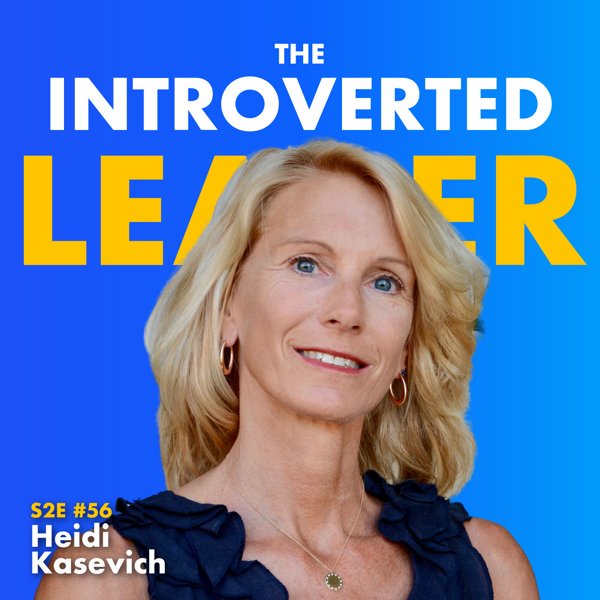
Dr. Heidi Kasevich is an education leadership coach and former Director at Susan Cain's Quiet Revolution, with 25 years of experience in school leadership. Her central insight: 41% of new teachers leave within five years — and overstimulation is a primary driver. She developed the Strength-Stretch-Restore framework to help introverted educators (and leaders generally) build sustainable careers without abandoning who they are. This is a deeply practical episode for anyone navigating a high-contact, high-stimulation work environment.
Forty-one percent of teachers leave within five years — and we're not asking why the environment might be unsustainable for many of them.
Strength, stretch, restore. That's the cycle. If you skip restore, you don't get to strength for long.
The walls are screaming at me.
Talkative people are considered to be actually smarter, better looking and more desirable as friends.
My IQ is not higher than anyone else's. I just have the temperament to control the urges that keep me from making bad decisions.
Key Stories
- Susan Cain’s Quiet Revolution: Heidi served as Director at Quiet Revolution, giving her a front-row seat to the research and real-world application of introvert strengths in high-stakes environments — particularly education.
- 41% of teachers leave in 5 years: The statistic is central to her work — she frames it not as a talent or commitment problem, but as an energy management problem. The profession is designed around extrovert-default norms.
- Strength-Stretch-Restore cycle: Heidi’s personal framework for navigating leadership: lead from your strengths, stretch deliberately into growth edges, then restore so you can return at full capacity — not as a luxury but as a performance strategy.
Techniques & Frameworks
- Strength-Stretch-Restore: Three-phase energy management cycle for introverted leaders navigating high-demand environments.
- Introvert-informed school leadership: Practical ways school leaders can design environments that retain introverted teachers — structured reflection time, reduced hallway stimulation, quiet planning periods.
- Reframing “quiet”: In education, quietness is often misread as disengagement. Heidi helps leaders and teachers articulate the value of deep listening and careful thinking in learning environments.
- Brain writing vs. brainstorming: Start group sessions with a few minutes of silent individual writing before sharing. Research (Adam Grant) shows brain writing increases group productivity by 50% and reduces stress by 74% compared to open brainstorming. Ideas are generated anonymously, preventing anchoring by higher-status voices.
- Reflective pause: A deliberate pause before moving to the next agenda item — “Does anyone have a thought they haven’t shared yet?” Creates space for quieter voices and separates idea generation from group pressure.
- Introverted decision-making style: Introverts weigh options and stay cautious — a different style, not a deficit. Heidi uses Warren Buffett as a role model: “My IQ is not higher than anyone else’s. I just have the temperament to control the urges that keep me from making bad decisions.”
Full transcript
Have you ever thought about what it actually costs an introvert to show up every day, fully, in a place that was never designed for them? Think about teachers. Six hours a day in a classroom, back-to-back meetings, lunch with students, parent emails at 10 p.m., for a lot of introverted educators and leaders in general. That’s not just exhausting. That’s a slow drain on everything that makes you good at what you do. Welcome to The Introverted Leader. It’s a podcast helping introverted leaders embrace your underrated quiet strengths so you can get promoted and start earning what you deserve. I’m Greg Weingart. I have over 25 years of leadership experience, and yes, I am an introvert. My guest today is Heidi Kasovich. She’s a leadership educator, executive coach, and an author who’s spent over 25 years working in and with schools. She was also director of education for a hero of mine, Susan Kane, at her Quiet Revolution organization. There, Heidi built a national professional development program. It was featured in NPR, The Huffington Post, Harvard Magazine, among others. She knows this world from the inside out. Here’s why this conversation matters for you. The dynamics Heidi describes of overstimulation, the bias toward louder voices, the way meetings and cultures are just inherently designed for extroverts. That’s not just a school problem. That’s our problem, too. In this episode, you’ll learn, number one, how to recognize and lead from your genuine introvert strengths and stop performing extroversion. Number two, how to use Heidi’s strength, stretch, and restore framework to grow beyond your comfort zone. And number three, one practical step you can take today to protect your energy and show up as your best self. All right, let’s get into it. So, Heidi, glad to have you on the show today. Welcome. Thank you, Greg. I am thrilled to be here. I really enjoyed this intro podcast. Thank you so much. Could you share for the audience, are you introvert or extrovert? Oh boy, yes. I’m very high on the introverted scale. I’d love to give you a couple of sort of negative and positive experiences from my past. The more negative are like the stories of family lore. Like, Heidi was such a highly reactive baby that we couldn’t take her anywhere. You know, I screamed or I thrust my legs or I made a lot of noise in environments that were overstimulating. And that actually became part of my psyche. And then fast forward to middle and high school, when you’re meant to, you know, speak up and speak out loudly. I was often told, Heidi, just come out of your shell. Heidi, you’re so shy. And as Susan Cain mentions in quiet, talkative people are considered to be actually smarter, better looking, and more desirable as friends. And this definitely impacted me. And I always want to put a spotlight on the positive too. So as an educator, we think about how we can reach any child, right, on a one-on-one basis, how we can make that impact. I had a seven grade science teacher who signed my green autograph book with the following words. Okay, you’ve got a lot to give, like reach out. And I’ll never forget that this is the impact that educators can have. I made a great choice to go to Harvard for college. It was small. It was completely introvert friendly. I was able to focus in on my twin passions of French and gymnastics. And it wasn’t at all nerdy or geeky to spend a lot of time in the library, have a few friends. And I believe the Quaker values of consensus and silence in that culture really helped me to thrive and set the basis for what I could become as an educator. That’s great that you found a quiet refuge that was really supportive. It was from there that I think I really learned that my introversion wasn’t a barrier but the strength that could help me as a leadership educator. I walk into the cost trail and it still happens today. I teach with high energy and enthusiasm and no one has any idea that I fall on the very introverted side of the introvert-extrovert spectrum. When I was first serving as a department chair at an independent school in New York City. And I remember that what I was doing was kind of creating this subtly, this energy at most, the faculty, whereby they felt that they could share. And I didn’t have a name for it at the time because honestly I didn’t really have a name for my introversion until Susan Keynesville. Quiet came out in 2012. But I can see in retrospect that what I was doing was creating a safe environment by listening so people could feel empowered. I was not taking the spotlight but that’s where I was doing and that’s how I continued to lead in that school and moving forward. So I like to call that kind of setting the stage to actualize the potential of others which is how I would define leadership. I love that. Was there ever a barrier to that? Like a hump you had to get over or was there initial nervousness or were you just drawn and passionate about being up in front and sharing this knowledge? That’s a great question. I think for me it’s a combination. So when I was very young my father installed a large green chalkboard in the basement and I used to go downstairs. This is my imaginary play and I used to teach two imaginary classes. My father is an educator himself and so I had that role model but I was drawn to it. It was just it seemed natural into all this imaginary practice. I was honestly terrified. I used to prepare as all good interests do, prepare and plan and I had the energy at that time to stay up literally till about 2 a.m. or 3 a.m. planning my French classes so that they were engaging and interesting and of course I had the unfortunate job of teaching at the 8 a.m. College. I have a class as a very young person myself. They do remember at the end of that year this particular class threw a birthday party for me in the month of April completely by surprise of course. I don’t forget walking in and I just got this reception that was so positive when I had been questioning how I’ve been teaching but there was a great moment of connection there. Yeah so it sounds like there was a confidence building experience. Really great themes here. How do you deal as an introvert with these challenging situations, preparation, it’s our natural strength, making connections with people, creating space, making people feel valued, sort of stepping back, reflecting the spotlight back on other folks, leaning into your introvert strengths. Yeah for sure. I know this is one of the greatest strengths of introverted leaders and they do what I think actually can come quite naturally to introverted leaders. They’re open to feedback. They ask questions. They’re interested in diverse perspectives and they do want to do what I said earlier, actualize the potential of others. The mission and the mission purpose focused. I can tell a little story about a middle school principal that I know well who was introverted and who was practicing her strength of humility. When she came in her school district had low test scores. Instead of having a top heavy approach saying okay faculty, this is what we need, she had a very different mentality and mindset. It was more as though she said colleagues let’s solve this together and she was new and that was a great move and faculty together decided that they wanted to emphasize social-emotional learning so that faculty could connect more effectively and robustly with students and that’s what they focused on for the year. Not drills or getting higher grades and Greg, I think you know where I’m going with this. It worked. Yes it happened. It worked. Test scores for us. She says like quote lose if you go in King you can solve everything yourself you’re going to fail but if you go with the mentality of when I ask questions I’m going to ask for help and build psychological safety on my teams and you have a much better chance of succeeding. That’s a great story. I want to focus a little bit on what it’s like for teachers and educators in the classroom and particularly I think you said something like 70 percent of teachers are actually introverts and then you just contrast that with the open classroom chaotic environments. Huge numbers of students. Like what do you see out there? What is it like for educators today? Well I can start with a statistic. 41 percent of teachers believe the profession within five years of entering it and that’s associated with an emphasis on constant social interaction. So in a typical K through 12 school what’s screened out is someone like me who’s an educator, educational leader and a consultant at this point for schools is overstimulation. So you have in a typical school day you’ve got high noise levels, got open office teacher lounges, very little restorative quiet, the expectation to plan, to socialize in an open environment and have other duties like you have to have lunch with your students and socialize. Then there are of course meetings after school that depends on each school environment for sure but there are meetings now there are even more expectations in the evenings for communication with colleagues and parents and even students via email. So in a way your school day just keeps getting longer and longer and there’s the quotation I really want to share. Greg we might know it. It comes from Florence Nightingale and it involves the word noise. So back in 1859 Florence Nightingale said unnecessary noise is the most cruel absence of care that can be inflicted on the sick or the well and noise you know comes from that Latin root actually meaning queasingness or pain and so that’s where I see and I’ve heard even you know students and faculty say when there’s so much going on and you know even the school like the physical school classroom environment there’s a lot of things on the walls and things are happening. I’ve heard faculty and students say the walls are screaming at me. So it’s a stimulation overload right that’s both sensory and social and of course it’s our introverts who need to who need to dial back and that sort of stimulation. Absolutely and so you’re really describing kind of a hellish environment for someone who is very introverted and I think this is similar to a lot of people who are in workplaces in general in a corporate work setting. You don’t necessarily have a lot of control over that environment so what do you advise your people who you work with or educators to do in those circumstances? Oh well there’s a lot. There’s a lot to be done and this is a key part of my work as a consultant with schools so we can work to create quite times within the calendar within the school day. You know how do you build in moments of and Greg this sounds so simple but even moments of passing time. I’ll be honest I used to work at a school where one class ended at nine and the next class started at nine. Schools have moved away from that model but even to add you know five or the luxury of sort of ten minutes of passing time for students can really help. I’ve worked with many schools I’m building in what they call the quiet ten you know which is again that sort of that ten minutes but this is for faculty members and indicating even if it’s in an open office situation that I am unavailable right now not because I’m unfriendly or not doing my job because I’m actually being a professional energy manager as an introvert I can show up you know in a much more productive way if I have you know the simple recharging time and I also work with schools who set up the corners of the faculty space that are quiet recharge spaces or even somehow manage to get one little empty room and that’s a place where faculty can go in there are no expectations for socializing you know it’s a calm kind of low light environment there might be music playing like music you can go in and meditate but it’s just it’s a it’s a place to recharge and restore in the midst of that what is going to probably always be a rather chaotic school day but you know I think it’s you know kind of getting that mindfulness around the needs of you know a third to a half of our faculty and as you mentioned by more faculty are more introverted and then our students as well yeah building in that quiet time for students I just recall my own experiences and k-12 and these are long really very very long days and like you said the walls screaming at you is a good description about like all the bright colors and you know the lights and all of that how do you come to work with specific schools or districts are they seeking this out or do they have problems that are presenting in different ways it’s a great question I would say I get contacted from a lot of parents parents steal as though their students are being overlooked in the school environment so whether they’re part of the school board or the parent council they want me to know that the school needs to become more introvert friendly when that that’s been kind of the kind of them the origin and then it kind of spreads right and then the word spreads you know to more upper level management oh we actually need to take this into account because we want our students to be in an optimal learning environment and so there are adjustments and tweaks that we need to make in terms of you know the way we approach you know collaboration quiet times quiet spaces and even our own meetings I’m thinking about faculty here I have witnessed throughout my career a bus far faculty meetings where a handful of voices even in the largest of faculties you know 150 faculty members it’s the same faculty members who speak up yeah and so it’s you know how do you how do you create an environment where you have you know oh you can hear other faculty voices particularly when when it comes to important decisions so you know that’s kind just another angle you know to the kind of work I do how do you create more inclusive meanings and I know that you’ve you’ve covered this in other episodes too I would say those tech beaks are fantastic and they’re important for schools too they have to say that when I assist in creating a more introvert friendly culture in a school I fundamentally believe that we need buy-in from faculty at large and so my preferred method is to build a task force and and work not in like a one-off but you know maybe over a year to shift culture around quiet which will bring in more more of a balance between you know solitude and group work collaboration and alone time and I have to say this is the model that I developed for quiet revolution when I worked for Susan Kane we had faculty members that were coming from different aspects of the hierarchy as well as teachers and I would say let’s face it all teachers are leaders they’re they’re leading students and one of my foundational tenets is that leadership is about action the influence you have on others and not necessarily your title or position so all educators can be involved in this quiet initiative in a school and then my work is very school specific in terms of how can we identify where the extrovert leadership ideal is taking root in our school in our admissions process or how are we writing our our comments for our students are we saying John is doing great work but he needs to speak up in class yeah are we relying on the extrovert idea in other words have to be charismatic fast talker quick decision maker loving the pony own is that one model of leadership that we are embracing even unwittingly and this is what’s so interesting about my work it’s it’s almost like healing off a layer of we call it plastic wrap you know around the culture so that you can see what’s really happening and then we can create a more inclusive one for our insurance it’s really important work because I think it starts even earlier than that in the home but but it’s such a formative time for students k-312 and these institutions are biased towards extroversion just all those things you just described the nature of how so much teaching happens you know teachers calling on students that whole environment is favoring extroverted kids you’re just going to have a tendency to call on the same kids there’s always the the kids who just really shrink from that and don’t want to participate for you say 50 of the population of kids yeah and I would say the more a teacher is honestly regardless of temperament the more a teacher is fatigued by the schedule the more likely they are to call on those first hands that go up right and those are going to be our extroverts we’re going to raise our hands for they’re getting a dopamine rush right that’s what the research shows biogenetically they’re they’re getting like bubbly buzz involving social attention and they’re they’re going to process out loud and I’ve seen it so many times and I’ll be honest Greg done it myself and I’m like oh yeah I’ll just I’ll just go with those but then you you have to catch yourself and you have to say okay hands down hands down they all take some time to say let’s all take a reflective pause and then research shows that for you know faculty member and for the students you have more complex ideas when we have that time to think again four introverts and extroverts alike and the more people who experience this they more people who are going to be better prepared when they move on to their careers and then the workplace yeah for sure I’m an advocate of the reflective pause in meetings and in classrooms in family discussions around the Thanksgiving table and I’m also an advocate for the brainwriting approach to creative collaboration so with brainwriting we start a group endeavor with a few moments of solitude solitude stimulates the default mode net network which will then help us to think divergently about a challenge we start with silence and then we share and so we step around idea generation in solitude from idea evaluation where we where we start talking everyone around the table is using post-it notes things can be shared anonymously and then before you start talking about ideas to evaluate them to figure out how you want to solve a challenge you’ve got everyone’s ideas not just those ideas that are presented first which also tend to anchor a conversation and those often in groups tend to come from those who are a hero in the hierarchy and the brainwriting session rather than a brainstorming session you have productivity goes up by 50% and stress goes down by 74% got it and we’re saying writing because everyone instead of just verbalizing everything then introverts are going to naturally shrink in that environment then force quiet everyone is sitting and writing out their ideas and yeah so I hadn’t heard the brainwriting term it’s a nice counterpoint to brainstorming absolutely this is an approach I use in coaching quiet leaders so if we focus on the introvert introvert see to understand that they’re not deficient that they come to the leadership table with many many strengths so I have them fill out what I call a personality preference indicator and that shows where you fall on the introvert extrovert spectrum when it comes to social recharging working communication and decision-making styles and so they see their preferences and then one of my mottos is let’s turn your preference into a strength and so we talk about the leadership strength of building one-on-one relationships and that is connected with the introvert preference of socializing in that one-on-one environment think about decision-making so the introvert tends to be more prudent weighing options before making decisions I say more because more than the extrovert tends to make decisions more quickly and that is one of the area I’m really focused on because often introverted clients believe that they are incapable of making decisions and so my work is to help them understand that they have a different decision-making style than extroverts that you’re going to weigh options you’re going to be actually cautious and then I often throw out Warren Buffett a famously prudent introverted investor he said my IQ to quote him loosely my IQ is not higher than anyone else’s I just have the temperament to control the urges that keep me from making bad decisions in investment so that’s the strength part yeah I like the framing too of the preferences there can be a lot of shame bound up in the way you are and expressing that as a preference it implies choice what do you tend to do what do you prefer to do or you’re most comfortable yeah perfect and now if we move on to so I have stretch as a as really I think a bit as a triad strength stretch restore because they all go together so I think we can feel at once we understand our more introverted or extroverted nature we can feel confant this is one of the things I worry about in the field that we’re in right we want introversion the label to set us free this message is brought to you by the capital one venture x card venture x offers the premium benefits you expect like a 300 annual capital one travel credit for less than you expect elevate your earn with unlimited double miles on every purchase bringing you one step closer to your next dream destination plus enjoy access to over 1000 airport lounges worldwide the capital one venture x card what’s in your wallet terms apply lounge access is subject to change see capital one dot com for details and I think understanding that that biogenetic nature is only a part of who we are and so here I turn to the brilliant war of Dr. Brian Little from Cambridge University who talks about our makeup as really tripartite so we have our biogenetic nature we have our sociogenetic nature and we have our ideogenetic nature so biogenetic is our preferences as introverts or extroverts that’s just obviously one facet of personality and then sociogenetic is how we act in environments because we we need to if you’re following your passion as an educator if you’re in the classroom or if you’re a division head running more meetings you’re you’re going to have to speak up all right so we talks about free traits that we have in addition to what we all know about introversion extroversion we have the ability to act out of character as he says in the service of our core personal projects and to elaborate on his work if you would say your core personal projects should be both meaningful and manageable and they can be small or large but we can stretch hence my term stretch and step outside of our comfort zones in the name of these core personal projects and this is how really the way we do it the the best if we have something we a goal we want to attain well i can give you a couple of example so an occupational goal for an educator maybe do you give a talk at a national conference actually this is how i stretched and how i eventually ended up founding my own company i just kept giving talks to comforts this networking getting to know people but that was not that that was stretching for me an interpersonal core personal project could be well then i’m gonna set a goal this week to have coffee with a member of a different department get to know someone else a an interpersonal goal could be okay i’m gonna try and manage my own self talk my negative self talk before and after parent teacher conferences special shout out to all the introverts in the audience we know we can ruminate so that could be with different kind of core personal projects and then when we’re stepping outside of our comfort zones thinking carefully about what those goals might be because we don’t want to stretch too far these if we stretch too far thinking about a rubber band though we can step there’s too much stress there’s too much anxiety and then the third part of this methodology is we need to plan time to restore to recharge particularly after a stretch i’ve heard you know gregal a lot of your interviewees talk about even what they’re going to do after this podcast interview i know i’m going to have to recharge like this is this is very social this is very on for me and as we discussed earlier in the educational realm there’s so many social events so then the question a key question is how am i going to restore how am i going to recharge and the two questions i really like to ask greg our wife gives you energy on the one hands and what saps your energy on the other hand so you can figure out is it do i need to i don’t know go out and play pick a ball do i need to take a walk with my dog do i need to watch netflix or maybe if you’re if you’re more extroverted you need to go out and go to a coffee shop and talk to somebody yeah we just want to add that the model is designed for introverts and extroverts to just think through that lens although i have in describing it to you really focused on the introverted leader that sounds like it can map to either type of personality it’s so important for people to take care of ourselves and also what i love about this is it really kind of builds in that notion that you can go beyond where your wiring is today and we really need to in order to be more fulfilled it’s a really useful framework thank you for sharing that if you could leave introverted leaders out there with some bit of advice what would it be very simple step would be to create an energy management calendar so instead of we often think of time management think about energy management and you can do this with your families if you’re with your partner and you can also do it at work by controlling your meeting schedule if that’s possible if you can your pet i really advocate for looking ahead so we know introverts need that planning and preparation time and then look at those moments in your calendar just even start with the day start with the week then you can move to the month where those moments that that are negotiable in my life i’m thinking right now just of families how can we how can we advocate as introverts for our needs within our social environments so we have those negotiable times where we can recharge and restore in ways that are beneficial ultimately for everyone a last little story i’ll end with here the great is that after those long days teaching leading groups in schools i walked in the door and my kids knew not to talk to me because mom was going to take a bubble bath and that was and then i emerged and i was ready it was ready for the evening that’s that’s sound advice right there hidey it’s been such a pleasure talking to you if people want to learn more about you and your work where should they go so i’m active on linkedin so hidey kasovich and i have my website i would advocate that people go there so it’s case leadership dot com all right thanks so much for joining us today in sharing about this area which i think is i think people don’t have a lot of awareness about the struggles that many teachers go through and thanks for shedding light on that thank you great i’d really enjoyed the conversation and your active listening i i feel it it’s it’s an energetic presence so thank you very much for that thank you so much okay let’s take a moment to recap what we covered today number one introversion is a true advantage not a problem deep listening careful decision making building real one-on-one relationships these aren’t gaps to close these are strengths that you lead from number two you can stretch yourself hidey’s framework strength stretch and restore reminds us that acting outside the comfort zone is absolutely possible for you and sometimes necessary especially when it’s connected to something that you find personally valuable and meaningful just be careful not to stretch so far that you snap plan for your recovery and number three start thinking in terms of energy management not just time management look at your week find the negotiable moments and protect them that recharge time is not selfish it’s what allows you to show up as your best self for everyone around you if this episode resonated with you the best thing you can do now is to subscribe on youtube apple podcasts spotify so you don’t miss out on what’s coming next i’m greg weinger keep leading with quiet confidence and i’ll see you next time