Storytelling for Introvert Leaders — Unlock Influence Without Raising Your Voice
Communicate Like a Leader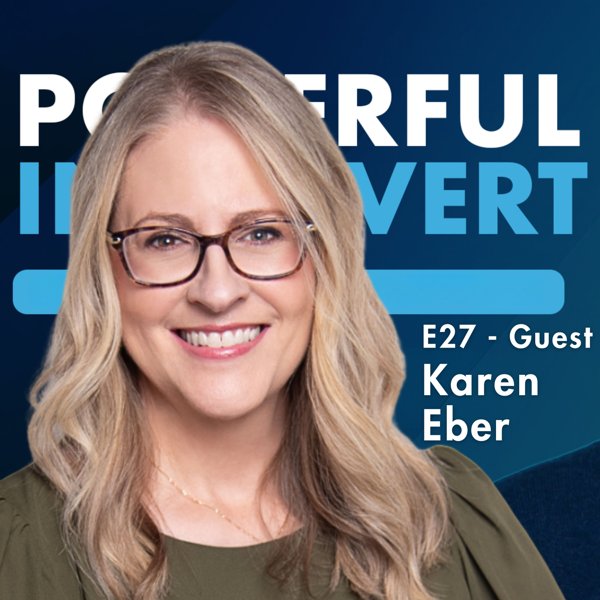
Karen Eber is a bestselling author, TED speaker, and CEO of Eber Leadership Group, with a background leading culture and leadership development at GE (90,000 employees, 150 countries) and Deloitte. She makes the neuroscience case that stories — not data — are the primary currency of influence, because the brain makes predictions from long-term emotional memory, meaning data alone never puts an audience on the same starting line. For introverted leaders who are already deliberate communicators and deep observers, storytelling is a natural superpower that can replace volume with precision impact.
No one will come to you and say, 'Please tell me a story.' It's just unfortunately not how the world works, so you want to look for these opportunities for where you can insert one.
The reason the data doesn't speak for itself is that fundamentally, there's no way to ensure that we all have the same understanding informing those predictions.
As an introvert, you're speaking less frequently and noticing more frequently — you're going to have insights that others may not. Stories give you huge impact on those words you choose to say.
Key Stories
- The TED Talk twist ending: Karen describes practicing her personal TED talk story dozens of times so she could deliver its emotional twist without her voice quivering — an example of introvert preparation creating public mastery.
- The gift-wrapper bicycle story: A client claimed her story “had no conflict” — Karen points out that being asked to wrap a bicycle on your first day as a gift-wrapper, having never wrapped before, is pure conflict, illustrating that everyday tension is story material.
- GE culture through stories: Karen shaped the culture of 90,000 employees in 150 countries by sharing stories of what the best leaders were doing — proving stories travel across generations, geographies, and languages in ways memos cannot.
Techniques & Frameworks
- Three attributes of a good story: Relatable characters (order vs. chaos muppet framing), tension/conflict (a gap between where things are and where they should be), and connection (sensory immersion so the audience experiences the story alongside the character).
- Context-Conflict-Outcome-Takeaway skeleton: A four-part story outline (1–2 sentences each) that prevents rambling and gives any presentation a coherent structure within minutes.
- Phrase to a pair of eyes: When presenting to large groups, say one complete phrase while holding eye contact with one person, then shift — avoids the “typewriter scan” and creates genuine connection at scale.
- Dialogue not download: Present one serving of information at a time and take the audience’s order first; people want back-and-forth, not a buffet of slides dumped on them.
Full transcript
The Pacific Northwest is a beautiful place, but with all our rain and steep slope to turn your beautiful yard into a muddy mess. That’s where we come in. Jake with the wall here in since 1985, our team has transformed the landscape around the Portland Metro area. From a small backyard makeover to major hillside stabilization, the wall has he covered. Don’t wait for the next storm to cause damage. Give us a call today or check out our website by thewall.com. Ask BY thewall.com. Hold your ground with the wall. CCB 54495. No one will come to you and say, please tell me a story. It’s just unfortunately not how the world works, so you want to look for these opportunities for where you can insert one. It can be any moment. But look for those opportunities to try and you will start to see the reaction that people have and that’s the greatest addicting tool for storytelling. But if the key to being a more powerful leader isn’t about being louder, but about telling better stories, Karen Ebert teaches that stories don’t merely persuade us, they shape our behaviors, our lives, and even the culture around us. I’m Greg Wanger and this is the powerful introvert podcast. Karen Ebert, who’s with me today, is a best-selling author, Ted Speaker, and the CEO of Ebert Leadership Group. She helps leaders and companies transform their work cultures through the power of storytelling. With past roles at GE and Deloitte, she’s helped some of the biggest companies in the world. Her book, The Perfect Story, is an award-winning roadmap for how to influence and inspire through story. But what I’m most excited about here today is how she simplifies the art of storytelling and breaks it down, makes it really accessible for anyone, especially quiet people. Karen, welcome to the podcast today. We’re really nice to have you here. Great. Thank you for having me. I’m so excited for this discussion. Me too. So I have to tell you, I went on a run after work yesterday and I was listening to your Ted talk. I’m going along and I was like, oh, this is really cool. And then how you talk about the brain and neuroscience. And I’m running along. And all of a sudden, you get to the end and I’m not going to spoil it for people because you need to listen to the Ted talk. But you drop the punch line and there’s a twist and oh, I just started crying in the middle of a run. And then I just think, wow, what an amazing way to convey the power of storytelling because it got me. And I don’t cry. I don’t think I’ve ever cried at a Ted talk. I might tear up in Pixar movies that they kill me. But it was a really powerful story. Yeah, that story, which I can tell here if you wonder, people can watch the talk. It’s a story that does have a twist in it and I had to practice it so many times because it’s a story about someone that I’m close with. And so that makes me feel rather emotional towards them. And when I get to the point where I reveal the outcome, I had to practice that so many times that I could say it without my voice quivering and getting to an emotional moment, which is completely fine to do when you’re telling a story. There’s nothing wrong with that. People actually responded genuine emotion, but I just didn’t want to have that happen to me on the stage. I was giving the talk, but it is the thing I get a lot of comments on of that surprise. Just totally gets people. I’m recounting what happened to someone else and when this happened to someone else, same thing. It was a really surprising moment for the person. Yeah. And it’s kind of a meta thing that you did there where the impact of the story you told and you just, your delivery was perfect, communicated with the power of stories in itself, which was what the talk was about. So well done, no surprise. It’s a very popular Z-talk. I want to get into the storytelling, but I’d like to start talking about your background. First, this is the powerful introvert podcast and there is no judgment either way. We talked about introverts and extroverts, which do you consider yourself? I’m definitely an introvert in the way it shows up for me is in a couple of places. I need a lot of time to restore my energy, time alone to recover or plan for different things, which as a keynote speaker, I have to be super intentional about what I’m doing right before a talk and right after a talk to make sure that I’m protecting my energy for that. And I do my best thinking in quiet moments of reflection, which is also a little funny for my work, because a lot of my work is in front of groups and having to think on my feet, which I do well. But I always joke that I’ll get my best idea at 10 minutes after the session is over and then also on the follow-up. I know and I’ve learned to be really intentional about my work days to give myself big chunks of thinking time and reflection time. I love doing that on walks and so setting myself up to capture insights from that and just making sure that I’m not over-scheduled back to back to back to back and never having enough time to replenish. That’s fantastic because you’re a living illustration of a lot of things that I talk about here about managing your energy, protecting that part of yourself, creating time for what you do best, and then bringing that into very public venues. You’re a keynote speaker how often in the year will you do public speaking? Well, I’m in front of groups every week in different shapes or forms. Sometimes it’s workshop, sometimes it’s keynotes, and sometimes it’s like really large-scale keynotes or podcasts or things like that. So regularly I’m sharing ideas at scale. What’s interesting is it’s actually suited really well for an introvert which you don’t think it necessarily would be because you’re seeing the moment on stage in front of thousands, but that’s 10% of the work. 90% is what you’re doing to think about what is it that I’m trying to share, what is the audience facing, how do I make this be meaningful for them? It’s all suited so well to an introvert to really work through. You need time to test it with people and to validate it, but the actual exchanging of that is so small in comparison to the amount of time that goes into the preparing of it. So for me, it’s the perfect balance of getting time in front of people and exchanging that energy and ideas, but also having all this time to think and put it together. Yeah, that’s really interesting. I read somewhere another public speaker would put in 100 hours for every one hour, they put on stage, I don’t know what that balance looks like for you. I don’t know that I’ve calculated it that way, but it depends on the talk and the audience and what we’re trying to do and there’s really two pieces to it. For me, there’s a piece of what I’m going to say and that’s thinking about the audience and what I’m trying to have them experience, what I want them to think feel, no, do after the talk. So there’s a lot of preparation there in the content of it and how do I structure this to be the most compelling and easy for people to follow and where can I insert laughter, stories, things like that. That’s a big piece of it. Then there’s the piece of, okay, now how do I take what I’ve planned on paper and embody it and that’s gestures and pause and inflection and how do I use this stage and where am I bringing people up? So I take it into chunks of getting really clear on what it is I want to share and then how I share it. So all total that probably does add up to about 100 hours and it varies depending on how similar it is to what I’ve done in the past. But there’s parts of what I talk about that’s core to everybody because I am trying to make storytelling accessible, but the way I connect it to the audience is going to vary and so that’s where a lot of the time is spent. And then you mention that you’re testing. Do you have a local test audience that you use just to bounce things off of it? It’s a variety of things. So I get ideas in so many different ways. I’ll be in a workshop and people will ask a question and I’ll file that away and know, okay, there’s a good newsletter article here. I regularly have newsletter or blog posts that are on different topics of communication or leadership and they dig into sharing a story in different steps. And so that’s a place for me to test. I’m hearing my audience talk about these things or ask these questions. So let me put it out there and see what the response is. Also I love to create and writing before I take it to the stage and so that allows for me to work out the ideas. So I do that a lot. I will test ideas in workshops as I’m seeing different things and I see what people struggle with. I’ll try different ideas. And then it may be, yeah, no, I’m working on a whole new keynote. So let me try and reach out to a couple different people and talk through the concepts with them and see sometimes it’s snippets of ideas on social media. What are people responding to? If I have a LinkedIn post, what are people responding to and grabbing it onto? So it’s not a one singular testing path. It’s many different things to see what works. Podcasts are also really amazing to see what comes up and then you just get this idea, okay, let’s play with that. So I do the combination of trying to pay attention to what I’m hearing, what are the patterns around the questions that I’m seeing and what people are struggling with and then how can I try across social media and different conversations and different moments to see how people respond to what I’m sharing. As you’re describing this, there’s really a wide variety of ways that you’re testing ideas or interacting with people in the public and gathering about feedback. It seems like one rich ego system that you’ve developed for that and many of these ways are pretty well suited for an introvert because I talked about this before, even a podcast. This is a one-on-one conversation which introverts are super well suited for. It’s relatively comfortable. So it’s building this picture where like being up on a stage of 500 people or more is while intimidating is actually a pretty small part of what you do and what I’ve heard and it’s been my experience is that when you are up there, you have such command of your subject and you’re so practiced that that carries you through that kind of event. It’s also, yeah. Yeah, if I could just add to that though, it does. It is having the depth to command the event but it’s also 500 individual conversations. So while I’m on stage and magnified really big and it may have a room so large there’s an echo. It’s really a one-to-one happening at the same time for many different people. And that’s the way I really try to think about it. This is not a performance on stage. This is me genuinely trying to have conversations and connect with each people and that makes it a little easier and less intimidating. Yeah, that’s the mindset and I’ve sometimes thought about in public speaking about that but this isn’t about me. It’s really about the other person or how I’m going to be a, you know, observer and that’s something that’s helped me. But I love that. If you really do break it down to individuals, do you, are you able to look in the audience and make eye contact and really deepen that? I’ve heard that’s another thing to do. Oh, 100%. So the way I think about it is I try to say a phrase to a pair of eyes. So a phrase might be a full sentence and maybe part of a sentence. But you want to avoid is the typewriter where it’s like you’re going down the line looking across the row, connecting with a whole bunch of eyes and you’re just scanning and not landing on anybody. If you start to say a phrase to a pair of eyes and then you shift to another part of the audience and then you shift to another part of the audience, it creates more genuine connection and it makes for a less frenetic speaker because you notice when the speakers are just leasing across everyone and not landing on anybody and that doesn’t feel as good. But when you’re varying and you just pick different people, it helps. There’s always someone who is probably an empath who is like looking at you and smiling and you want to give your whole talk to that person because they’re making it so easy. So I find like I have to fight that and make sure that I’m giving attention to the entire audience and sometimes it’s looking in a direction. I mean, I’ve given talks on just for over 10,000 people and so you’re not going to see 10,000 eyes, but it’s looking in the direction I divide the audience into sections and so it’s looking into a particular section and just pretending you see eyes there but varying it. So it’s not just focus on one and not anything else. It helps when you’re magnified on a big camera too because then people can see you there and you can create that on scale. That’s right. And then in those cases, are you making eye contact with the camera consciously or is that I do? I do. I do. I tend to be so I describe it as I’m a friend on stage. I’m not the funniest person up there and I don’t try to be. Although there’s humor in my talks and especially I bring up volunteers from the audience and we work on stuff and there’s always a lot of humor in that. When there is a camera, I tend to try to use it because most people are watching the screen and very few can see you individually. So I’ll mix it up. I’ll look in the audience but I do look down the camera quite a bit to help make sure that we feel like we’re connecting. I do the same thing on Zoom. If I’m presenting on Zoom, I’m trying to look right down the camera so that anybody that’s looking at the screen can feel like I’m looking right at them. All right. And anyone who’s listening to this, she’s making excellent eye contact with the camera right now and the video, which is very connecting. Yeah. That’s these are great tips. And I love the one person who is kind of smiling back at you and glowing in the audience. They’re kind of a lifeline sometimes. Okay. Somebody’s listening. Yeah. So I want to maybe backtrack a little bit and just hear a little bit about your story. Like where did you grow up? What was your, what was it like being an introvert as a younger adult and then how do you get into your current career path? I think when I was growing up, the idea of an introvert as someone that needs restorative energy or time to process wasn’t understood that way. Susan Cain did a gift to many of us in writing quiet and making that be more common. So introverts were classified as you don’t like people and extroverts were classified as you do like people, which wasn’t helpful in any way. So I don’t think I really understood what it meant. And I probably viewed it as a weakness or a negative of I didn’t love being in front of large groups or I needed time to myself. I didn’t understand it. And because so much of the messaging even early in my career was like be outspoken and be in front of all of these people and all the things didn’t feel great to me. You just feel less than and that you’re never going to be successful in the way that people want. But once I started to recognize this is not a negative at all. This is an advantage in many ways and how to manage it. It was a great flip. So I grew up in Miami, Florida and ended up going to college and studying psychology. And I don’t think I even understood them that this was an advantage of mine. But as I got into the workplace, I started to recognize that I’m not being the first one to speak in every meeting or maybe observing things that other people don’t notice is a big gift and being able to put together ideas really quickly is huge. Ended up in Deloitte as head of leadership development and part of the business and was building leaders in the company, building teams and recognizing that there was a need to share insights and information and help people think about things differently. And I would use stories to connect to them and help them try different things. And that continued to grow as I was in general electric as a head of culture. And that was a business of 90,000 employees in 150 countries. And the only way that you shape culture is when you can have each person stop and think, what does this mean for me and what do I want to do? There was no way to get everybody in a room to create that. So I found through stories, I could tell stories about what our best leaders and teams were doing in different examples and what we wanted people to experience. And it did not matter where people lived in the world. It didn’t matter their generation. It didn’t matter what their background was. They were connecting with these stories and often stories about experiences they never had. And it started to create a shift because they could then see and connect to things differently. And so that’s when I really was harnessing this magical gift and marrying it was storytelling to help build understanding for people. When my company gave the talk that ended up on Ted and wrote the book and have really deepened both the leadership development that I do and how to use stories to connect and influence. Yeah, I was wondering about that when you say you do workshops. Are those primarily leadership development kind of workshops? There’s a mix because I have this background in organizational culture. I tend to work with companies holistically of what is happening. What is it that we’re trying to solve? A lot of culture is behavioral and trying to help leaders understand things they can do differently or how to set up teams that can operate in a great environment or it’s working with leadership teams to be intentional about what the culture is and what it looks like and the stories that they’re telling. So on the leadership edge, it’s usually when there’s some challenge, it could be that there’s a team newly formed and they want to get the right habits and behaviors in place or it could be that there’s some type of challenge happening, anything from quality issues in the organization to just struggling with good teaming behaviors or struggling with trust. So I come in and help set them up for success. On the storytelling side, it is where there’s an understanding that we want to be more dynamic and memorable communicators, particularly with data. And so it’s helping people understand what’s happening in the brain when we experience stories, what to do with that when you’re telling a story and how to put all that together. And so there’s a range of workshops that give people the opportunity to get hands-on practice, building a toolkit of stories and learning how to tell stories with data and getting them to embrace this more as a key skill. Excellent. And I do want to drill into that a little bit, just to broaden this out when we’re talking about storytelling in the corporate environment. These are skills that are influenced skills that can help us in any aspect of our life. And how do you talk about that and do you go into that in the book? The process that I share is how to tell a story for any setting. So it doesn’t matter if you’re interviewing for a job or you’re needing to tell a story to give a eulogy or you want to give a toast or because you are leading the team and you want to come up with a story that will help navigate through change or you want to kick off a presentation. The process is the same because it takes you through the different considerations for what do you need to do to get clear on who your audience is, what you want them to experience, and how do you then engage their brain in your stories. And so the steps will help you in any setting. And I even in the book talk about how do you take this and apply it if you are in the eulogy or if you are interviewing for a job so people can see different examples of this isn’t just storytelling for a big presentation or a big meaning. This is like how do you take this as a skill and be able to use it in different settings? Yeah, that’s great. So let’s jump in. I studied creative writing a bit when I was in college and we talked about the story and it’s got a beginning of middle in the end which is somewhat helpful. But how do you explain basics? What is the story and the key characteristics? So there’s three attributes that every good story is going to have. The first is it’s going to have relatable character and relatable doesn’t have to be enlightable. But it means we understand why they’re doing what they do even if we would make a different choice. If someone isn’t relatable and we can’t think like, oh, I get that or oh, I know someone like that, then we just engage from the story. And when you’re telling a story, one of the easiest ways to make characters relatable is to start from order or chaos. It comes from this fantastic article by Dahlia Lithwick where she’s talking about the muppets. And she says that every muppet can be categorized as a chaos muppet or an order muppet. Chaos muppets are animal, mispiggy, the scientist, where they thrive on chaos. They thrive on uncertainty and coming in and stirring things up and having fun. Your order muppets are your curmud and eker and gosh, who else? I think Ralph the dog is is an order muppet. So these are those that like structure, they like a plan. They don’t like the chaos. They want to know that there’s some organization. And so Dahlia says that humans can be categorized as order or chaos. I don’t think it’s that simple. I think we have moments where we’re order and moments where we’re chaos because I know I certainly am both, but I wouldn’t say I’m just one or just the other. But if you’re telling a story about a character and you start there and let’s say it’s a work story and you’re talking about the order colleague who is on time really early to every meeting in appointment. Their offices, if they are in a physical workspace are spotless. Everything is cleaned up. Their phones have no notification. You never hear a thing. It is all perfectly clean. They come with an agenda. They send follow-up notes. If they’re packing for vacation, they have an Excel spreadsheet and checklist for everything they want. The chaos colleague though is probably 10 minutes late each meeting. They don’t care what’s on the agenda because they’re going to bring a different idea or a different question that kind of blows up the agenda. Their phone is lit up with notifications and dinging in times. Their office spaces and cars look like they’re living out of them. They have to buy everything on vacation because they forgot what they packed. If you picked any one of those sentences when you’re describing a character, it’s going to help the audience say, oh, okay, I get who they are. I know someone like that. If you’re describing maybe an attribute of a chaos character, and then we see some decision they make, it makes it relatable. We understand why they’re doing what they do. Relatable characters are the first important attribute of a story. The second is that stories have to build tension and conflict. There’s something that’s being explored. There’s something that isn’t quite right. It doesn’t have to be big sometimes because of movies and fiction and stuff. Everything, conflict has to be this huge thing. But so much of conflict is like, I’m not at where I want to be or tension between two people or in work settings, maybe between two teams or a deadline. I had a client. We were working on stories and she said, there’s no conflict in my story. I asked her to share her story and she said, well, it’s about the very first job that I had. I got a job as a gift wrapper in a department store and I’ve never wrapped gifts before. I’m like, that sounds like a lot of conflict to me. You’re talking about a skill that you don’t have. Then she says, my very first client brought up bicycle for me to wrap. You have plenty of conflict in your story because now, immediately, I’m stressed for you. How did you wrap this when you’ve never done this before? Conflict is just often that where you’re presented with something unexpected or there’s some gap. That’s what’s being explored. Sometimes that gap is between yourself, like you’re just not at where you want to be. There has to be that conflict or tension because once you run out of that, you run out of story. The third attributes, we’ve got the characters, the conflict, and the third one is connection. Connection is where we’re experiencing the story as though we’re there alongside the characters. We are seeing, hearing, feeling, experiencing the same things they are because the more we experience a story, even if we’ve never lived it, the more neurochemicals are released and the more our brain plays an active participant in it, and it informs future decisions that we make. We start there with that as one of the guidance. I have a story structure or skeleton that I have people used to outline their story. It’s four parts. It’s the context, the conflict, the outcome, and the takeaway. This is meant to be, like, if you’re cooking a meal, you’re gathering all the ingredients to make sure you have it. It’s not every single part of the story. You’re going to add to it, but this gives you the major chunks. So the context is a sentence or two about what is the setting who’s involved? Why should the audience even care? You would write out one, maybe two sentences for that. For the conflict, it is what is the tension in the story? What’s going to be explored? You’d write out a sentence or two for that. For the outcome, what happens as a result to the conflict? You would write out a sentence or two for that. And then the takeaway is, what is the idea you want the audience coming away with from this story? You would write out a sentence for that. So in just a few minutes, you can get a basic structure of your story that allows for you to tell a more cohesive one and it’ll prevent rambling as you add to it and it makes it really easy for someone to follow. Yeah, that’s fantastic so much in there. I presume you have some of these things, and well, certainly in the book, but I’d love people to have that as a reference as well. But it seems like awesome framework there to help focus the storytelling. A lot of parallels between what you’re talking about conflict. There needs to be something at stake, some understanding. Then we start rooting for the person. We understand them and they were like, well, what’s going to happen? How is she going to wrap the bite? Now I want to know. I know. I never got the answer. I feel so unresolved. I don’t know. Yeah, we’ll have to Google that. I’m sure Chatshipy could supply the answers there. So you’re touching on a few things here where you’re getting into how this impacts the brain and one thing that I know that a lot of introverts have, I’ve had this tendency myself, is why doesn’t the data speak for itself? Why don’t the facts just speak for themselves? I think it’s a source of great frustration for people who are very knowledgeable and who maybe do technical work or a scientific study. The results can be so compelling. But then when we go to explain it to other people, it just falls flat and it’s mystified because of the data. There’s trauma in the data. You’ve talked about a marrying storytelling to data. Why is that? Why is it so much more effective to communicate in the form of stories than in data? There’s so many things that are happening in the brain that make it complicated. But the easiest illustration is if I put up an ink block and each of your listeners were able to say what they thought it was, we would not have unanimous agreement. There would be such a variety of perspectives of what people see in the ink block, what they think it is. And the reason is that our brains are constantly making assumptions. Our neurons are constantly firing in our brain. You used to hear people say, we’re scanning the environment for threats and for lions and danger so we can react and that’s actually not true. Yes, we are very aware of what’s happening, but our brain is constantly firing neurons to make predictions. From everything like, how do I send my foot when I’m walking downstairs to what do I think this is, the reason being the faster the brain can make a prediction, the faster it can conserve calories. Now, it may predict wrong and it may have to course correct and it’ll learn and it will strengthen the neural pathway with what it learned. But more often, we’re pretty efficient in our predictions. We’re getting more right than wrong. And this allows for our brains to be more economic and conserve more calories. The brain is the broker of calories and it is the stingiest banker because it always wants to ensure it has calories to keep you alive. And I equate it to a couple buckets. First is the non-negotiables. The calories needed to allow for circulation and respiration and all your bodily functions and cognitive thinking, all of that. But the second bucket is discretionary and that is attention and focus, immersion. And all of that is greatly impacted by if you’ve slept, if you are tired, if you’re hungry, all of that. The brain will grant or withdraw calories based on how things are going. So predictions are such a vital part of how we stay alive because it allows for this conservation of calories and it allows for us to be responsive more quickly. The reason why uncertain times are so exhausting is because we’re having to react more than we can respond and that causes inefficient metabolism. What’s happening when we see an inkblot? Our brain is immediately making assumptions and making predictions for what do we think this is and it’s doing it based on our long-term memory of experiences. So if you think about when you take a photo on a phone and you swipe up, there’s all of this metadata stored on that image, the date, the location, F stop, anything you would want to record the photo. You did nothing to put it on there. It’s immediately stamped on there. Some things similar happens with our brain and our senses. So as we’re taking in information through our senses, as we’re having experiences, they get stamped with emotional metadata and they get stored in our long-term memory. So when our brain is making an assumption, making a decision about what something is, it’s going for your long-term memory in an overly simplified way. It’s trying to say, have we experienced this before? Do we know what this says? Is this related to something we know? And we make a guess about what this says, is this brand new? And when you’re putting up data and that is happening, we’re each going to have different experiences that are informing that. So we’re not even at the same starting line for understanding and discussion because we’re each making predictions based on our long-term memory, based on our experiences, which are going to be different even when we think it’s super simple. So the reason the data doesn’t speak for itself is that fundamentally, there’s no way to ensure that we all have the same understanding informing those predictions. So you have to ground people with what the data means, with what the story is, just to get to the same starting line for a conversation and debate and discussion about it. When you don’t do that and you say the data speaks for itself, there are often really simple assumptions and predictions made that are just having people be on different pages. And this happens in business environments all the time when you see people debating about the data, the quality of the data, the source of the data, they’re like, that’s all a symptom of this because people haven’t been able to ground them on it. So what a story is doing, whether you’re communicating data or not, is it’s building an understanding in someone’s mind. It’s allowing for that creation of the emotional metadata to be stored in the long-term memory and help inform decisions. That’s great. And then that’s really shaping their views. It’s connecting them. So half the time you can’t even create a connection with somebody. We’re all in our heads and you have to reach somehow into somebody else’s head. So the story is that there’s many other things coming into play. People have their own preconceived notions, but it seems like it’s a clever way to kind of reach under the first layer of defenses, almost, to reach deeper into where people can start to form connections and think creatively. And that’s really, I think that’s ultimately what you want is to create an environment where people are starting to look at things in a new way to shift their mindset. Completely. And if you think about it like in a job interview, if you’re not using a story, taking someone through the story of your experience and you’re just saying what, you know, listing events or what you did, you are allowing each person to make their own assumptions about what that means and what to do with that information. But if you are taking someone through a story and what you learned, what you took away from it, which is why things like star don’t work well for interviewing because they’re just like situation, task, action, result, you have to bring people to what you learned, what was the impact, what would you now do differently? When you do that, you’re now building an understanding in their mind and you’re helping them know what to do with it versus leaving it up to them to make an interpretation. And similar things are happening when you’re communicating stories or communicating stories with data, you are helping build an understanding in someone’s mind and guiding them to here’s what you can do with this versus leaving it up to each person who is listening to do that and potentially creating differences. So then what kind of resistance do you encounter when you’re working with somebody and they’re like, well, this, you know, this sounds great, Karen, but you know, I, I can’t do that or like, you know, it’s too scary to do this. What kinds of things come up for people and how do you help them? There’s many because what we’re often talking about is something that feels like a different way of communicating. So if we take a business example, what often happens today, we know we have to give a presentation, give an update and we open five different PowerPoint files and we start piecing together a presentation. Well, I can talk about this one and this one and this one and we line up bullets and we spend all this time making the slides perfect and not spending enough time thinking about who we’re talking to and what do we need to say. And so then we get into the sessions and we say things like, I’m not going to talk about this and people’s brain just kind of going to lazy mode. And so you’re wasting attention, but it feels easier for you because it feels like a lot of work to step back and think about who is my audience and what do I want them to experience and what is the best message? How do I want to get them there and what might be their resistance? It’s a little bit more work on the front end, but it allows your message to go much further on the back end. So one of the biggest hurdles is getting people to recognize it’s okay to share a story even if your colleagues aren’t. It’s okay to shift the time from being spent on PowerPoint slides to really focusing on what it is you want to say and what you want people to experience because you may not even need slides at the end of it. I remember one time I was working with a very senior leader who had beautiful, very dense slides and I said, you know, that’s how new this is that people aren’t going to be listening to you. Anytime you put up a slide, people stop listening and they focus on the slide and the more complicated the slide, the longer it takes for them to come back to you. And I said, your slides aren’t going to help you in this case. Here’s what I would suggest. And he said, what you said makes a lot of sense, but I don’t have time to update my slides so I’m not going to change it. And it was like, you’re going to knowingly go and waste people’s time. You know that you’re admitting it. Like that’s the hurdle of it feels like it could be harder. It’s not. It’s a different habit and flipping time differently. So that’s probably a big one. It does feel vulnerable to communicate with stories when maybe other people aren’t. It’s a different type of communicating. There’s always the nervousness of, but I have to present data. I can’t present a story even though we’re not saying either or there’s probably the big ones time and being willing to think about it and try something different. And there’s a balance in their different context or sometimes you need data or someone might challenge you. So you could put those in the appendix. I work with someone who’s a pretty good storyteller and slides would be so simple. I mean, it was a context where like you had to have slides, but as long as they had to have slides, they’re very, very simple and basic and really put all the focus on the storytelling. Can we stay on that just a second? Because many cultures do rely on slides and that’s not a bad thing. The true definition of a slide is it’s meant to be a visual aid, meaning it’s meant to aid what you’re saying. Unfortunately, it is a driver in so many places because we are allowing it to drive the content versus the message that we want to get to. There is nothing wrong with having super clean, simple slides because just like you described that that’s calling did the more simple, the faster the intention comes back to you and that you can move people along. I think sometimes we think the more complicated things are, particularly with data, the more it charts and things like that, the more credible we are. But it’s actually not true. You’re not having the impact that you think because people aren’t listening and they’re not taking away what you want and so often the slides aren’t designed in a way for people to get that takeaway. What is more credible is where you make the message seem simple because simple information can lead to a really rich conversation because now we understand and we can talk about what this means or what we want to do or what we want to continue monitoring. When we don’t understand the information, that’s when we have these conversations where we’re fighting about the data or the information or what to do and it just seems like every update is the same fight over and over and over. And if you’re the one preparing this particularly with data, you’re coming in armed with every potential question you might get and you’re frustrated and you feel like I can’t make headway and the leader jumps ahead four slides to something else and they kind of take over and they ask questions and it’s a little bit because we’ve taught them to because they know they’re not going to get the information they need so they just kind of try to take over. And so there’s things we can do differently and it’s leaders, my caution to you is that make it really easy for your teams at the onset. Have agreement about what are the questions that you want to be able to discuss. Have that agreement before the meeting because that will allow for them to come in focused and prepared for that and there can be other stuff in the appendix but without that they’re trying to guess and anticipate what you want and they’re coming in with a whole bunch of information you don’t want which is just first frustrating both of you. So start with what is that problem that you’re looking to explore, understand together and let them take you there and don’t limit it to you have this one slide template that you have to pack everything in on because that doesn’t help anything either. Focus on here the outcomes, here the questions or discussions I want to have. Here’s the time limit that you have and then let people use ten slides. If there’s one idea on a slide and it’s really simple they can move through that much faster than one slide that has ten things on it. So that’s my caution for leaders. I know you’re frustrated because you find people aren’t giving and communicating the information that you want and you’re a little bit of the problem in that. Excellent, I’m really glad you touched on that. I want to flip that over to the people who are maybe earlier on. They’re not leaders or they’re in the situation but as we often are we’re called on to present or that sort of thing. So what advice would you have for someone who isn’t in the leadership seat right now? Yeah, same thing. Start with can you before the meeting get agreement on the problems that you want to explore or the questions that want to be answered? Test that at least if not with the leader or test that with colleagues and start your presentation with here is the problem that we’re looking to discuss today because you’ll know immediately if there’s agreement on that or not. But ideally you want to get that clarified before you’re building the slides because that’s going to support it. So start there. If you are given a one slide template ask if you can use more and that you will stay within the time limit but see where you can role model what’s going to make easier communication to build ideas. So those are the inverse and the leader. The other thing is to note my introvert just lost that idea. I had it and then I just flew off so it’ll come back in a moment I’m sure. Yeah. This is really wonderful and then I did want to broaden this out a little bit. So if we got one thing to work all of us got one thing to work on whether we’re in business or not to try to practice storytelling incorporating that in the real life is there some exercise or the thing that we can try? So there’s an awareness piece particularly for introverts that I think is important to be open to an embrace. The research says that extroverts speak more words per day and often they’re not planned and bought of they’re found in the moment and introverts are very intentional and calculating about when they’re speaking and what they’re saying. Recognize that stories give you a huge impact on those words that you’re choosing to say. And as someone that is probably speaking less frequently and noticing more frequently you’re going to have insights that others may not. So it can become this really super power so that your words have great impact and it will create people to pay attention and lean forward and recognize things that they might not have seen. Sometimes we I think are weighing when we want to speak and what we want to speak about and just recognize that this can be such a wonderful way to do that wonderful differentiator. The second piece is that no one will come to you and say please tell me a story. It’s just unfortunately not how the world works so you want to look for these opportunities for where you can insert one and it might be a metaphor. It might be an example. It might be in a quick story like the gift wrapping a bicycle story or it may be or that’s a minute or two. Look for opportunities where you can build an understanding for the people you’re talking to. It might be in a team session. It might be when you’re in a presentation. It might be in a coaching session. It can be any moment. But look for those opportunities to try and you will start to see the reaction that people have and that’s the greatest dictating tool for storytelling. I love it. I think this is going in the core tool kit for the powerful introvert. There’s ways that without dominating the conversation that you can have that impact and this seems like it’s a very high octane. I leverage kind of way to really have an impact when you get that moment. And another one is asking questions, appropriate questions that can shift the flow of the conversation. But this is super powerful stuff. Absolutely. It’s a huge way to be a pattern interrupt and a meeting around a team that is maybe used to one set of behaviors that are fine. But every now and then we need to change it up and you can create that. I have to thank you so much for sharing this wealth of information. I was so fascinated by your explanation of why we’re scanning the environment and what’s going on in the brains. It really just helps to understand what’s going on for other people and really to have more empathy for other people. We’re all coming from different places and this is a great scientific explanation of it. Where can the listeners or the watchers and listeners find out more about you and your work? My website is the easiest place. It’s my name, K-A-R-E-N-E-B-E-R dot com. Couple of things to look for in there. You can find a link to the book, The Perfect Story, which breaks down all the things that we’re talking about, the science of storytelling, how you tell stories, how to tell stories with data and even how do you physically tell stories, how do you use your body, your voice, pause in storytelling. Then there’s a section there called Brain Food, which is my blog and I share different topics. There is one on storytelling for introverts. I use stories and give different tools and lessons to be able to leverage and help you be better at storytelling and as a leader. We’ll definitely have to link that on. Yeah. Thanks so much for being here today. It was a lot of fun. Thank you for having me. An efficiency tip from Northwest Natural, small steps add up to something bigger. Like changing your furnace filter, it can help your furnace run better. Last longer and can lower your bells. That’s good energy. Reliable and ready. Learn more at nwnatural.com.