Hard Reset for the Introverted Leader — Breathwork to Cut Anxiety & Self-Doubt
Manage Your Energy & Thrive in Extroverted Cultures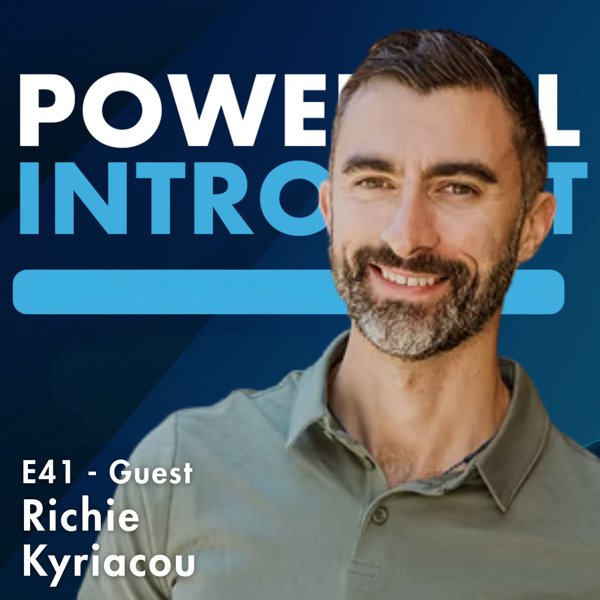
Richie Kiryaku is a mindset coach and founder of Reset with Richie who went from high-performing financial services leader — hiding anxiety behind alcohol, cocaine, and a corporate mask — to walking away from that world entirely and building a coaching practice that combines deep self-awareness work with therapeutic breathwork. His central argument is that most coping strategies (therapy, meditation, gym) are sustainable only as long as you keep stacking them, and that the real transformation comes from going inward through felt experience rather than intellectualization. Breathwork, particularly the holotropic and Wim Hof styles, is presented as the "hot knife" that cuts through subconscious blockage faster than years of talk therapy.
I spent years running around trying to be accepted by everyone else and never stopping to find acceptance for myself. Self-acceptance — let's call it what it is — it's self-love. And when you get there, the opinions of others just don't bother you. You become almost indestructible.
What you resist is going to persist. Go with the emotion, surrender to it — that's where the shift happens.
Imagine your subconscious as a big block of butter. The breathwork is a hot knife. It goes straight through and accesses those deep places to release blockages that hold people back.
Key Stories
- The engagement party blackout: Richie woke up the morning after a party back in his own apartment with his clothes still in the host’s wardrobe — he spent the weekend checking news to see if he’d been reported, which led to a GP visit, an anti-anxiety prescription, and years more of the same cycle.
- 2020 quitting everything: After a senior promotion in 2019 with an escalating party lifestyle, Richie quit alcohol and cocaine in 2020 — describing the process of grieving the identity of “that Richie” as the hardest and most essential part of the transformation.
- The Monday presentation coaching call: A potential client asked for presentation tips at the end of their intro call; Richie ditched the hacks and told him to surrender to the emotions he was feeling rather than fight them. The man emailed mid-week: the presentation to US executives went “way better than expected” — and he signed up for coaching.
Techniques & Frameworks
- Inner confidence vs. surface confidence: Distinguishing the inner calm and clarity that comes from genuine self-awareness from the performative confidence Richie wore throughout his corporate career — the former makes you “almost indestructible.”
- Breathwork styles and their purposes:
- Box breathing / 4-7-8: Regulates emotional state directly; accessible anywhere.
- Wim Hof method: Rounds of connected breathing induce a physiological stress response with no external stressor — training the mind to stay calm within stress.
- Holotropic / psychedelic-style breathwork: Circular, fast, guided breathing with evocative music that induces altered states; accesses subconscious blockages (described as a “hot knife through butter”) to release trauma and unlock creativity.
- Surrender, not fight: The key instruction for intense breathwork — willingness to let go to the breath rather than analyze it. What you resist persists; going toward the emotion releases it.
- Coaching + breathwork integration: Breathwork insights fade without integration; Richie’s cohort model pairs breathwork sessions with group coaching to translate altered-state clarity into daily behavior changes.
- Self-awareness layers: Coaching begins with deepening self-awareness, but Richie flags the trap of over-intellectualizing feelings — he probes until clients move from narrative to felt experience.
Full transcript
A payment tip from Northwest Natural. Northwest Natural offers flexible payment plans and build-as-count programs. For customers who need extra support, that’s good energy. Reliable and ready. Learn more at nwnatural.com Did you know The average Northwest Natural customer is paying about the same for their natural gas bills as 20 years ago? Because with Northwest Natural, warmth value under liability are built right in. Learn more at nwnatural.com Do you ever wish you could go back to your original factory settings? To a mind that wasn’t cluttered by a fear or worry or self-doubt? Welcome to the powerful introvert podcast. It’s a podcast helping introverted leaders embrace your underrated quiet strengths to get promoted and start earning what you deserve. I’m Greg Wanger. I have over 25 years of leadership experience and yes, I am an introvert. Today I’m talking with Richie Kiryaku. He’s a mindset coach and founder of Reset with Richie. In this episode Richie shares his journey with Brutal honesty. He goes from a high performing financial services leader to confronting his alcohol addiction. Only to walk away from the corporate path and build a life that actually fits who he is. You’re going to discover number one how breathwork can help you unwind the spiral of anxiety, worry and self-doubt right in the moment. Number two powerful mindset shifts that quiet people need to lead with confidence. Number three, why self-acceptance is the real hard reset and that can make you almost indestructible? This conversation as a warning does touch on some suicidal thoughts. I found it incredibly powerful and I hope you find it inspiring. Let’s dive in. Richie, a real pleasure to have you here today. Yes, great to be here Greg. Been looking forward to this one. Yeah, absolutely. So we spoke a couple months ago and talked about an episode. And out of fantastic conversation, I feel like we really connected immediately. And I hope you have felt as well. It was no pressure here. But I connected to you because you seemed to me to be the real deal. And what I mean by that is I have done a lot of personal transformational work and I had a coach and he gave me a set of tools that literally transformed my life. So you talked to my wife, my children, the people who know me best, my personality is shifted. And I am a much less anxious person. I just have a lot of common situations, crisis situations, things that might classify as that. And I just approached them the different way and I show up really differently at work. And one of the course to that was it’s really the type of work that you do with your clients. So I want to get into this today and I really want people to understand that the type of work you could do creates a fundamental shift in your life. And it gives you a different perspective so that you just look at situations differently. It’s perspective and tools to actually deal with those situations differently. So that’s a big preamble and no pressure with all this. But let’s get into this because I’m so happy to have you here and share about this and tell people more about what you do. Thanks, Red. And thank you for being a great advocate for coaching. It’s obviously worked for you. It takes you to be willing to show up and do that work and it’s not easy, especially in the beginning as I’m sure you would have found out. But the rewards are, as you say, transformational. And yes, in your work, Cam, you mentioned there, but also with your family. That stops prices. Isn’t it? It’s priceless. And I’ve experienced that and witnessed it firsthand with some of my clients too. They tell me stories about how they’re at Cam and speaking up more in meetings, for example. But then they share a story about something with their family. For example, one client recently, how his son would do things to rattle him and he might lose it a bit. Yeah. Get a bit angry. Feel that frustration to a point where his car might just wash his over him now. It doesn’t bother him. Instead of telling him to go to sleep and chowling him to go to sleep, he’ll sing him a song instead from a place of calm and love and peace. And that’s the stuff that lights me up mostly. So yeah, I’m really looking forward to getting into this conversation with you, Greg. Can’t wait. Let’s go. Yeah. All right. So then, so let’s start. I want to talk a little bit about you and your background. And this is the powerful introvert podcast. And I believe you’re a powerful introvert yourself. I was wondering if you could tell us a little bit about that. How did you come to realize that? I would say the realization, well, as more first, I heard the word probably in my early 20. And I guess I was a bit ignorant, arrogant in a way. I just presumed introverted meant you were a loner bit of a weirdo. And I went off on my way until in my later 20s when I started to address certain aspects of myself, which I’ll get into later. And this word came back again introverted, being an introvert. I started to look in it and I resonated with it a lot. Some of the traits. Yeah, I get my energy from being in solitude, being in big crowds, especially it can drain me a lot. But when I reflect and especially God in corporate days in those meetings, it was head down very much so keeping quiet, working hard, not putting myself out there, not speaking up in meetings. But when I reflect more and as we do, we reflect over our whole life and without trying to over-intellectualize it, I don’t think I was born introverted. I remember speaking to my dad and he was saying, I don’t remember you as a really small kid. You were very much social, active, always outgoing and want to be amongst it. So I reckon I started to go inside of myself through certain, I guess, small tea dramas, which affected the conditioning, it was the environment, very much so influenced me to go inside myself. For example, early childhood, the effects of moving from one country to another country and then again within the same country, it was very much made known to me that I didn’t fit in, didn’t belong, not accepted, especially in the likes of boarding school, in high school, in those early teenage years. It was morning, noon, evening, you’re at that barrage of nasty comments going into my mind and the way I dealt with it was very much being quiet, I might even laugh it off, but so much anxiety and fear, I was walking around for fear of some, one of the culprits who commented and lay out an nasty comment, right, and this stuff affected me. And I would say, their voices became my voices in my head, they had become my belief system. I don’t fit in, I don’t belong. And that followed me throughout my teens, that followed me into my twenties, and I spent all those years, here’s the crux of it, I spent all those years running around trying to be accepted by everyone else and never stopping to find acceptance for myself. So I put on that mask, created that persona, that identity to try and fit in, and it served me well, don’t get me wrong, it served me well. But it was when I went and did that other inner work, finding that self acceptance, which look at the end of the day, let’s call it out here, it all boils down to self love, and as a priceless feeling, you get to that place, and you don’t care what other people think, the opinions of others, it just, it doesn’t bother, and you almost become indestructible. And as a journey one has to go on, and it is very much a felt experience, would I still class myself as introverted? Oh yeah, but just in a different way, in a more comfortable, confident way. Yeah, I still thrive in solitude, I like my alone time, but yeah, I can turn up to social events, and find confidence and be comfortable, but I don’t want to stay there for too long. It does drain me, and I want to get out of there. Yeah, yeah, thank you for sharing that. Yeah, it can be so painful to be in those situations where you don’t feel accepted, and it sounds like through your early moves, and being in a, maybe a culture that’s slightly different, and you’re obviously not accepted in that, those lessons can really go in deep. Yeah, yeah. Literally to the point of, they are my voices, and then it’s about separating yourself from them, realizing, no, you’re not, that’s just conditions of the mind. And this is universal, right? We’re very much belief system, and when we’ve got problems, issues in our lives sometimes, it’s easy to just go after the symptoms, treat it with a plaster. But really, if you start looking at some of the belief systems and almost rewiring them, then you can get freedom from them. Yeah, and I think this is true for everyone. I think, like you said, it’s universal. There are certain beliefs, and it’s just the way our human brains evolved. There’s this negativity bias, and so we all have this, we internalize these beliefs, which are unhealthy, and ultimately these struggles are rooted in a lack of self-acceptance. And stories are really different. They vary from person to person, but there is that commonality of theme, where once you get down to that deepest level, there is some part of yourself, and we have all kinds of crazy parts of ourselves. There’s plenty of things that, for a lot of reasons, society says, okay, we got to tamp these things down, so we’re all not accepting ourselves at different levels. Yeah, that’s great that you found your path through that, and this is something you help others with in your work. Let me continue on here. So you really described really beautifully how you developed this mask, and I think that mirrors what a lot of us go through, and how to form success in the world, and it sounds like you’re quite successful, and to school, and later on into the corporate world. Could you tell a little bit about that part of your career? So corporate world in financial services, working in different banks, global banks, big name banks, high pressures, I went in there with a very good work ethic in terms of working hard. I wasn’t sure if it rolled up the sleeves due to dirty work, but again, as I mentioned earlier, that anxiety or fear was with me to really put myself out there, and it ended up being frustration, just not speaking up in meetings there, and stress taking that home, not sleeping on Sunday nights and things, and speaking of which, on the weekends, my way of coping was to drink. Yeah, I’d go out on a Friday night after work with the guys, and girls, and you’d have a good time. You release a lot of the stress due to say I’m on Saturday, Sunday, just not good, Monday, not good even, and that was the cycle, work hard, play hard, and probably that late, as I mentioned earlier, that late 20s is when I said, I hear this is something’s not right here. I cannot keep going like this, I need to address it, I started doing things, I started doing meditation, I started doing more of the gym, I actually started therapy as well at that time, late 20s, which helped, wasn’t the solution, and other things as well, just to get a hold of this, but I still drank on weekends, and one weekend, specifically, it was just too much, there was this engagement party I went to, and this is a funny story, I can’t believe I’m going to share this, on a podcast, but I went to an engagement party, a friend’s place in the same apartment complex, as where I was living, just a different block, and after the party, yeah, in there, and old fashions were had, whiskey was had, and all I remember I woke up the next day in my apartment, but my clothes are back in their apartment, so I’ve obviously taken them off there, apparently they found them in the wardrobe or cupboard or something, and I’ve made my way across the apartment complex, this is in the morning stage, I hear, right, so, I’ve made it, I’ve made it, the girl I was living with at the time, obviously, let me in, I went straight to bed, but it’s such anxiety that weekend, I was actually checking the news to see if I was reported or something, over the whole weekend, afraid to go out, went to the doctor Monday, explained the story, prescribed me anti-anxiety tablets, alright, so I went on, 10 milligrams of xpro at the time, the way I went again, same cycle, work out at party hard, that was it for years, until again, I reached that desperation stage, 2019, that was performing well, these things that I was doing, the meditation, the gym, the self-awareness stuff was helping, I was taking action at work, becoming confident, so the promotions were happening, 2019, I got a big external move, pay rise, but then the party really escalated, I started then, I’m going to say this, I started introducing cocaine, okay, for that year, and things got really dark, it’s like a whole weekend, just no sleep, and then trying to function the next week, and I was a senior leader, I had teams, I was pulling it off, but it was in dangerous territory, alright, and performance reviews are still good, that was just high functioning here, but it was killing me inside, depression, anxiety, I was left with after these weekends, it was horrible, 2020, I quit, quit at all, I was drinking, I had to go, and I see a lot today out there on socials about people quitting drinking, like it’s just a nothing, I could drink in, and I see all these benefits, I feel like that, but for me, the struggle in quitting was huge, there was an identity thing to go through, I had to let go of who I thought I was, I had to grieve that guy, that Richie, that was a huge part of the journey for me, and not only that, getting touched with who I really was, and through that, through that, on the other side of it, of that work came this deep connection to what I wanted to do, who I wanted to be, all of this, I got clarity, reset with Richie was born out of this, that our idea came through that purpose was very strong, extremely powerful in terms of the calling I got to come away, and set this business up, that helps other professionals that are struggling with the likes of stress, self-doubt, lost, done aware to go, and what’s next, because when I was struggling, I was getting help in different places, but not a sustainable solution, and that’s the thing that was missing, and that’s the thing I thought I had, and I wanted to give it to the world, and I believed in it, so then I left corporate in 2021, I left corporate and set this up, and haven’t looked back. That’s awesome, there’s a lot in there, just in terms of dealing with that struggle, and that not being your core personality, it’s a means of dealing, but the whole world is externally telling you what you’re making it, you’re doing it right, you’re getting the promotions, you’re fulfilling the ideal that you weren’t, before, so there’s all these rewards for not looking in and not finding yourself, and that’s wonderful, you found a means to that. I want to pick up on one word that you said in there that I think is really key, is sustainable, because so many of the fixes that are out there, it’s more like a band-aid, it’s more like a band-aid, it’s I can get through the weekend, or through this emotional crisis, or over this hump, and I think for a lot of people, therapy is that, and so there’s a never-ending cycle of layering more and more remedies on, you get a stack of remedies, and this is great, this is my stack of remedies is getting me through, I got my meditation, then my gym class, and then sort of this, that, and the other thing, but there is something else there, and so this is something that I have experienced, which is why I’m been excited to talk to you about that. There is something else, there’s another level, and so it’s really, how do you get there? You’re coming, it sounds like you had a real alcohol addiction, and some substance addiction, and it’s powerful enough to overcome that, and even for someone who doesn’t have, maybe they feel they don’t have that, there’s still a barrier to getting to where you want to get to go, you’re still dealing with it, there’s walls around you, it almost can seem impenetracible, and you might get to a point of wondering, can I ever break through that? So tell us about your coaching practice. Yeah, just on your point there before I move across, you’re absolutely right. For me, the voice was alcohol, certainly if someone else can be something else, or nothing, just their own internal dialogue going on, and the stress is that they’re feeling, and it does, it gets, these symptoms do get masked, and just to point out, going to that GP, you never met me before and prescribing me, an anti-anxiety tablet, now I’m not saying to stop doing that, of course, everyone is on their own journey, but that was something that didn’t really resonate with me because it also suppressed the going inwards. So when I quit alcohol, it was that process of going inwards, and I weaned off the anti-anxiety medication, as well, to continue going inwards, and really just get brave and honest with who I am, where I’m going, what I want to do, that clarity. Okay, I just wanted to put that in there. Yeah, and maybe just to stay with this a little bit, that’s a very different kind of motion there. Like, one is, I just want this to go away, and the other is, I’m turning around and going straight toward it, I’m facing this, I’m going to immerse myself in this, and so what helps you do that? What helps you make that kind of shift? Well, I was scared, shitless, let me just say. Yeah, it was a trust. I fully trusted, it had to change, and this was the way to do it. I trusted that on the other side, there has to be something that’s better than what’s going on. And that’s a lot of my clients, too. People don’t just buy you culture, because it looks great, it’s trendy, you perform better. Most buy culture, because either one, their company has sponsored it, sponsored them to do it, or two, they’re a place in their life, they’re desperate. Yeah. They’ve tried all the things themselves, and it’s just not changing, working. So they put their hand up. Right? So it’s that place of desperation, I guess. And for me, it was that trust element to go head on towards this thing, which was the inner work. Yeah. And do you have a mentor or a coach that you worked with that you trust it? I had a few mentors and coaches, both doing different things with me, tremendous support at that time of my life. And I think that is, when you’re so vulnerable, going through a change like that, does take support. It’s no way you go here. Just reach out. People they’re willing to offer help. Reach out, get the right person, of course, people around you to just get you there. Just help guide you there. And then once you’re there, you can reach your hand back and help others. Yeah. You almost need to be at that point of desperation, feeling of desperation, to be able to open yourself up to that trust of something else and someone else to guide you through. Yeah. Yeah. So you’re there. So now you’re that person who’s available for other people. I guess so. Yeah. He asked about my coaching business. So it’s essentially, I’m working with professionals of all sorts of titles, and executive, senior leaders, but also business analysts of work to venture benures as well. And they’re all human, and they all feel that they’re not fulfilling their potential. And when that happens, you’re essentially left with these symptoms of like stress and self-doubt and posture syndrome. And so I take them through the coaching program, I take them through a journey of deepening their levels of self-awareness. That never ends. There’s just layers and layers to that, to go through to understand myself. But you got to be careful because some do tend to think they are very self-aware, but what they’re doing is potentially over-intellectualizing how they think about themselves as opposed to feeling so it’s important to incorporate different tools there to make sure that it’s flowing well. And then it’s a process of capturing real aha moments or insights, clarity into yourself, into how you see the world. And it’s this inner confidence, I would say, not so much a surface confidence, which I know all about from my corporate days, just doing the thing. It’s this inner connection. It’s coming from that place and you’re quite clear in your decision-making and on the path you’re on. So that’s the journey, very short description of it, basically, starting in one place, journey of self-awareness plus tools into this place of inner confidence, calm and clarity. Yeah, I think for a lot of people, there’s a lot of familiar things here. You have this image of what confidence is, you see it around you, people projecting confidence, and even doing that, knowing that you don’t necessarily match the outward show when you’re doing that. And yeah, internally, another thing that I very much, what you described in spades, myself, is just intellectualizing things. And I spent years journaling and going into my past and just understanding past events. And I have had, I think, pretty great stories. I hear pretty fairly accurate stories about what transpired and memories and all these things. And I was doing a good job, hopefully not as well anymore, of masking the actual emotions that were underlying them. So you can talk about them, and still distance yourself through that intellectualization. And a lot of people that I knew and grew up with were all adept at that kind of thing. So it was very natural to me. It was just what I’ve always seen. So how do you help people through that sort of thing? How do you help someone pass the intellectualization? I don’t know, I want to avoid here using the term self-awareness, which is a big chunk of coaching. I have to sit there very intuitively with someone. And if I sense that it is being over-intellectualized, I have the probe, I have to get them to connect. And I’ll challenge them. I have called it out before. I’m not shy to call things out if I see them. I’m confident now that it lands, and for many it does land. And just having that awareness, as you’ll know, starting with this awareness that, hey, I’m over-intellectualizing. I’m not really getting anywhere of this. It’s good stories to tell, but it’s not helping this feeling. I’m not feeling this calm and peace, like the brochure said. So something’s got to be re-approached. Now, again, there are different tools. I use meditation as a tool that can help someone also connect internally to what’s really going on. Breathwork as well, and the different styles of breathwork can help someone connect. So, I guess, to answer your question, it is just awareness of the over-intellectualizing and addressing it through a deeper conversation into the emotions, essentially, getting into the emotions, and understanding the emotions, and sitting with the emotions, not fearing sitting with anxiety or sadness or stress. It’s just the last weekend, there’s having an introduction call with a potential client, and right at the end of the call, they asked me about, could I give them any tips for presentation they’re doing on Monday? And I didn’t want to just give out a hack. There’s just so many hacks out there. And this is technically a sales call, and I just said, screw it, I’m going to just speak honestly here, and I spoke all about just going really into the emotions, surrendering to them, just let yourself go to what you’re experiencing. Go with it, because what? He was telling me, his mind would be like, I should be feeling different, I shouldn’t be feeling anxiety, I shouldn’t be feeling this, and I, that’s what is, go with it, because what you resist is going to persist and he emailed me during the week, he signed up for coaching afterwards as well. That was great, because I was concerned, maybe that surrendering talk might have scared him off, but he signed up to coach Annie E. Malmys, saying the presentation to whatever execs in the US went way better than expected, so that was pretty cool. Yeah. So you got the sale? Got the sale, yeah. Yeah. Yeah, it strikes me a lot of this stuff, and it’s my experience too. It’s got to be experiential. So you have to somehow guide them to experience that for themselves, and you guide them into that, and then they feel it, and then there’s a positive outcome, there’s an emotional awareness response, and maybe some awareness arises, it’s more of a guide to gaining that experience, and then that experience becomes a reward, and then they come back for more, it sounds like you get the sweet spot with that prospect there, and he saw enough of it to sign up for more. You’re exactly right there with that experience piece. You’re showing your brain, the hey, trying this new way, is bringing good results. Let’s do this some more. All right, I think that’s a great segue to the most powerful tools that I’ve experienced, breathwork, that for me was the thing that just unlocked all of this. I’ve been doing a lot of this work, and with somebody being guided, to go into the emotion, and get into the body, and really understand things, beyond the mere intellectual mind. So that’s okay. I had this idea, there’s more here, and then spending time in a more intensive type of breathwork, I really want to hear how you describe it, but for me, it was like giving me a perspective that I’d never had, and a tool that could slice like a knife through nearly any kind of emotional state that I was going through. And so this to me was like crack. It’s a hit of something that it’s very obvious like to me, this is different. This is a key to going beyond that brick wall, the things that were hemming me in. So that’s my one minute description. Tell me how did you think about breathwork, and then we can talk a little bit about we did a breathwork session. It’s quite something. Yeah. It’s hard. I can’t put it into words. The descriptions I’ve given say my coaching clients see if they want to try it, and then they try it, it doesn’t match back to the description I gave them. It’s quite subjective, firstly. It’s so broad. What style do you want to go with here? Any style of breathwork you want to speak about? Or just breathwork as a whole? Yeah, maybe as a whole. My experience, there is, you get instructions counting of breaths. And so, just even just repetitively, three, four, seven, breathing, box breathing, these kinds of things, very clearly regulate your emotional state. You can experiment with those things, and it gives you some direct control. So to me, that’s one level of things. But then there’s another style, which I think is more like holotropic, which I’ve experienced at the term where you’re guided into it, and you’re guided to kind of abandon yourself to the breathing, and it induces an altered state. So I’m curious how you would talk about these things. So different styles serving different purposes, as you said, very commonly known now, the info for out for six, right, or the four, seven, eight, which is a very good one to go to sleep. Actually, a doctor used it to ween as patients off sleeping medication before the four, seven, eight. But then you get into the more intense ones, and you got Stanislav Graf back in the 1970s, like Iatrist, he was working with LSD with his patients. LSD got banned, and he created or recognized this holotropic style of breathing, because he saw his LSD patients. They were breathing in this very unique way, very circular, very fast, accelerated. So when they banned LSD, he started experimenting with this circular breathing, with evocative music, and people were, as you said, reaching these, going into these altered states of consciousness, really healing, healing past trauma, pain, hurts, coming out, feeling like a healed, really healed. And then others really connecting to inspiration and creativity. That’s been a big one for me. I’ve got a lot of my ideas for business through this breathing technique. You got the likes of Wimhoth then as well. Wimhoth known as the Iceman. A lot of his work is in cold therapy. He’s known for climbing the Himalayas in a short and freezing cold temperatures. But he’s also brought this breathing technique. He calls it Wimhoth breathing, but it’s a modern day version of the ancient, two more breathing. Tibetan monks would use this to heat their bodies, to dry wet clothes, and on their shoulder. But this Wimhoth, it’s a, it’s getting quite popular in corporate actually now. I see it as a great tool to practice sitting and stress. So Wimhoth would do rounds of circular breathing. What I mean by rounds right there, he could do 20, 30 connected breaths or null pauses between the inhale and the exhale. Right, it’s faster and deeper than normal. And he holds the breath at the end of each round. But what’s happening within your body is you are inducing a physiological stress response. You are secreting adrenaline on cortisol, the stress hormones into your body. But there is no stress. Your body’s feeling the stress, there is no stress. And your mind can stay still in there and practice calm within the physiological stress. So when you’re out in your stressful world and it is very stressful and busy world today, your mind is almost training for responding better and calmer in stressful situations. So the styles that I, and I know you came to one of my sessions, the styles I facilitate very much blended between holotropic and Wimhoth. So it’s psychedelic type experiences. Right, because as you said, it is a hot knife. Right, is that if you imagine your subconscious as a big block of butter, don’t say margarine, apparently margarine is not healthy for you. So let’s just say, we don’t eat that anymore. Okay, good. It’s a big block of real butter. And you got a hot knife, and this is your butter, your block of butter is your subconscious. That hot knife goes straight through it and can access those really deep places to release a lot of the blockages, mental, emotional, spiritual blockages that hold people back. It’s phenomenal. It’s a phenomenal, literally the word is phenomenal experience. But you mentioned this earlier. You let yourself, I think these are your words, you let yourself go to the breath. You have to be willing to surrender and let go to it. You know, willingness. You’re not going to be fully surrendering. You’re going to come in with a little bit of expectations and doubt and skepticism and things. But it’s a willingness to let yourself go to the breath and focus on each breath and nothing else matters. And after five, ten minutes, you’ll enter those altered states of consciousness where all the magic happens. Yeah, you have to enter with enough curiosity to really want to see what’s going on here because you hear the testimony. You say, okay, there’s something different here to be had, something different to be experienced. And so you agree, a willingness. Yeah, I’ve experienced this in a few different settings now. There’s a local yoga studio and fantastic place. It’s actually called the name of it is Wu-Wu, which is the love of the ironic embrace there. But it’s a beautiful place and they have a breathwork classes. And it’s amazing to me. We ate ten people in doing all this. There’s all the music and the energy in the room is incredible. Kind of experiencing that. And yeah, I sat with you. So you perform these sessions over Zoom. So the cat, that’s something. Yeah, so you also do in person as well, or is it mostly online? I do corporate in person around Ireland. Online would be anyone from all over the world. That’s interested. So initially doing one-on-ones, and I’m still doing one-on-ones, which evolved into group sessions then where we meet weekly. That started at the very beginning of this year. As I speak to you, now we’re in October in the year. And it’s time for me to take a break from the groups. Okay, I’ve just gone on a bit of a pause, but I’m coming back with more of a cohort style, where we’re block of weeks, number of participants. We meet for deep breathwork sessions, maybe put in a few different coaching sessions along the way, groups coaching sessions to really… And this is the thing, many do breathwork. Oh, amazing, it’s great for a few days. And then they can fall back into their old habits and patterns again. So it’s important to capture the insights that you get from a breathwork and integrate them into your life. Be the person that you connected with in your breathwork session. Not revert back to the auto. So for me, I believe in the… Was the term the sum of the equal part isn’t as good as the whole? Yeah, the sum of the parts is greater than the… Yeah, that one. That one. So that’s why I want to combine coaching and breathwork together. Yeah, to make sure that it’s a journey of people processing their insights and getting integration plans into their life to basically live how they want to live and have the life they want to have. Yeah, that makes a lot of sense. And I do think the impact is best felt is part of a larger program, a larger set of work that you’re doing. Do you offer this as a standalone, holocaust kind of thing or is it one of several techniques and tools that you’re using with one of your clients? Okay. So when I started reset with Richie, purely coaching, okay, tools like meditation and some lighter breathworks, but certainly not the psychedelic styles. Yeah. It was then 2024, qualified as a facilitator, as a breathwork therapist, to start guiding others. And I offered it to my coaching clients and did one-to-one sessions, I just threw it in there. And they were as surprised at the results, the experience. And then I started offering it as well as weekly group sessions. At the start, I was doing a twice a week. Now, do I offer it as a one-to-one only breathwork? No, I’ve gotten rid of that. So to work with me, you can either choose coaching only, which some people want. Right, they just want the coaching. They’re not there. They don’t want the interested in feel called to. Right, this work, breathwork, you almost get calling to it. So if there’s curiosity, yes, but some just want the coaching, then you can choose coaching plus breathwork. And it’s a deeper journey. We’re mixing the two together. So that’s the two methods. You can work with me once one coaching or coaching a breathwork. But then I’m going to start doing this group coaching and breathwork program, soon probably starting beginning, yeah, 2026, I would say. That’s great. So you’re on this path now. And I’m curious, what is your relation to fear at this point? To fear, you know, I can feel it sometimes. It doesn’t affect me, not near as much as before. It’s a rare feeling. I give you an example, the birth of my son, I was about two years into business. Now, you know, this is meant to be the happiest moment of someone’s life. And it was the night of his birth. It was ecstasy. But I was two years into business. Jill stopped working a couple of months, a few months before. We’d also bought a house four months before that. I was at a stage in my business. I was really in a drought for a month or two, coming into the birth. I was feeling the pressure. I absolutely feeling the pressure. And it was the first time actually in the career of my business that I checked the job website out of fear, anxiety. Running on no sleep as well, that didn’t help. Right, there’s triggers to it. But I learned from that experience again. And maybe another big event happens in my life that brings on a lot of fear and anxiety. But I guess I surrender more now to this belief that what I have to offer is worth serving. It’s a good thing. There’s going to be people out there that want it. I have faith. It’s just going to work out. And I trust again. I trust that if I show up and keep living how I’m living. In fact, when I quick to go back to the alcohol, when I quit alcohol, had the idea for the business, things were very uncertain, super uncertain, unknown. I hadn’t even proven that I could make money out of coaching before I left corporate. But I believed so much in this. I believed that as long as I don’t drink again, it’s going to work out. And that has literally been a bit of a mantra for the start, especially the beginning phase of the business. Now I’m not even concerned with drinking anymore. I’m around people that drink and I’m not no cravings, temptations, nothing that’s completely gone. But that was quite a thing for me. I’ve such belief in that. And that comes back to trusting in how I show up, how I choose to live my life, affects everything. My state of being, my ability to manage fear and anxiety, my ability to sit super present with a client in a deep coaching conversation. My ability to sit present with my son and not be distracted by other things. Take time to play with him, to be present with my wife, speaking to me about things. She might not say that sometimes. But it does, right? It’s all about how I live now. So fear, fear, now and again, it’s just tools now that just doesn’t phase me. Yeah. And I like how you drew that back to when you’re in that calmer place. How it impacts everyone around you. Yeah. Yeah. It gives them the space to be themselves more. At least the past two plus years that’s been unfolding. So I’m now I’m different. And so it impacts the relationship in so many ways. And then a lot of ways people around me, my spouse can be herself. And it’s just really cool to just to see the ripple effects all around you. How changing in that way changes the world around you. That’s beautiful, Greg. They sense that calmness in you. It’s maybe a word beyond kind of, like they get that more inner peace. It’s almost it’s an energetic transfer in the rooms you’re in. And for you to just say it almost influences it’s like it’s contagious for someone else to be more of themselves. Unbelievable. Beautiful stuff. Yeah. It’s beautiful work that you’re doing. I’m so glad you’re doing this. Sadly, the time for a recording session is winding down. There’s much more I’d love to talk about with you. Maybe I just asked for one thing that you could leave with the audience. And if there’s one thing they can take a look at or try on their own, what might you guide them? Ooh. Okay. So it’s easy to get caught up in what we don’t want. I don’t want the stress. I don’t want the anxiety for this presentation. Spend a little time. All it takes is a few minutes to get clear about who you want to be. Get really clear on who you want to be. You can visualize that. You can write about it. But feel it. Spend a time to really feel it. And that can be feeling uncomfortable. This isn’t true. But you do that right. And it’s probably who you are anyway. It’s who you really are anyway. You’re authentic self. That’s who you really want to be. Mm-hmm. And yes, there’s going to be difficulties, things in the way of that. Limiting beliefs, for example. Not good enough and things like that. But just again, trust surrender to it. There’s a good quote by Joseph Campbell. He says, what in the way is the way. So the obstacles blockers challenges that you’re faced with. And lean into them. Just a little bit more. But get curious about them. Because on the other side is this person you really want to be in your life, your family, life, your home life, but also at work. And I hope, I know I’ve been in corporate some years ago now. But I hope, you know, people are leaning more into words this. Be themselves a bit more. Mm-hmm. Can show up as that without the anxiety and fear. I hope I hope. That’s the way the world does shift more towards. And be rewarded for that, as you mentioned, right? To start the conversation. Be rewarded for that. Yeah. Yeah. I hope for that too. Thanks for that, Richie. This has been so wonderful. I want to give you a chance to share where can people find out more about you and your work in your coaching practice. So you can find me reset with Richie. Just throw that into Google. Reset with Richie. All one word. You can find more about me and what I offer there. Just click the work with me, Link, and you can see the different programs there. LinkedIn. I’m active and actually paused for a moment on LinkedIn. I’m just working behind the scenes and a couple of projects. But once they’re in a good state, I’ll be back on active posting on LinkedIn. And you can come follow me or just connect with me, even better. Don’t even bother following me. Just connect. Say hello. Yeah. I’m sure you’ll put in the show notes. Yeah, absolutely. All these links will be in the show notes. Yeah, good. Absolutely. Yeah, thanks so much for sharing your wisdom, your stories, your vulnerability. It’s just been great. Thanks so much. Brilliant. Great. Love it. Thank you very much for creating this podcast and putting this out into the world. Because what we’ve just spoken about as two men, as two blocs, I think, I mean, needs to be out there a bit more. Absolutely. Absolutely. And I want to do that. Thank you. Okay. Let’s take a moment to recap what you can take away from this conversation with Richie. First, remember to interrupt the spiral. When anxiety or self-doubt starts looping, having a simple breathwork tool can really bring you back into the present moment and respond instead of just reacting. Number two, confidence doesn’t have to look loud. The real shift is learning how to show up with your calmness and clarity of mind and meetings, decisions, and hard conversations. Number three, practice the hard reset of self-acceptance. When you stop chasing acceptance from others and you start building it up in yourself, that inner voice changes and responds with confidence in you. Everything gets lighter. If this episode helped you, here’s one clear next step. Subscribe to the powerful introvert podcast and don’t miss future conversations like this. We give practical tools and real stories to help you lead with quiet confidence. I’m Greg Wanger. Keep leading quietly. See you next time.