Introvert Leaders—Unlock Your Confidence and Success by Conquering the Four Fears
Beat Imposter Syndrome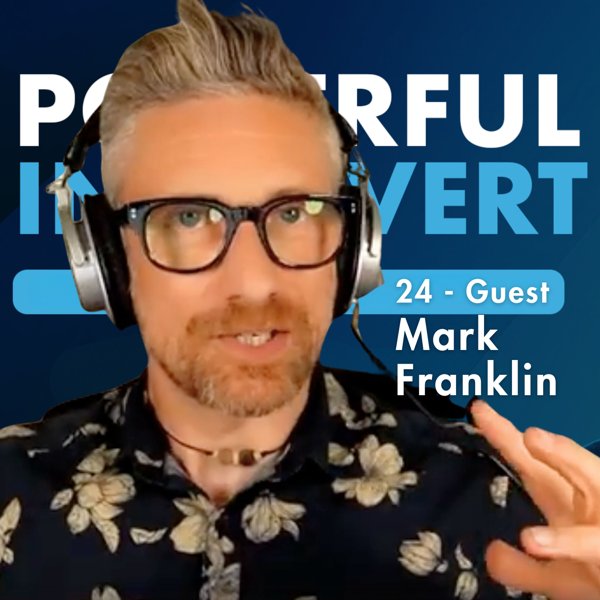
Mark Franklin, mindset expert and author based near Oxford, UK, introduces his Four Fears framework—the most common limiting beliefs that prevent people from pursuing the business or life they want—and demonstrates how each fear is, at its core, rooted in caring deeply about what you're trying to do. Himself a late-identifying introvert, graphic designer, musician, and former corporate leader, Mark shows that introversion is fundamentally about energy management, not shyness, and that the same listening and reflective capacities that make introverts feel out of step in the corporate world are exactly the qualities that allow them to read a room, find the right words, and contribute with precision rather than volume.
Our relationship that we have with failure is a choice. It sits somewhere between the factual version of what's actually happening and the emotional version of how that's making us feel.
The only reason we're wobbling is because we want to do it really well. The fear is proof that whatever is in front of us is something we care about.
I used to block time out to ensure I had moments for myself to either recover from something that was going to affect me in a less positive way, or to prepare for something big. No one could see those gaps in my diary—they just thought I was really busy.
There's a lot of positive in here—I worry about it because I care.
Key Stories
- Blocking the Diary: As a corporate leader, Mark would secretly block time in his shared calendar to recover from draining meetings or prepare for high-stakes ones—no one knew, they just thought he was busy. He now freely admits this as a necessary energy management strategy.
- The Drumming Metaphor: Mark is a drummer, and he draws a detailed analogy between the technique of holding drumsticks loosely (letting the stick absorb impact and rebound naturally, enabling faster and more dynamic playing with less physical energy) and the business skill of managing energy efficiently to create more impact with less strain.
- Only Child, Happy Alone: Mark describes a happy childhood entertaining himself with Star Wars toys, inventing stories, and filling sketchbooks—not isolation, but creative solitude that he now recognizes as the introvert recharge pattern rather than a deficit.
Techniques & Frameworks
- The Four Fears:
- “I’m Not Ready” (perfectionism): Doing something today is better than doing nothing at all; perfection is subjective and progress is the real goal.
- “I’m Not Good Enough” (imposter syndrome/comparison): Look at your body of evidence—the things that actually happened—rather than projecting unfounded fears about what might happen.
- “I Don’t Have Time”: Usually a cover for one of the other fears; if something truly matters, you find the time.
- “What If I Fail?” (fear of failure): Your relationship with failure is a choice—somewhere between the factual version of events and the emotional story you tell about them. Move toward the factual version.
- Action-Impact-Energy-Technique (AIET): Mark’s drumming-derived framework for using intentional energy management to create greater impact in business and communication.
- Body of Evidence Reframe: When the “not good enough” voice appears, deliberately inventory the specific moments and achievements that prove your capability—then lean into those rather than the projected fear.
Full transcript
I recently gave a talk where I was discussing this idea of our relationship that we have with failure is a choice. And it’s a choice that sits somewhere between the factual version of what’s actually happening and the emotional version of how that’s making us feel. And the more we can become comfortable, or the more inclined we become to lean into the sort of factual version that body of evidence that kind of proves that it is good enough, it is ready to put out there, it’s important enough to make the time to do those things. And if it doesn’t quite go according to plan, we see it as a teachable moment and a learn experience as opposed to all that noise in our head that says people will be judging us and laughing at us and therefore I shouldn’t do this again. Hello, welcome to the powerful introvert podcast. I’m Greg Wanger. I’m here today with Mark Franklin. Mark is an author, a speaker, and a mindset expert and business strategist with over 20 years of experience supporting business owners to embrace what he calls their four fears. Really excited to get into that. These are the most common barriers that are preventing people from having the business and or life of their dreams. Mark invests deeply in his clients stories and he provides uplifting, relevant and engaging support to unlock the bravery and belief that they need to pursue their happy path to success. Mark’s vision is to help others write a better story for themselves and their families. Really great to have you on. Welcome to the show. Thank you so much. Greg, I’m really looking forward to this. So you obviously hail from the United Kingdom. Am I correct? That’s right. Yeah, just outside Oxford, so right in the middle of the country. Absolutely. Beautiful countryside. I had privilege of spending about four months and I was in my college years. Just loved it. Absolutely charming place. It is. Yes, we are very lucky. We are to the cops, Walt, which is beautiful. That’s a beautiful. Do you spend time in Oxford? I imagine a number of us have Harry Potter, fantasies walking around the dark and shadowy alleyways there. I’m going to confess I don’t spend anywhere near as much time in Oxford as I probably should. It’s one of those things when you live so close to something you just overlook it. You just take it for granted. But every now and then when I’ll go into the city, it is breathtaking to see that architecture that’s a thousand years old. It’s crazy. It’s absolutely crazy. Yeah, recall going into a pub, they said, this is the oldest pub in Oxford. I had to crouch down to it. Again, my head under the door. It was super cool. I think there are about three pubs in Oxford that claim to be the oldest. So there’s a bit of competition there. But yeah, yeah, it’s great stories, great stories. Yeah, that tracks. Speaking of stories, maybe you could tell me a little bit about your story or background. And as I understand you’re an introvert, please confirm or deny. I am indeed. I would say relatively recently identifying as such. But yes, no, that’s definitely me. Yeah, and similar to me, I and Johnny come lately in terms of realizing and understanding that. But could you tell me just a little bit about that journey? How did you discover that? Sure. And I think again, just to thank you for inviting me on the show, what I love about powerful introvert. And this side that you’re myth busting a lot of that sort of noise that surrounds introversion. That one of the reasons I came so late to that, so admittance of yes, I am an introvert is there are so many labels that surround it that are just not true. We’re not shy and quiet retiring all the time. We’re not the group of people who choose not to contribute or don’t have ideas or don’t like to be stood on stage. And so on. Yes, there are sort of defaults and things that we feel more comfortable with. But actually, it’s so much to give. And what convinced me, I think to accept, yes, actually, you know what this is me and it was a really exciting moment was this idea of for me, introversion has always been about managing my energy, which is, I think, is a very common sort of theme within the topic. I’d previously I’ve never quite got my head around what that meant. So there were times when you know, as a speaker, I’d be up on stage looking to a huge room. I’d be in my element. I would love it. And I’d feel so much energy off of that audience. But afterwards, I’d be exhausted. And I thought, well, how can I be up for one minute down the next. And then equally, there were other times where being on my own, having that kind of solitude where I’m deep thought processing and analyzing and coming up with ideas and really exploring. So notions and things that I want to play with is another sort of moment in my life where I’m in my happy place and feeling that energy and that buzz. How can I be both things? How can I enjoy that solitude and take strength and comfort and sort of pleasure from just being me. And yet at the same time, be up on stage, speak on podcasts, put myself out there, which is supposedly not what introverts do. But it is. It’s all about that sort of understanding, understanding your energy and understanding that, again, that misnomer of introverts are their most energetic when they’re on their own. That’s when they top up their tag. That’s not true. We top up our tag from being in the right room with the right people and enjoying that sort of collaborative process and feeling of other people’s ideas. Because I think we’re good listeners, typically we enjoy hearing other people’s stories. We love to learn. So we love to absorb other people of sharing telling us and that helps us in those kind of deep moments of reflection and thought and personal development. And then we get to turn that around and put it back out there. That for me, I think is where I’ve got really excited by the fact that yes, I am an introvert and proud. Thank you. That was just a really beautiful description of my experience. I hope that other people will resonate without as well. Because that was a situation that was just very confusing for me with the mental frameworks that I had. How can I really enjoy being in one-on-one conversation with people? And I think that’s a point that I don’t think I’ve made clear enough in my work so far is how energizing it is to have a conversation like this, even better that our oldest English public in a hogsburg next time. But yeah, you could be up all night and completely energized by talking about ideas. So that’s an important point. The other one is public speaking, performing. I had somebody on the show not too long ago who is a comedian. She loved getting up on stage. There’s just no end of people who are doing things that don’t fit the traditional definition of someone who’s just shy and red-spiring. Thank you for all that. You said you came to this lately. So what was your experience prior to that? How did all this show up in your early and then formative years? Yeah, it’s a great question. Again, thinking about those incorrect labels of being shy and quiet and happily entertaining myself. I’m an only child. When I was very young, I was very happy being in my bedroom, playing with my star wars toys and just entertaining myself. I think I found great source of creativity within that time inventing stories and playing out games and so on and so forth, which I absolutely loved. I am, by nature, a creative, an artistic, I am musical by career, essentially art and design and a graphic designer by trade. So I love that whole process of jortling down ideas and squiddling things and thrashing stuff out and just that whole process of playing with shape and space and color and so on and so forth. And there are times, again, coming back to the collaboration. There are times when I do that beautifully all by myself. And I’m really in my happy place just losing hours, scrambling and filling scrapbooks and notebooks and so on that I used to do when I was at college. Equally, as I developed through my career, I started building teams, leading teams, working with others, working on larger projects, the energy that I got back from other people in the room who were sparking ideas and making suggestions that I never possibly come up with what myself was just so invigorating. And I think it was that again, the acceptance of the introvert label, which is a really clumsy way of saying it, came about from that realization of, yes, I am happy being by myself. Yes, there are times when I’m out socially and I am the quiet one because I do like to listen, I like to absorb, I like to watch and observe, and I take an awful lot from that because I’m very open to learning from those moments. Equally, there will be the occasion where I’m the one holding court and sharing the stories and telling the jokes and much less, the comedian that was on your show yet. That can be a happy place too. And I can be all these things and still be comfortably associated with the fact that I am introverted. I like my space, I like to manage my energy in my way, I can turn up in different ways, in different spaces, in different groups of people, and that’s okay. There’s just a lot of autonomy in this is what it’s hearing. The possibility for introverts to really be master of how they want to show up in the world. And if you can separate yourself from the external expectations and pressures, you have such a variety of ways that you can show up. And I think a lot of that depends on how well it tuned you are to what’s going on the inside. Quick tangent, I listen to this amazing interview with Rick Rubin, Christopher Tippett’s on Being Podcast, such as legendary producer. Basically what we’re talking about is very sensitive person is just extremely tuned to his intuitions and his feelings. And he’s allowed us to guide him through his life. I think that’s a great description of the potential that’s there for all introverts and so happy to have your description of that as well, because I think that’s really aligned with that. I think you’ve put it far more eloquently than I had, but you’re absolutely right. It is that permission to be ourselves on that. Okay, there’s get by sometimes have sort of an issue, I guess, with labels. And I’m using that word deliberately clumsily. But if we were to assume there are those two labels of introvert and extrovert, but unthiatically people expect or interpret extrovert as being better for some reason. They’re the leaders, they’re the people who are out there at the front of the room, they’re setting the direction, they bring energy. I think it was David Hall said on your show this idea of the sort of experts speak first in order to then think where is introverts. We like to think first in order to better inform what we say. Yeah, there’s this kind of extroverts, great leaders, powerful, addubrants, full of energy, introverts, therefore less so. The Bleacher Report app is your destination for sports. Right now, the NBA is heating up, March Bandis is here, and MLB is almost back. Every day there’s a new headline, a new highlight, a new moment you’ve got to see for yourself. That’s why I stay locked in with the Bleacher Report app. For me, it’s about staying connected to my sports. I could follow the teams I care about, get real-time scores, breaking news, and highlights all in one place. Download the Bleacher Report app today so you never miss a moment. And it’s just not the case. It really is. We all have so much to bring in again. I think it’s one of the things I really enjoy about your show, great. It’s this sort of equality of we are, who we are, and that’s absolutely fine. And again, in different spaces, with different environments, different sort of people, social settings, opportunities, within work outside of work, we have these amazing strengths that again, as long as we give ourselves permission to manage our energy in a way that serves us in that moment, we can contribute so, so much. Absolutely. I think we should turn to that art or the practice of managing energy, because this is where I’ve struggled most in my career. I’m maintaining that balance that’s right for me, because you’re not always in control of the situations that you’re in. So it can be challenging, especially if the situation isn’t well suited for you. I’m not feeling like I have the energy to show up in the way I want in this situation, or I don’t want to be here. So can you say a bit more about the energy management aspect, what you’ve learned and experienced? Sure. I think it’s a very valuable and honest point that you make there in terms of you do author-wide ourselves in places where the situation is slightly outside of our control. It’s how comfortable, how brave, how prepared we are to do something about that. You can be half of ourselves, regardless of who you are and who you are working with, who you serve, whether it’s in business, at home with your family and so on and so forth. You can’t pull from them to cut, as the saying goes. And having given yourself permission to firstly acknowledge that and then do something about that is so powerful and so important, I can speak to, again, myself a former corporate career before I went out on my own just over two years ago. There are many occasions where I’d find myself in a space where I thought this isn’t working for me. I’m really struggling. I can admit this now because I’m not in there, but I used to, in terms of my diary, which everyone had access to, like you know, just drop in and call at any moment or request me to, I used to block timeout to ensure that I had moments for myself to either recover from something that I knew was going to affect me in a less positive way, or to prepare myself for something that was big and important and that I wanted to contribute in my best possible way to. No one could see those kind of missing gaps in my diary that just thought I was really busy. I’ll happily admit that now. I needed to do it. Otherwise, I was no good to anybody. I’m certainly wasn’t only good to myself. That’s a good tip and when I use and have used in my career for sure. And I think that there are certain things that you have control. There are a couple of things that I’d want to draw out. One is the self-awareness of maintaining, like, how am I in the situation? Some of that is anticipation. Okay, here’s a situation coming up. Let’s look at my day. What am I going to need through that day? And then I think there’s what can you do within a situation? And I think there is always something you can do. You could say, excuse me, I just need to step out for a second. Or you can suggest we approach this discussion a different way that’s maybe better for some of the quieter people in the room. But if you’re always thinking ahead and you’re thinking along those lines and you have that awareness in the moment, there’s so much more that you can do to manage your MG than maybe you think you do. I’m still working on this and I’m still in a corporate role. But this is one of the things that I think about and I do it for myself, but also to support other people who I know have a similar nature. Yeah. Yeah. There’s two sort of elements within the work that I do now around the four fields, which I think play into this. I help people really dig into the clarity and the bravery around what is they really want and whatever is they’re doing in business and life. And the bravery around how important is it to them in order to take the steps to make it happen, leaning into what you’re saying there Greg, the clarity around why this meeting is important, what the end goal is, what we are trying to achieve in this moment. And the bravery to keep that meeting on track and pull it back to that focus so that it does serve the common good everyone in that sort of scenario, having that awareness again. I’m going to keep using the word bravery because I think it’s really important. But there’s a bravery there’s the confidence and the clarity around recognizing this might not be serving me. There are other people in this room that it also doesn’t serve and I will take this moment to stand up for them. If that’s one way that you want to put it. And again, I wanted sometimes this is something I’ve been reflecting on myself. I’m not sure if I have the answer yet, but because as an introvert, I enjoy that listening. I enjoy that processing, that analysis of what’s going on. What can I learn from this? How can we make this better? Again, my creative brain is kind of taking over what’s the magic that we can find from this? I’m using that energy to pause and wait, observe what’s happening. I’m perhaps the quiet person in the room in that moment, but I’m the quiet person because I’m working on finding the right words that I can then share with confidence in spite of or because of my introversion. But I can contribute something that I know is going to be right for the room. And that I can feel cult with with sharing in that moment. So I’m not creating an anxiety within myself of blurting something out because I can sense that things aren’t going right. I’m using that moment to contribute the best possible way I can. But again, coming back to the energy management, having used that quiet pause and that space to ensure that this is right for me. Does that make sense? It does. If I can restate one of the things you’re doing is you’re grounding yourself in that moment. And there’s something intuitive about this. Like you’re quieting your mind and you’re tuning in. In a sense, you’re getting more present and more to and to everything that’s around you, the entire situation. And you’re looking for some kind of internal guidance of what is what is the most supportive thing? What is the best way? How can I best contribute in this situation? And I do think that is something that introverts would create the space to do. And that is a source of strength. Again, something I’m trying to do more of and tap more into. But that is a source of creativity and new ideas and maybe just the right words come to you to really shift the direction. I did want to broaden that as well because we’re talking about a business situation, a corporate situation. This type of thing could come up in a social situation. Maybe you people are coming in and starting to have an argument. There’s a disagreement. So I think this approach and this thought can apply in all aspects of life. And again, I thank you because once again, you’ve taken my words and put them much better, much better kind of definition than what I was trying to get to. But as great, but no, you’re absolutely right. It applies everywhere. Again, it’s that space to take a moment in order for us to be able to be the best that we can be in that scenario for ourselves and for those in front of us. Yeah, no, I love that. So you mentioned this is kind of part of your framework and you have the four fears and I see a cool looking book title out in the back behind you. Can you tell us about the four fears of business ownership? I can. Yes. So it’s actually the four fears are what I would define as being the foremost common hesitations or mindset wobbles that we each have. In terms of that kind of gap between what we tell ourselves we’re capable of versus what we’re actually capable of. And although the work I do exists within the world of business. So again, it’s helping you unlock your potential within your own career journey, be that corporate or self-employed, so no entrepreneur, etc. But it completely overlaps into sort of our personal lives as well. It’s all about that kind of inner monologue that we have those little voices that whisper those four things being I’m not ready. I’m not good enough. I don’t have time to do things I need to do in order to be as successful as I would like to be at the forefront being what if I get it wrong? That fear of fate. And from many years experience working with businesses of different sizes and different sectors and industries, those are the four variations on those themes. Some slightly peaked higher than others, different places or with different people’s stories. But those are the four that keep coming back and therefore are worth exploring. And let’s say embracing rather than dismissing. We can never get rid totally of that noise. It’s good that we have those fears and hesitations because in many ways they are proof that whatever is it’s in front of us is something we care about. We want to put time and effort, energy and passion into it. And the only reason we’re wobbling is because we want to do it really well. Maybe we can walk through those individually because I don’t pack those a bit if we could go a level deeper. Certainly the fear of failure. I’ll wait for that one. That’s a big one we are. Say the best till last year. That’ll be our dessert. So there was once the appetizer course. The appetizer. Possibly I’m not ready. Let’s start with that one. Which is essentially perfectionism. It’s this sort of getting caught up in the there’s this thing that I want to do. It needs to be absolutely right. It needs to be the best it can possibly be before I put it out there. Because if it’s not the best it can possibly be. Which links us into fear number two. The fear of not being good enough. If it’s not the best it can be. It’s not of a quality therefore that I think my audience will appreciate. They therefore might think less of me. I therefore their reflection on me is that I’m not good enough to provide whatever it is that I’m looking to provide for them. So there is the kind of sort of duality between those two. They do into twine quite deeply. But the thing with sort of the perfectionism piece is to sort of embrace that and turn that around. Only many things have been written about this. So I’m not creating something earth shatteringly new. My approach is slightly different. But essentially what we’re saying is doing something today is better than doing nothing. More right here. Perfection is entirely subjective. The pursuit of perfection is as it’s been said many times. It’s just futile. There is no such thing as pure perfection. However in that moment that one tiny step that moves you forward today is good enough. And in that sort of tiny moment there is an element of perfection in the fact that you have found the clarity and the bravery to do that one thing well enough today. And tomorrow you get to do it again just that little bit better because you will have learned from that first step. Then we move on to the I’m not good enough which is the imposter syndrome is the comparison it is. It’s the looking sideways in the very noisy world that we’re living at the moment. That’s so much easier because we’re constantly bombarded with images and videos and stories of what other people are up to. And we can’t help but think wow look at them. I can never be like them which simply isn’t true. Add to help people resolve that particular war. I guess the conversations that I then get into is that well let’s look at this body of evidence you are where you are in your life right now having enjoyed or endured a story that is yours and yours alone. There will be plenty of moments in that story which prove unequivocally just how capable you are. Let’s lean into those as opposed to project an unfounded fear of what might happen should I try something you have 99% of the things that we worry about never happen. And that fear of not being good enough is one of those fears. So let’s lean into the things that we know that have happened that again demonstrate our capability, our skill, our gifts that we can bring to the world and lean into that. It’s without going too deep into the sort of science in the whole sort of neuroplasticity of retraining your brain to think about what has worked well rather than defaulting to the what if it goes wrong. And then the third fear which is a not enough time which I think I’ve said many times is my favorite fear because that’s the one that most people would put their hand up to first because it’s very rare particularly if someone met me for the first time and I’m declaring hey I’m the fourth is guys and that sound really cool. I help you with embracing fear no one’s going to immediately volunteer say fantastic I’ve got all these fears let me tell you all about them. That’s not how it works but the fear of not having enough time is a good place to start because it sounds very practical and it sounds like it’s a fear that is difficult to challenge supposedly because I literally do not have the hours in the day to do the things that I need to do. Now of course that is relatively easy to challenge because come back to that clarity and bravery piece if you know what it is you really want. Are you actually spending the time that you have doing the things you need to do to make that up and if you’re not it’s almost everything not because you don’t know what they are. We all know the things we should be doing but there is a deeper reason a deeper hesitation underneath that is getting in our way and that again plays into the well I’ve got enough time to make it absolutely perfect because if it is absolutely perfect then it will be received as I have intended it to be received and everything will be fine and I will not fail. It will not let me down I will not have let myself down and that’s really what’s going on underneath the not enough time. But for me it’s a great one because sorry Carl. Yeah so it’s kind of a it’s a great entry point because it seems very practical in some ways it’s probably easier for people to depersonalize it. You know I objectively don’t have enough time but it sounds like it’s a excuse it’s a cover for some of these other deeper fears that you’re talking about. Absolutely yeah it’s exactly that I then we move on to our dessert failure which again it is the overarching those other three in so much as again if you play that story on your head if this thing I’m doing isn’t perfect and therefore isn’t ready to put out the world one of essentially saying is it’s not good enough. So therefore I need a bit more time to make it good enough but I’m still hesitating around giving it that time because that feels a little bit too hard there’s a little bravery that I’m not quite comfortable with putting into that effort and therefore all of this builds up to the best not putting it out there and best not taking that action or best not doing that braving because it will go wrong and if it goes wrong then I’ll have all those people looking sideways at me just as I’ve been looking sideways at them and what will they think of me there’ll be laughing they’ll be critical they’ll not want to work with me they’ll be judgmental etc. Of course they won’t the only person who ever sees 100% of what you do is you and everyone else who’s spending so much time worrying about their own imperfections and so on and so forth that they’ve got enough noise in their own head let alone get caught up in what’s holding you back but this is the narrative that we often tell ourselves and we get caught up in and what I hope to do with the sort of people that I support is just flip that energy around we’re coming back to energy here but essentially all of those four fears are born out of emotion and they are one might weepingly summarise as negative emotions but actually there’s a lot of positive in here as well again coming back to that I worry about it because I care and I recently gave a talk where I was discussing this idea of our relationship that we have with failure is a choice and it’s a choice that sits somewhere between the factual version of what’s actually happening and the emotional version of how that’s making us feel and the more we can become comfortable or the more inclined we become to lean into the sort of factual version again that body of evidence that kind of proves that it is good enough, it is ready to put out there it’s important enough to make the time to do those things and if it doesn’t quite go according to plan we see it as a teachable moment and a learn experience as opposed to all that noise in our head that says people will be judging us and laughing at us and therefore I shouldn’t do this again again it’s that kind of slight juxtaposition again that sort of seesaw I call it between the sort of the logical and the emotion the more we can shift your habitual thinking close to the logic then that energy that has been used within the negative emotion starts to work for you as a force of good creating that kind of momentum and motivation to cry to actually put that thing out today in all the Twitter rate and improve it tomorrow great point there at the end where there’s a minus amount of energy in negativity and yeah it goes bad there’s a lot of energy in it there available to be mind if you could somehow trans meet that into positive energy I get tremendous energy waking up every morning and working on this work this podcast I call my podcast business hours I get up at 5 30 and I’m just energized and I could be spending that time like just blocked by that I’m not bragging I spend years in that you have blocked in that negative energy not doing things and it sounds like you’re helping your clients are helping people with this work to take that step and develop some tools to transmit this energy I certainly hope so yes and if we were having sort of one of my conversations I guess Greg I could very easily start asking in the case that you tell me about the podcast why is the show important to you again coming back to the introversion piece you are an introvert who is pulling themselves out there online hosting the show facilitating invite other people to share their stories creating a safe space that’s a lot of energy for you to be sharing but there must be something that’s so important to you again you that clarity and bravery piece there must be something so clear in terms of what you want the show to achieve that’s giving you the bravery to wake up at 5 30 dedicate that time without distraction or hesitation this is your podcast show time your passionate about it is giving you something back there’s an awful lot of fantastic stuff in that was kind of hopefully proves my hypothesis of when something is so important to you and you’re so passionate about it you can find the time you can find the energy you can find that self belief to commit to it whether you are a shy retiring introvert I don’t mean that but you know exactly that whatever it is I love that I love seeing people have that passion that clarity that energy that confidence to commit something that means so much to that and I’m again I’m hoping you are hope that’s what the show gives you it does absolutely I think that’s a really important inside that it is having clarity about the mission and my mission is to help people as many people as possible realize their potential and be more comfortable in their lives and improve the lives around them that is the hook that’s tremendously motivating for me and I think each of us has the potential to access that that sort of what is it for you what could be a really meaningful difference that you can make in the world an impact that you can make in the world and for each of us it’s different but you’re only uniquely you you have a unique gift to bring to the world each of us I just happen through this work you get to meet just a succession at least a couple of people a week people like you doing fantastic things amplifying similar messages helping people I think we’re all broadly speaking we’re helping people to become more conscious and a part of a broader evolution in the world and yeah it’s tremendously exciting I’d like to be part of that with you. Thank you and as you said I love that idea she just suggested helping people become more conscious of their gifts and their capability on what they can create an offer and share that’s hugely powerful very rewarding you touch on something else in there we can make a point that spinus is different from introversion met a very non shy introvert the other day but a lot of us are shy and have a lot of shyness or just anxiety for one reason or another is socially anxiety. I’ve got them in spades and the wonderful news about any anxiety is it is completely curable it is something that you can overcome with basically exposure bravery coming back to that and the more you do something the more comfortable and that’s really a big story of a lot that I’ve done over my life I also find myself in situations I’m not shy at all so I guess you’re not bad if you’re feeling shy either because that’s something to own and honor and value and that’s not a big story. It’s also something that can be overcome if you choose to 100% agree and I was delivered using the word shy to be that kind of slightly that sort of slightly provocative or all introverts of shy of course they’re not but you’re absolutely right in so much as we are who we are I’m shy absolutely I have a number of anxieties as well but that makes me who I am and as you rightly say there are moments when that shyness dissipates because you find yourself in a space that allows you to be a little bit more vocal a bit more brave so but it’s who we are is who we are we should absolutely be 100% proud of that all the time is different sort of traits and strengths and values and nuances within our personalities are all to be celebrated all the time. Man so you are a musician you mentioned your very creative very creative individual and played music and you mentioned that how impact on the way you think about energy could you talk a bit more about that sure yeah so I’m a drummer even though this piano in the background that’s not actually mind the drug it’s next to me I played drums longer than I have done anything else in my life it’s a huge part of who I am again with a smile again with a sort of I suppose with the introvert sort of element of my life there’s a sort of jock suspicion there you’re a drummer you spend all that time on stage you’re the guy thrashing around how can you be an introvert the beauty of being a drummer is your top to wear the back no I can get to you so pretty so space so that works really well actually for the point of being interrupt but coming back to the energy piece there’s a number of elements the story I guess that I could ship firstly as a drummer it is a very physically demanding. I’m a very demanding instrument from a mental health perspective there is nothing more rewarding cathartic invigorating refreshing you beating the heck out of a good set of drums there are those moments where we all need to let go and a drum kit is a perfect place to do that so when you have one of those days where it feels frustrating you feel lost and you’ve been in those meetings where you just felt out of control and deeply uncomfortable sitting at a drum kit it’s a good place to be but equally there’s a lovely analogy that again I’ve done really become aware of in the last sort of one or five ten years within my playing as a drummer and this is a business analogy I guess more than anything well I think it overflows into life as well as a drummer you’re putting an awful lot of energy into the kit and you’re creating impact you’re making this sound you’re making this noise and there’s a lot of risk we’re playing trunks is that you’re playing all this energy in and of course you do Newton’s law says you’re every action there’s an equal opposite action you’re pounding a drum kit you’re getting those kind of reverberations back up your arm through your wrist and so on there’s an awful lot of risk of injury you can really hurt yourself but with good technique you can control that energy and use it in a way where you’re actually able to play the kit better like faster play when you want to create those accents rock down to have a greater range of dynamic and actually use less energy or use your energy better in the book as I’ve my shoulder there’s a whole chapter around drumming which seems like a very strange thing to add into like a book about mindset but it does explore this idea of if you’re working a drum you’re getting all that energy back up your arm because you’re gripping that stick too tightly what if you relax if you relax let the stick breathe the stick absolves a lot of that impact and also the loose of the grip more sort of flex the stick has and then you’re in that place where you can use your fingers rather than your wrist or your elbow or your shoulder take the movement so suddenly you’re in this position where you can create multiple movements create multiple beats using much less energy but again from a music hard to point of view so the things have got a lot more interesting because there’s an awful lot more that you can do I could really lose myself in the geekery of music and drumming here because I’m trying to be very careful not to bore everyone out of it I suppose yeah by pointy as I suppose you’ve got this instrument in front of you every single drum every single element or instrument within that kit serves a different musical purpose can come back to the business that I did you could think of the different departments within your company if you’re able to move around all those departments add value create impact in a right way that doesn’t drain you of your energy in fact you’re using your energy better to better serve that particular instrument to create something that has more musical business emotional value that there’s something really interesting there and that’s where again sometimes when I just do talks on stage talking about as mindset and I call it action impact energy technique it’s that idea of using drums on stage to demonstrate this ability of knowing what you want to create having the skills to actually create it and manage your energy in a way to deliver it in a more beneficial rewarding musical presentation sorry I really want to know I could do that’s never asked me about the drums break you could lose me for days oh no I can I can listen to you talk about the drums for the it’s fascinating you’re it’s coming to me you’re describing a kind of mastery and I think mastery in in any domain I think there’s something that’s interrelated about it it’s you know all the different aspects so well that some of those things become more unconscious and then you’re truly living more in the moment you’re directing energies and because you have this mastery you can do this in a way that is an exhausting to you and you can do it in a way that that really benefits everybody so I definitely see that could be in martial arts or it could be in speaking or in leadership absolutely I think it’s a beautiful metaphor and with interesting specifics I think that’s one thing I have never tried in my life that it sounds fantastically cathartic to just beat the heck out of it you drum again I could thoroughly recommend it yeah master is a great word thank you for picking up on that and again linking about mindset mastery we talk about neuroplasticity retraining our brain rewiring our brain to focus on the positives with a drum kit it is that kind of muscle memory is the physical equivalent it’s moving to a place where the movement the actions the actual sort of the playing out becomes so natural and comfortable and familiar that it works for you coming back to the four fears if we’re in a place where those limiting beliefs that in a dialogue is not serving you how can you practice and prove your technique and create a better impact in a way that retrench your brains muscle memory to serve you more effectively beautiful so Mark you do coaching as well at this point yes so one to one coaching with see this or I have to be careful because I get so excited about helping people in any way people in any sector I can work with anybody which of course will be helps nobody I work very well with creative so people in the creating sector again design as illustrators artist editors musicians anybody who has that similar background that I have that sort of familiarity with but the one to one training I do or coaching that I do the beauty of it is it’s your story so whatever your background whatever your new into a history and those beliefs wherever they sit with you it’s your name is your story so my job is literally to help you as you said very kind to the start right a better version of our story but yes a coaching is a part of it speaking is another part of the speaking much like the book works for me in a way again coming back to that no one volunteers to share their fears immediately the first time they meet me a room full of people is a great way of introducing the concept of the full fears and allow people again in their own time in their own space to explore their own how do you use to was vulnerability around those fears but without having to hold their hand up to create sort of the first step into exploring those thoughts around hold on a minute I see I am good enough I am better at this than I think maybe I am ready to take that next step such a so there’s a nice kind of strength there in terms of from my point of view reaching more people but from the audience is point of view having that permission to start playing with those thoughts on their own terms so glad you’re out there spreading this message and encouraging people in this direction so I hope people really take that to heart and get some value from that if people want to learn more about you or your work where can they go it’s very easy to remember so the website is mark franklin dot code at UK and I’m very active on LinkedIn so that’s probably the best place to come and find me you might even stumble across and drumming videos on there as well excellent will check it out thanks so much for being on the show today mark really glad to have you oh no thank you Greg I really appreciate it it’s been an absolute delight thank you