How to Get Meetings Right and Let People Thrive
Speak Up in Meetings with Quiet Authority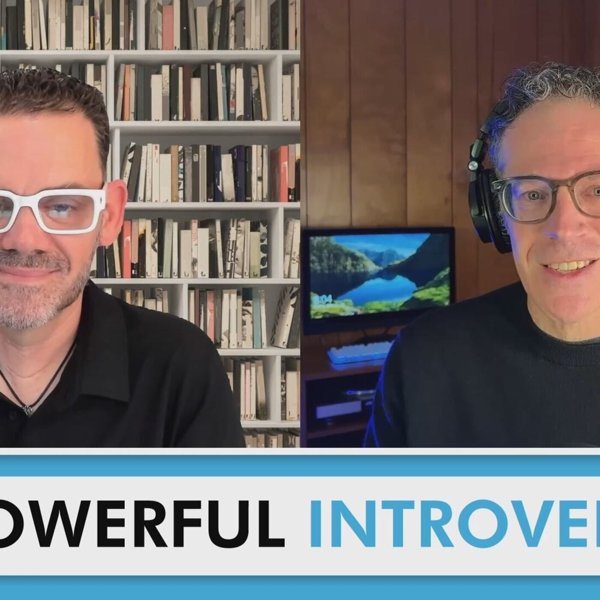
Chris Dyer is a multi-time CEO, keynote speaker, and culture expert whose companies repeatedly earned "best places to work" recognition. His core insight is that getting meetings right is the key to getting culture right — and he shares a concrete system of named meeting types designed to unblock people, reduce unnecessary time in rooms, and surface the quieter voices that most organizations are losing. For introverted leaders, this framework is a direct antidote to the draining, open-ended, endlessly recurring meetings that burn their energy without giving them room to contribute.
If you get the meetings right, you get the culture right.
You can't just speak a culture into existence. It has to be created.
It's your job to do the hard things. It's not your job to do the little things.
Less meeting time is so impactful for introverts because introverts are burning a lot more energy — they're deeply processing everything.
Key Stories
- The COVID Pivot: After years of deliberately fostering a culture of employee-generated ideas, Chris’s team came to him unprompted during COVID with three fully researched pivot strategies — the payoff of a culture that had finally learned to trust people with autonomy.
- The 2008 Blank Stares: When the recession hit and Chris needed ideas, he faced a roomful of employees who had been conditioned to wait for the boss to tell them what to do. It became his wake-up call to change his leadership style entirely.
- Jason vs. Greg in the Tsunami Meeting: During a scenario-planning session, Chris noticed an extrovert (Jason) dominating and an introvert (Greg) going unheard — and used it as a coaching moment for both, illustrating how leaders can actively rebalance meeting dynamics.
- The Vacation Email Delete Ritual: Chris’s “wired or fired” vacation policy, combined with a 15-minute re-entry ostrich meeting where returning employees deleted all emails from their absence, led directly to higher employee happiness scores and higher client NPS.
Techniques & Frameworks
- Seven Pillars of Great Culture: Transparency, positive leadership, leveraging mistakes, celebrating uniqueness, listening, recognition, and one additional pillar — the foundation Chris uses to assess and build company cultures.
- Cockroach Meeting: A 15-minute max, optional-attendance, anyone-can-call-it meeting for small problems; goal is to end early. Averaged 7.5 minutes in practice.
- Ostrich Meeting: Same structure as the cockroach meeting but for knowledge transfer — “I need to get my head out of the sand.” Also used as a post-vacation re-entry briefing.
- Tiger Team Meeting: Mandatory, leader-called, longer-format meeting (1 hour to all-day) reserved for genuinely large challenges or opportunities with a real agenda.
- Tsunami Planning Meeting: A monthly fake-scenario meeting (e.g., “what if the CEO is in a coma?”) that spurs innovation and reveals meeting-room behaviors so leaders can coach both the dominant voices and the quiet ones.
- Bonding Check-In: A round-the-room question — “How are you showing up?” (not “how are you?”) — that surfaces real human context; leader always goes last. Closed with “How are you leaving?” to surface unspoken objections.
- Parkinson’s Law: The principle that work expands to fill the time allotted; Chris uses it to argue against default 30- and 60-minute meetings.
- Rigid on big things, flexible on small things: A psychological safety framework where leaders are visibly firm when it matters most (e.g., harassment) and deliberately push autonomy for minor decisions.
Full transcript
The Bleacher Report app is your destination for sports. Right now, the NBA is heating up, March Bandit’s here, and MLB is almost back. Every day there’s a new headline, a new highlight, a new moment you’ve got to see for yourself. That’s why I stay locked in with the Bleacher Report app. For me, it’s about staying connected to my sports. I could follow the teams I care about, get real-time scores, breaking news, and highlights all in one place. Tell of the Bleacher Report app today so you never miss a moment. Hello, I am Greg Wanger, here with the powerful, introvert podcast. Today I am here with Chris Dyer. Welcome, Chris. Hi, thanks for having me, Greg. Yeah, absolutely. Chris, I’m really excited to have you on here today. You have a very impressive CV, many times CEO, multiple times. You’re a featured speaker, keynote speaker. Your companies have been the best places to work, voted multiple times, ink fastest-growing company multiple times. But the question I really have for you is where did you get such fantastic taste in eye glasses? Well, the funny story is I got eye surgery years ago, a few years ago, and they didn’t tell me that that was going to cause me to need readers. Right on the same time, my grandson was born. I remember my grandfather always had these big, giant glasses. And so I joked around and got some really big, giant glasses. That sort of evolved into, I noticed like people really were paying attention to that. They thought it was interesting or funny. And so I just kept playing around with different glasses and different colors. And I have this one in orange that people absolutely hated. I mean, the visceral red apple in orange glasses. And so I tried the white and it had the opposite. I loved them. And I’m like, OK, that’s it. White glasses I’m done. So that’s the new brand. That’s smart. It’s definitely an iconic look. And in my mind, these are kind of extroverted glasses. And I focus on that topic a bit. So it brings up the question. Do you consider yourself an introvert extrovert or somewhere in between? I am a card-carrying extrovert, that is for sure. That checks out. It’s awesome. And it’s definitely useful, personality trait for a CEO. But you are inspiring me to pick out some more extroverted glasses. One of the things I want to get into and we’ll build up to it is I’m interested in supporting aspiring leaders who happen to be quieter, maybe naturally introverted. But they want to go out and have a bigger impact. And one of the things I recognized is a lot of times company cultures don’t support individuals who have leadership potential but don’t necessarily fit that extroverted mold. So I’m super interested in your work in creating great dynamic company cultures and what I want to get to a little bit is how do you change cultures and how do you make them great and supportive for everyone? Because the intention is to get the best out of everybody in your company. Yeah. We start with the problem. What is wrong with company cultures today? Yeah. Probably the easiest way to say this is that you can’t just speak a culture into existence. You can’t just say it. It has to be created. It has to be really intentionally figured out. And that comes from a really deep sense and deep understanding of I think as a CEO or the owner of the business, like who you are or what you really want for your organization, how you see it operating. And very few people have that understanding. And so what they end up with is some cockameme version of like something they had before in different company and something they read in a book. And then like, you know, the inmates are running the asylum essentially, you know, half of it. And that just doesn’t work. So the being super intentional is probably the most important thing at the beginning. And of course, I have some things that we’ve studied and worked on that I think are the pillars to greatness. But if you at least want to be good, it’s got to be super intentional about what you want. And this matches my experiences that the company culture starts with the CEO, the founders, the founding team and they set that tone. And it can be modified to an extent, but just an outsized CEO has an outsized impact on that. Is that your experience? Yeah, absolutely. So then if you don’t have that, what are the downfalls? What are the impacts? Well, let’s just flip it, right? So what do we see out of the greatest cultures? We see higher profits, higher performance, higher productivity. So the weaker your culture is, the harder time you’re going to have, getting to those goals around productivity, performance and profits, which is really the three things that I consistently hear that CEOs care about. I mean, they care about a lot of things, but whether it’s their personal preference, a personal goals or the board or their investors or whatever, we know those are the three things that they think about all the time. And what blows my mind is that they spend so much time on all these other things besides how to make work not suck for their people. I mean, creating that good culture is that gateway right into having those things be better. So let’s continue with that. What are these hallmarks of a great company culture? Sure. So there are seven pillars. So again, to kind of take one step back, if you want to at least be good, you’ve got to be intentional. You’ve got to have your mission statement. You know your values, you’ve got to like have goals and there are certain things you need to at least be doing. But if you want to be great, then you have to be really, really good at transparency, positive leadership, knowing how to leverage mistakes, celebrating uniqueness, listening, recognition. Those are all the seven pillars that you have to be really, really good at. Now, most people might, most companies might say, oh, well, you know, we’re pretty good at recognition. We’ve got a little program. We do something over there. And you’re like, yeah, but, you know, does anybody know anything about why decisions are made? Does anybody know what the goal is? Does anybody have any transparency into what is really happening with the company? Right? It’s great to pat people on the back. But if nobody knows how anything is done or why decisions are being made, you’re going to really struggle. So all seven are super important. Yeah, absolutely. They definitely see in a number of those. Tell me more about celebrating uniqueness. Yeah. So, uniqueness shows up in a lot of different ways. The obvious one is how do we celebrate what makes each employee unique? This is where we make sure that we don’t end up with like 19 people of the exact same background and, you know, look the same, act the same, talk the same, went all the same school. Like, there’s that part. There’s also the like, how do we celebrate that this person is wildly effective and they’re really good boss, even though to your point, they’re not an extrovert. All right, but they’re really effective personally. How do we recognize those things about people? But what their strengths are about what makes them tick, what makes them special, not what makes them the same as everybody else? Right? So I’m in Orange County. If I only wanted to hire people, I thought were Anheim or Los Angeles Angels fans. I get a pretty slim group of people and that’s a pretty silly way to think about hiring. But honestly, like I’ve seen managers at hire people based on if they have similar likes and hobbies as the manager. And that’s like, are you kidding me? Like, I don’t want the best person to come and do the best job. Uniqueness also shows up in, can marketing, can sales really articulate what makes the product unique, what makes the company unique? And we really talk about that as a story is the managers and the leadership talking about what makes the organization unique and why that is a good place for the employees that they’ve hired to work. So we’re constantly focusing on this, trying to stand out that needle in the haystack and all these different moments from client facing, divender facing to employee facing. We really have to get that messaging right and we have to get that approach right. Yeah, that’s interesting. So the concept kind of applies both to using another word, diversity or including different recognizing, different voices, recognizing that that makes you stronger and you have more diversity of opinion to get to better results. And then the other part is, what is your unique competitive advantage? What makes you stand out as a company and as a product in the market? Yeah, that’s cool. So and then have you been in situations where you’re not able to start fresh with a company culture, but you’ve actually have to go in and actively change something that’s existing. And how do you go about that? Yeah, I mean, I do this quite often where companies or our leadership is struggling and they want to get from, you know, A to Z and they’ll bring me into help. And very often they are overly worried about the larger processes and larger things. And really culture is quite simple, at least from my perspective. I think human beings are complex. And what we have to do is be able to serve up to them. This is how we operate. These are the guardrails. These are the rules. I mean, really spending that time to create that environment where we sort of show them very clearly where they can exist and where they can operate and where they can’t. I’m not saying that the rules are the same for every company. I mean, I’ve worked with companies where those boundaries move around quite a bit. That’s up to the organization itself. But creating those sort of, okay, we’re not going to go past this line if you do like you can’t work here. Like that’s not, we’re not that kind of company. I’ve been in organizations where they’re super cutthroat, super competitive. I mean, they would, you know, you’d be, some companies or people would be appalled to be in that culture. But like that works really, really well. And people want to be in that and then it’s high growth and it’s high pressure. And like, I mean, come over here and I’ve been other cultures where, you know, it’s come by on. They’re all holding hands and singing a song every morning. And it’s like totally different environment. But the idea is still the same thing. So we create that place. And then after that, we’ve got to get people on board with that. And that comes from having conversations and including them and getting them to think about what, what is a great workplace look like for them? What does a great team look like for them? What does a great boss look like for them? And the answers are what we would expect. But there’s some magic in them telling us that and us listening, what’s one of the pillars, just listening to what they think and being able to then put some of those things in action. And for them to feel like they were a part of that creation. I don’t know if you ever saw the movie, the hit trackers guy did the galaxy and you may have read the book, but in the movie, they screwed up and they’re going to recreate Earth and say they’re literally like deciding what’s going to happen. And it’s a little bit like that of like, we kind of already know what needs to happen. But if you bring some of the employees along and say, well, this should be a river here, should there be a tree there? And they kind of feel like they’re a part of that. There’s real magic in that. And I think the leaders and managers make the mistake of like, well, I already know what’s supposed to be here. I already know what the design is. And I’m going to tell everyone what we’re supposed to do instead of letting them be a part of that. Love that analogy with the recreating. Bring people along when you’re recreating the world. What I’m hearing in that and I’ve heard this from some other folks is like, you’re not going to change every culture. Every culture is unique. And maybe that’s part of that tied into the CEO and the founding teams, that kind of thing. So you have to find a place that’s going to be a good fit because there are people who just love these cutthroat cultures that might, may not be a good fit for someone who is on the quieter side. Yeah. And what I see is when we go in and we’re super intentional and create this together, when you bring people along that 99.9% of them, they modify their behaviors. They become what we need from them. And that’s because they understand now what the rules are. And I’ll give you an example of how that works in a second. But like the other ones, they tend to leave on the road. They tend to opt out because they’re like, oh, I can’t yell and scream and get my way anymore. Or like, I can’t manipulate the whole situation because now there’s transparency. Now there’s clarity about how we make decisions. And I can’t come in here and weasel my way in and do what I want to do. Like, you know, that kind of toxic person’s like, I’m going to go find somewhere else to go to be toxic. That’s not how they see it, but essentially that’s what’s happening. Think about like a birthday party. Birthday party is the most popular party that you’ll, you will ever go to. And that’s not because we care about someone’s birthday. It’s actually because there’s very defined rules about what happens when you show up, when there’s appropriate time to go, how you’re supposed to act, what you’re supposed to bring, what you’re supposed to do. It, I mean, go to almost any birthday party and you’re going to know exactly what you’re supposed to do. Show up on time, bring a present, stay around until someone sings in the candles. Right? Like, you know the rules. And that’s why people come to birthday parties. You know, if you come to just like a barbecue, like those aren’t as popular and why is that because no, well, am I supposed to go leave my, am I supposed to dress up or be swimming up? Like, suddenly people have filled up anxiety of all of these things that they don’t know what’s going to happen and who’s going to be there and what’s the point of the party and like, and so you have less participation. When we help our employees understand how things are going to go and how they’re going to operate and how we see it happening like the birthday party example, they suddenly reduce the anxiety, they reduce their friction, they don’t worry about that stuff so much and they’re instead worrying about how to get their job done the right way. Yeah, you’re reminding me, I think that white, elephant parties are probably popular for a similar reason because there’s a set of rules there. So just in terms of that, so you’re kind of describing norms, company norms is well there. So there’s the transparency, the clarity about why am I here, what’s our purpose and you know, people have brought along and being listened to, but then there’s, you’re also creating comfort for them by setting, creating a predictable environment where, you know, this is how we operate here. And so, so what are some effective practices for making effective meetings or anything else that comes to mind? Well, if you’re running around all day having first meetings all day long, you’re doing it wrong. If you’re having the same meeting over and over and over again, you’re doing it wrong. So what I mean by that is like, you know, all of your meetings are 30 minute teams, resume meetings, all of your meetings are an hour like that, it’s insanity because there’s something called Parkinson’s law, which says, if you set an amount of time to do something, you will fill up that space. Really, you and I have an hour for this podcast. It’s probably going to be an hour because we’ve set an hour and we’ll find some way to talk enough so that we fill that hour no matter what, even if like at 30 minutes, we feel like we’re done, we’ll find some way our brains will like stretch it because we had an hour. And so we’re doing that all the time. Leaders set these meetings when maybe they don’t need a 30 minute meeting. But now they have put that in place. And so other things pop in, they spend longer, they don’t move as quickly or as effectively. And so, you know, I have leaders tell me all the time, like, I spend all day on meetings and then I have to go home and do my work. That’s that’s insanity. So we invented a bunch of different meeting types to really help people. And I’ll say this, if anybody is interested in a little PDF guide and has all these broken down and how to do it, welcome to text 3, 3, 7, 7, 7, 7 and put my name Chris as the message. And then it’ll prompt you with instructions and we’ll send you out a little PDF that has all these in them. So awesome. So the first one is a cockroach meeting. Imagine you have a cockroach in your bathroom and it’s a small problem. You may not want to be the one who cleans it up. That’s okay. That’s a small problem. We allowed anybody to call a cockroach meeting and they could invite anybody they wanted. Five to seven people was the max. It is a 15 minute meeting or less. We always start on time. So if you’re late, you got to sing. And we always try to end early. So we’re trying to bump up against that Parkinson’s law. We literally, our goal is to not be here for 15 minutes. That is our number, number two goal. Number one is to start on time. And number two is to not actually go 15 minutes. And people are really empowered because they could call a meeting and get their problem solved. They didn’t have to wait for their team and wait for their boss. They didn’t have to wait for Tom and I.T. to tell them what they’re supposed to do. They can say, Hey, our client just called and said they need this thing. I have no idea what to do. And then like, can anyone help me in 15 minutes? Like three, five, seven people show up. Some of them know the answer. Some of them want to know the answer. Some of them are just bored or whatever. Like they all hop on and they find out. We had like, I don’t know, 60 cockroach meetings happening a day when we were measuring it. And they were an average of seven and a half minutes. So imagine an employee in seven and a half minutes is getting their problem solved, is not spending hours calling people all around the organization watching YouTube videos, researching on Google, trying to figure it out themselves. And instead in seven minutes, I got unstuck. This is also kind of a really great tool for your hybrid or remote because sometimes we could have gotten that unstuck by just walking down the hall and asking people pretty quickly. We want to use that strategy. That meeting right there, if you did none of my other meetings, if you just did that when you implemented that, you’ll notice that people feel so empowered. It shocks me how my organization is like, there’s such a hierarchy. You can’t even call a meeting unless like your boss approves it or whatever. Like you can’t just invite people to a meeting. I mean, you’re brand new. It’s day two and you think it’s the right idea to invite the CEO to this meeting. You can. But the other rule that I forgot to mention is that it’s totally optional to attend. So if you get invited to one and you can’t do it, you don’t have time. You don’t know what they’re talking about. You just decline it. You don’t have to go. Totally optional. And these meetings also are wonderful for introverts. You don’t want to spend all of their energy being social or being on all the time. And so we noticed this really helped a lot of our introverted employees as well. That’s an absolute goal. I mean, so I think the key there, the optionality and just short as possible. I’m going to bookmark Parkinson’s Law here. This is, I need to crusade because this is something I deal with personally. How do we change it though? That’s really everyone recognizes a problem, but these are really concrete solutions. So I’m fascinated. What’s the next? So the second one is a ostrich meeting, which is literally the same meeting. I mean, all of the variables are exactly the same. The difference is we needed the new ones of I need someone to teach me something. I need someone to help me get my head out of the sand. That’s why we call it the ostrich meeting. And that could be just does anyone know how to do a pivot table? Does anyone know how to like, you know, make this software where I who can teach me? We had the ostrich meetings a lot as well into other instances. One was very often like I would get called or one of my senior team would get called in on something like, oh, we’re at the last final meeting of this million dollar deal. Or this client is super pissed and like, you know, they now want a senior level person on the call to rectify the problem. And so we would say, well, let’s have an ostrich meeting because I got no idea what’s happened. I need you all to give me the download of what’s going on. We also use the ostrich meeting in. So we created this policy of if you’re wired or fired, meaning if you go on vacation, you are on vacation. I do not want to see you on email on text in the Slack. I don’t want to see you’re gone. Like you should be gone. If there’s an emergency, we promise we will call you. Like 99% of the time, we had to enforce. We wanted people to relax. They were so dedicated and they wanted things to have. I mean, it was well intentioned, but it was actually burning them out. And so we created this little process that when they came back from vacation, four days or more, they had to have an ostrich meeting with their team and they would pop on for 15 minutes. They would tell them what they missed, what’s been going on. Maybe what emails they should read, what like little client thing is happening or something that is important, but then they had to like share their screen and go in and delete all of the emails from when they were gone. Oh nice. Right. What a beautiful thing. Yeah. How many hours do you burn doing, you know, catching up for all that time you were out? And you don’t want to go on vacation because it feels like more work than just staying. So we did that and we found that people just started taking their vacations and we also saw that, you know, people weren’t burnt out. We saw our, you know, happiness scores continued to go up and up and up. And coincidentally, we saw our MPS scores continue to go up and up and up. So our clients were happier and happier with us because our employees were nicer. They were happier. They weren’t miserable people, you know, barking at a client or something. So that’s the ostrich meeting. Then we created the tiger team meeting. So a tiger team meeting, I’m again, imagine if there’s a tiger in your bathroom, that’s a lot bigger problem. And how you’re going to operate is very, very different than if you were going to go grab that cockroach and, you know, flush it down the toilet or whatever. So we would need, you know, animal control, a crane, a dart gun. I don’t know some strong people to carry it down the stairs. Like it’d be a whole operation to get this tiger out. It’s the same thing. We have a big problem. We’re going to have an hour meeting, two hour long meeting, all day meeting. A leader is going to call this. It’s going to be mandatory to attend. We’re going to have a real assigned agenda. We’re going to talk about people going to know what they’re supposed to do, what they should have researched in the beforehand if they’re presenting something because maybe we’re about to land the million dollar client. You know, maybe our business is about to double. Maybe, you know, we’re about to lose our largest client. Like whatever this big deal is, that tiger team meeting really sets the tone. And everybody knows they need to step up and show up. And the energy is different. You know, you know what’s hit the fan at that point, right? Yeah. New big tiger. Yeah. In our eyes and yet. Yeah. What one observation so far, each of these meetings, none of these are recurring meetings. Correct. None of them are recurring. They are called based on what is needed. And so we did have team meetings. And the team meeting was up to the team leader decide how frequent. And so some teams only needed to meet once a week. Some teams met every day. I mean, my customer service team had a daily stand up every day. And that was really important for them. My sales team, they had a pretty close to a daily sales meeting. But other departments, operations and research and marketing, like they were once a week or something. We wanted those meetings and those are important. But we also wanted people to be not stuck waiting for that meeting to happen to get their answers that just slows down organizations. So you talk about the productivity and the performance component. That’s where these meetings come into place because we’re unlocking people’s abilities to be able to go and solve their own problems go faster, get more done, that having to constantly wait inside that internal bureaucracy. Right. I have to wait for this person to be available to help me. Awesome. So two observations. One, I’m starting to see just from all the things you’re describing why your companies were named some of the best places to work. Just how intentional you are, especially all the vacations, giving employees real vacations, real breaks, real downtime. I mean, that’s brilliant. And your observation about that less meeting time is so impactful for introverts because introverts are burning a lot more energy. Just paying attention to every word everyone is saying. They’re deeply processing everything. You know, that’s part of why they get so drained in that. So that’s a huge benefit for people like that, which is, you know, it could be close to half of your people. So back on this question of collaboration, unblocking people, they’re not waiting for that meeting is really key. And of course, we have online digital collaboration tools. So are there practices that you encourage? There’s a whole topic of remote work. Where does a tool like Slack or Teams fit into that? Yeah. And I want to make sure I tell you about tsunami planning meetings, because I think it’s really important for the introverts. But I will say we moved 100% of communication internally to Slack, meaning there was no more emails to each other. Only emailed externally. And so we found that that really helped centralize communication that allowed us to help people turn off at night because you can set your slack to like not alert you. But you know, like everyone installs our emails on their stuff and it’s really hard not to like open your phone and see emails. And somebody else might be working at nine o’clock at night because that’s when they work. And you’re getting an email and now you feel pressure that you have to respond and we want to eliminate that. And so we had to train our people and talk about like we want you to go into Slack and set that time so that if five o’clock is when you’re done, five o’clock, it stops alerting. So when you pop back in the office, then there’s 10 Slack messages that I got caught up on real quick and no big deal. I just answer when I’m ready. So having full company participation in, you know, because I’ve encountered that there’s there’s always like the one executive who doesn’t slack, you know, because they’re come out of blackberry culture or something, you know, like I just only email. And so if everyone’s bought in, then everyone was there. And then you could have the equivalent of your cockroach meeting with a, you know, a slack thread. You know, it’s like I know I need these three people. Does one of you know the answer to this? Yeah. I also have like larger company rooms. So you could go into our water cooler room and say, who knows how to do a pivot table. And like several people would be like, Oh, I do what Tom does, you know, Jane does, they get taught, they get shown or maybe someone sends them a, a YouTube link. It says, Hey, this really helped me when I was trying to learn how to do that. Cool. But like everyone is observing this inside that room, even if they’re not participating in that moment. And so they’re getting upskilled as well. They’re getting the education. If you’re new to the organization or young and you want to get visibility, you show up to those meetings, even if you already know how to make a pivot table, I mean, you show up, you ask good questions, you see, you’re visible, you participate. And that’s a great way to get yourself sort of in to the company a little bit farther. So the tsunami planning meeting, I wanted to make sure I forget. We created this meeting for two reasons. One, it was to help spur innovation, but also it was to help curate our meetings for the whole month. So a tsunami planning meeting is a fake meeting. And you might ask, Well, why would I call a fake meeting or on meetings all month long? But we did a 30 minute meeting with a prompt. And the prompt was something that wasn’t real. Like what would happen if I as the CEO was in a coma for six months? Or what would happen if we doubled our business? Or what would happen if like website traffic disappeared because AI, you know, took it all. Like, whatever these things are that hadn’t happened yet. And what we noticed was a few things. People were far more likely to speak up, far more likely to give ideas and to be creative and innovative because it isn’t real. It’s not a thing that’s really existing. No one’s going to ask them to like be in charge of this project now just because they spoke up. So there’s total freedom. But just having this like, let’s talk about what would happen, you know, oh, Chris was in a coma for six months. Does anyone know how to run payroll to get anyone else signed the checks? How will we get into the credit cards? Like they’re thinking about all these things and actually they would come up with some ideas. Sometimes that we really needed to actually deal with. I realize like there was no other secondary person on the credit cards. But the most important thing that happened was that we would notice the behaviors of the people participating. And so it was that moment for me as the leader or each of the leaders to go, ah, I see that Jason is talking way too much and he keeps interrupting and he’s excited and he’s just being a big bumbling idiot extrovert. But like he’s just like running over the whole meeting. And here I have Greg over here who’s not quite talking. And I know Greg smart. I know Greg should be saying something, but he’s not getting is he’s not talking and he’s not fighting to get his opinion out and he’s being too patient. And so as the leader, I need to go have two conversations. I need to go back to Jason and say to him, Hey, in the net for this month, can you really make sure that you’re giving everyone space to talk? Can you make sure that everyone’s had an opportunity to give their opinion before you come back and give your opinion, your second opinion or your third opinion or whatever it is? Like coaching that person to dial it down a little bit and to be more open to hearing other people’s thoughts, but also going to you and saying, I need you to speak up. We brought you here for a reason, you’re an employee here for a reason. I want to hear you. I need you to figure out how you can be more confident and speak up for the rest of the month. Like that’s your goal. And then we would see that these behaviors would at each month as we did that tsunami, they would start to balance out and they would fix themselves or sometimes we would have to really very rarely, but sometimes deal with somebody who couldn’t make the change. But like when you get your meetings, right? You get your culture right. And I firmly believe that the culture of that company is constantly living in those meetings. And so when we really set the boundaries there the right way, and we’re really curating all the time there, that everything else works. That one meeting sets the tone for the whole month for that team. That’s as there’s a headline right there. If you get the meetings right, you get the cultures right, right? Just because so much is done in meetings in the course of those meetings. And you’re kind of touching on a couple of themes that are really interesting to me is one of the things that introverts struggle with is those situations where it’s not their natural inclination to speak up. And so having a leader like that recognize them and say like you have potential and you can do this and encouraging them, seeing them, validating that. And also taking steps to make that meeting more manageable for them. That’s an ideal situation if you are a quieter, aspiring leader. Mm-hmm. Yeah, absolutely. Is there anything else that is a key component for you in fostering strong culture when there’s a lot of remote work? There’s a lot of companies who are in this situation now. Is there anything else that we haven’t touched on that can support that? Sure. So all of these meeting types were really originally designed for this sort of hybrid remote work environment to be able to help us collaborate a lot. And they work no matter what the working situation is. But the more teams and zooms and things like that were on, the more these meetings will certainly be helpful. I guess the sort of the last thing that we didn’t hit on is if you are spending a lot more that time in the digital world than really in their presence, something that leaders need to think about doing is an exercise called bonding. So we had our teams do this no more than once a day. The goal was once a day realistically they probably did it three times or four times a week. It would only be with your team. The people you work with the most. So you’re not going to do this on a meeting with, you know, with Muhammad in accounting who you only see one time at, you know, at the holiday party every year. Like, you don’t, it’s just the people you have the psychological trust with that you work with all the time. This is who you would do this with. And you come to the meeting and these would be at least a 30, maybe maybe that stand-up that daily stand-up or something like that. Maybe you’re working on a project for a while and there is going to be a 30 minute meeting that’s a project meeting or something. And so what we do is we go around the room and we ask everyone, how are you showing up? Very important that you do not change the words. It’s how are you showing up? Not how are you? Not how’s it going? How are you showing up? And we find this is like the human answer comes back to you about them in their whole life. They might be telling you they’re struggling or stressed out, they have too many projects, they might also tell you that their spouse is going through chemo treatment and you’re, it’s been really hard. The more you ask and the more time to do this, the more likely you are to get these deeper, more personal answers. You might find out that like they just got a new puppy and they’ve been great training for three days and you’re like, ah, that’s why Greg is so grumpy. It’s not that he doesn’t like me. He said he hasn’t slept in three days because he’s got a brand new puppy. Like, ah, that’s key information for me to know and our interactions together. Like I need to give you grace and maybe I need to help you out and take on some of your work or like, you know, how can I help you? But if the team doesn’t know that information, they’re just going around like filling in the gaps with their own negative conclusions or like negative things that have happened to them in the past. So like my boss has been in a bad mood for two weeks. Clearly I’m in trouble or the company is in trouble and I’m going to get fired because that’s what happened last time. Not that, you know, oh, my wife has cancer and like that’s why I’ve been in a bad mood for two weeks because like things are really bad at home right now or maybe I’m going to go through a divorce or like whatever, right? So we ask that question. It’s mandatoryly important that if you are the leader of the most senior person in the room, you need to go last. And as a subset to that, if your team is struggling, if they’re telling you that there’s something wrong, you need to do something about it. So Greg, if we got in the meeting and you said I just found out that like, you know, one of my best friends from high school just passed away or something or I don’t know, your mom and passed away. It’s a big really intense, right? I’m be like, why are you here? Like please take the day off. Like please, that’s a moment for the leader to come in with a compassion and come in with the like, hey, we will handle your stuff today. We’ll handle your stuff this week. Like whatever the appropriate response is, please go be with your family. Please go deal with that right now. You don’t need to be here. We’ve got this. The meeting is over. Right. We show up for that person in that moment. That means a million times more and that will keep that person in your company, that great person with you far more than giving them some cost of living raise. But if they’re struggling, nobody cares what you have to say. Nobody cares if you’re struggling as the boss. They don’t have the capacity to handle your crap on top of their crap. But if they’re all doing great, well, then that’s the moment for you as their leader to be vulnerable and maybe share what’s going on in your life. But they’ve got to be okay or good to care or have the capacities, probably the better word to hear your stuff. And if they’re not, then you have a problem as a leader. You’ve got to go uphill. You’ve got to go to your boss and complain and cry about your stuff. Not to your team. That is a giant mistake that leaders make is to be constantly complaining and criticizing and talking about their stuff all the time to their team, who they’re managing. And they don’t have that they don’t, they just can’t do it. It’s too much for them. That’s right. You’re there support. You’re there to be there support. Right. Right. And then at the end of the meeting, we asked, how are you leaving? There’s probably like hundreds of examples where I was on the meeting and I thought we came up with the most amazing solution and I thought everybody was happy and I thought we were really were smart here and I said, how is everyone leaving and I’m hearing, I don’t know if the client’s going to go for this. I don’t know if we’re ready to launch. I think we should meet again and I’m like, are we, we were the same meeting? Like that was not the energy I was getting in all, but because I stopped to ask, how are you leaving? I got the honest answer of like, eh, little unsure your boss. And it’s like, oh, okay. So we need to deal with that. We need to have another meeting. We need to talk through that. We need to like come up with solutions like whatever it is because otherwise they would have left that meeting, not done what I asked them to do, slow roll, passive aggressive. I would have been upset. I would have been going, why are you guys doing this done? Why isn’t this been completed? Because they’re like, not ready, but I don’t want to tell you that, right? We need to get that stuff out and get everybody on board. That’s what we really mean when we say get people on board. We mean, we’ve got to talk through it. We’ve got to get to that point where they really are okay or at least if they’re not okay, they fully understand why it’s got to be this way. And I’m going to move forward. No, that’s a really, it’s happened to me so many times. It feels like everyone’s on board and then day or two passes and it starts to come out and you’re like, well, all the objections. That’s really smart to try to catch that early. Yeah. Awesome. So, we’ve kind of issued a challenge to be here, not to take up every minute of this podcast. So I do want to ask you, what else can you do to create psychological safety for your team? Trust is obviously a big one. And so like doing what we say and all of that. But I do find that kind of what I’ve talked about with the bonding where like you show it for people when it matters is a big one. And another way of thinking about that is that employees want their leaders to be really rigid about the big things. And they want them to be very flexible about the small things. And what most leaders do is they show up and try to like show how strong they are and are really rigid about little things that don’t matter to show that they’re competent and that they’re of course. And the moment something big shows big comes up, right? Like your number one salesperson is like sexually harassing people or like telling terrible jokes or like whatever. You suddenly shrink and disappear, right? And you’re not willing to stop up when it’s something really big. And so think about your leadership in that. Like it’s your job to do the hard things. It’s not your job to do the little things. And I remember I learned this lesson just very, very specifically. I was at a CEO meeting a group of CEOs and I was kind of complaining about people constantly bringing me these problems. And another CEO, super successful guy like nine, it’s sold nine companies is a gazillionaire. And he said, you know, one day I realized that it was my job to deal with the big things. Like that’s why I’m here. I’m the CEO. And so he said, I decided one day I’m going to start enjoying it. But I’m going to thank them for bringing this to me and I’m going to enjoy solving the big problem. And I was just like, wow, okay. My whole perspective was, oh, another problem. Oh, come on. You know, as a getting upset. But if you want our people to feel safe, we have to step up and do those big hard things. And then at the same time, give them the freedom and the autonomy to deal with those other things that we don’t really need to be dealing with and to keep pushing back and saying, you decide. You come up with a solution. You know, let me know what you think you want to do. And that’s hard to do as a leader not just to give them the answer, but to keep redirecting them back to, I trust you. You’re a smart person. You know what you’re doing. You decide what you think is best. If you really think there’s some reason why I need to be involved like, you know, we’re going to break a law or like, you know, something terrible. Let’s talk. But like, I don’t, you don’t need to bring me in these little things. I trust you. I believe you. And that creates such the level of trust there that’s, I think that’s what we say psychological safety and we say all this stuff. And leaders go, yeah, okay, cool. But like, how do I do that? Yeah. Right? That’s how you do it. Right. Make care of the big things and letting them do their job. Even when they’re bringing it to you, say, is that pushing back? It’s like, no, really, that’s, you know, I trust you. Yeah. When I realized this, it took me nearly two years to change that behavior and all my employees. I had to keep saying, well, what do you think we should do? They had gotten conditioned because I, this was my fault, I would just give them the answer. Or I would just tell them what I wanted them to do. And I didn’t allow them that freedom to come up with a solution themselves. And I had to willing let them walk out the door knowing they were going to make the wrong decision sometimes, knowing they were going to cost us some extra money, knowing that they were going to go fall flat on their face because they came up with the wrong decision. Now, I would save them from anything horrific, right, that would cost us, you know, get us in a lawsuit or something like that. But like, you know, they had to go figure that out themselves and I had to trust them to figure that out and then have them come back and tell me, ah, that didn’t work. Here’s what I learned. Now I’m going to try this. Cool. Go try it. And let me know what you think. And that took time. But then that was like that snowball effect. I had to tell the story of my keynotes that back in 2008 when it was a recession 2009, I was literally looking for ideas and thousands of employees exterring back at me blankly, like going just tell us what to do because that was the culture. I’ll I tell you what to do. You go execute. You know, I’m the smart CEO and I’ll I have all the ideas and I have all the experience and I’ll just tell you what to do. And you know, and they were good executors, but they were not good. I did hurt people because I had not fostered that. And so once I had fostered that, what was crazy to me is when COVID hit and we were all struggling and it was weird and like, you know, business was down and of course, we’re all stuck at home and all this stuff. And they called a meeting. I had like seven people from like two different departments asked to have a meeting with me. And I said, okay. And then they presented to me three ideas on how they thought we could make money and how we could pivot during COVID. And it was like we had finally reached the peak. Right. I didn’t even tell them I wanted them to think about ideas. They had already come up with them. They had already been in that mindset. Come up with ideas, done the research, figured this thing out. And then together we figured out which one would be best and that helped us make millions and millions of dollars extra that we would have never made and helped us, you know, during that during that time when our revenue was certainly down from our traditional business. This is wonderful leadership advice. I’m Chris. I just have to thank you and you know, conscious of time. There’s so much great material we’ve covered in here. I’m really excited to share this with my audience and really for myself to try some of these things. I’m going to share your three, three, seven, seven, seven text to Chris and get the information about the meetings, the meetings PDF. Where else can people find out more about you and your work? I’m on LinkedIn. Happy to connect with anybody who wants to connect there. I’m also do a lot of content on TikTok, on Instagram Reels. So if you hang out in those platforms, find me there. Otherwise my website is christire.com. And there’s lots of content and blogs and things like that. Awesome. Well, thanks so much for taking the time. Thanks for having me, Greg. I’m going to share this with you. When was the last time you felt in control of your business finances? Expenses tracked, invoices sent, taxes ready. That’s where found comes in. Found brings your banking, bookkeeping, invoicing and taxes together in one simple app. Manage expenses, invoice clients, send payments and prep for tax time right where you bank. Join the hundreds of thousands who have already streamlined their finances with found. Open a found account for free at found.com. Find us at financialtechnologycompanynotabankingServices provided by lead bank member FDIC. Did you know The average northwest natural customer is paying about the same for their natural gas bills as 20 years ago? Because with northwest natural, warmth value under liability are built right in. Learn more at nwnatural.com.